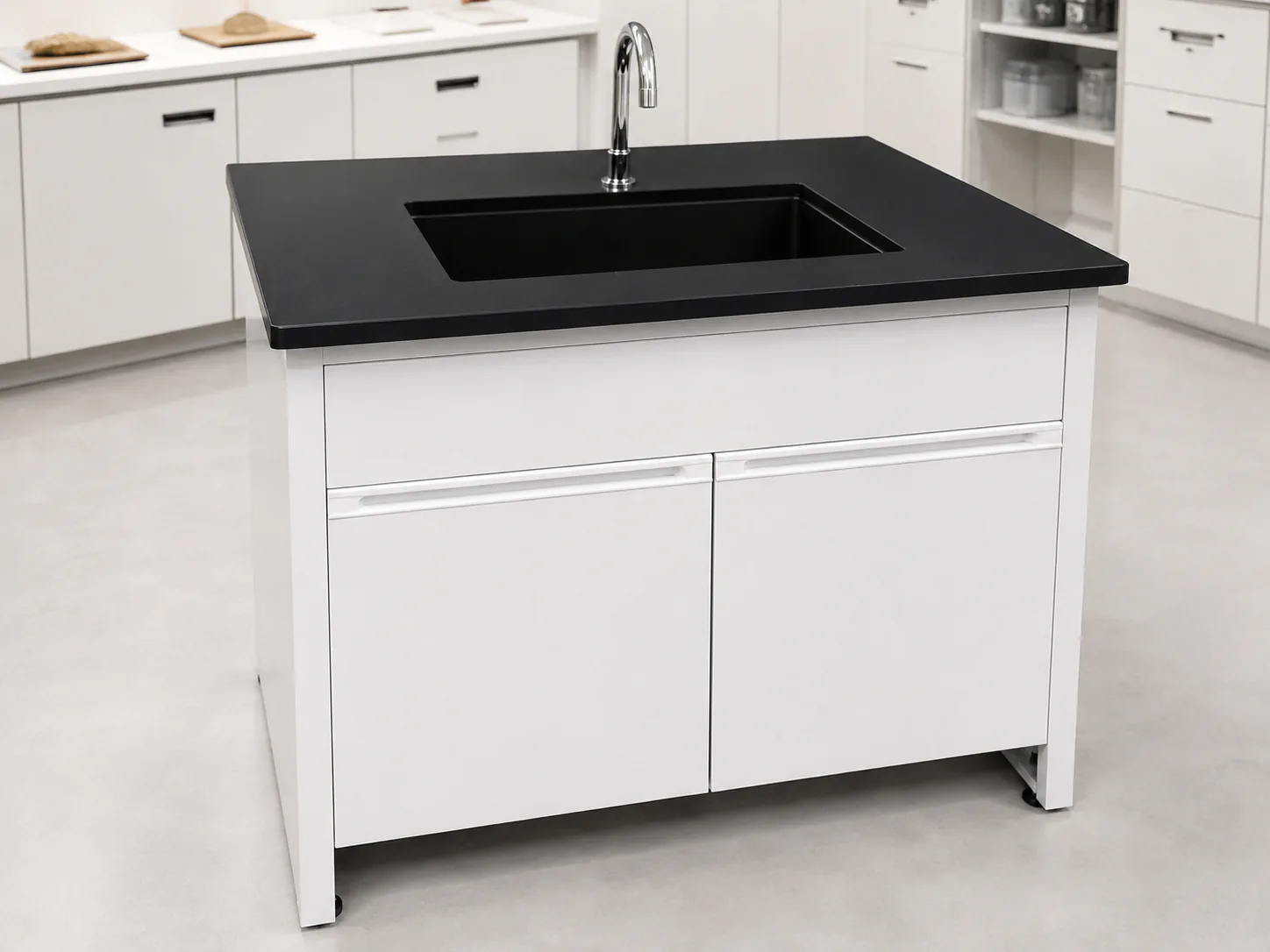
A conservation laboratory should be designed around the work it needs to support—not around a catalogue of laboratory furniture.
Before choosing benches, sinks or specialist equipment, map how objects will move through the laboratory. Identify which processes create dust, use water, need extraction or require controlled conditions. Then decide how much space, which utilities and what type of workstation each activity needs.
This approach reduces costly changes later. It also creates a safer and more flexible laboratory.
Professional guidance for book and paper conservation laboratories treats layout, water systems, lighting, ventilation, furniture, ergonomics and quarantine as connected design issues rather than separate purchasing decisions.
Start With the Conservation Workflow
The first question is not:
What equipment should we buy?
The first question is:
What will happen to an object after it enters the laboratory?
A typical workflow may look like this:
Receiving → Examination → Cleaning → Treatment → Repair → Drying or Finishing → Temporary Storage
Not every laboratory needs every stage. A small archive lab may focus on document cleaning and paper repair. A museum conservation facility may need space for paper, textiles, archaeological objects and mixed-material collections.
The workflow should therefore reflect the actual collection.
The U.S. National Archives provides a useful real-world example. Its St. Louis Paper Lab moves damaged records through different treatment areas according to need. Contaminated material may begin in a negative-pressure decontamination lab, then move to wet treatment and later to dry treatment or housing.
This leads to one of the most useful rules in conservation laboratory planning:
Design the workflow first. Specify the furniture second.
A Simple Conservation Lab Planning Framework
For early project planning, Sinoalta uses a six-part logic:
| Step | Key question | What it affects |
|---|---|---|
| Object | What will enter the lab? | Work surface, access, storage |
| Process | What treatment will be done? | Work zone and equipment |
| Risk | Does the process create dust, water, fumes or contamination? | Separation and safety |
| Space | How much working and movement space is required? | Layout and clearances |
| Utilities | What services are needed? | Power, water, drainage, extraction |
| Equipment | What supports the process? | Benches, workstations and treatment systems |
In short:
Object → Process → Risk → Space → Utilities → Equipment
This order matters.
If equipment is selected first, the room may end up serving the equipment instead of the conservation workflow.
Separate Dirty Work From Clean Work
Not all conservation work should share the same environment.
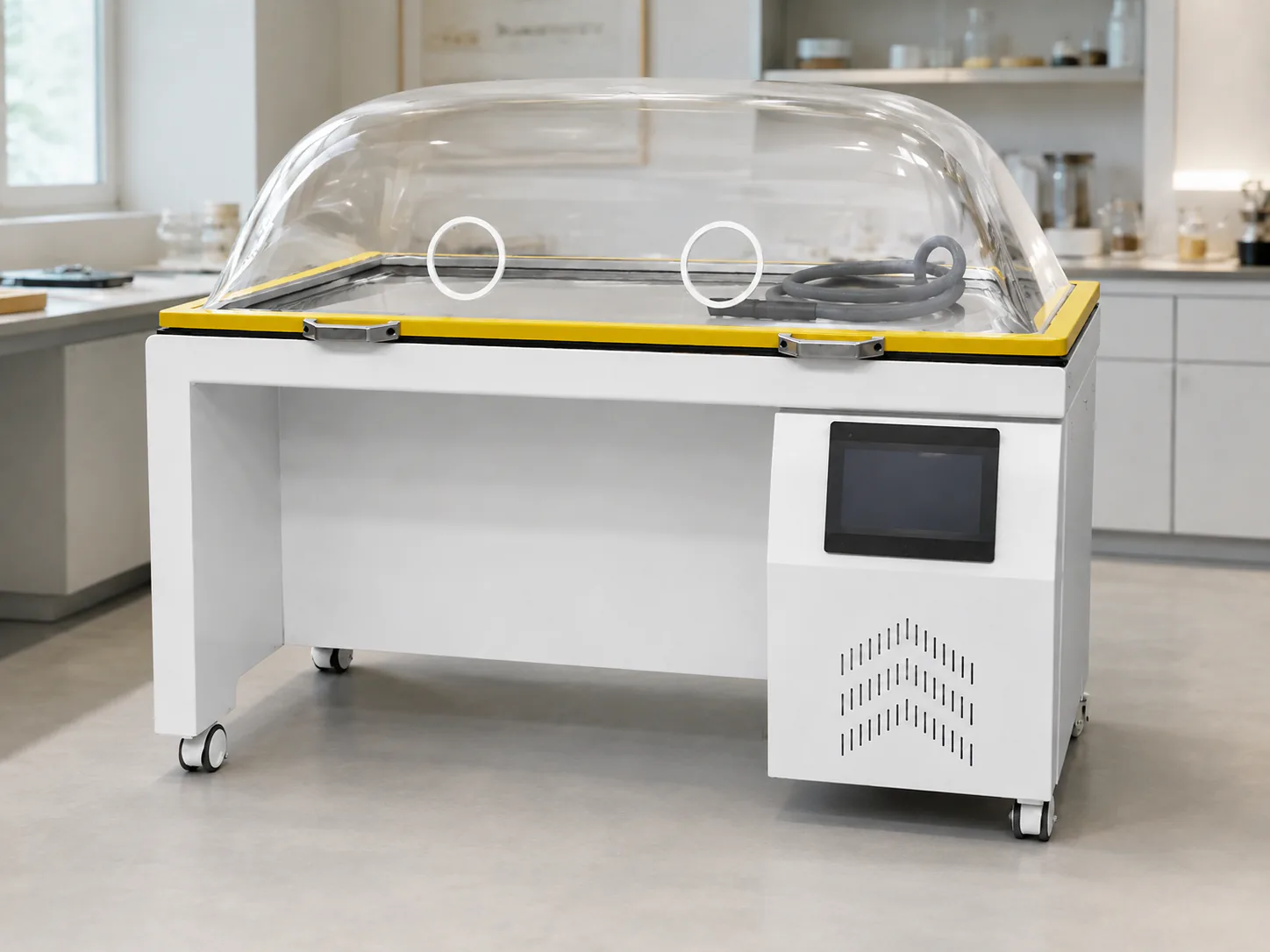
Some processes produce contaminants.
Dusty archives, mould-affected records, soot-covered materials and dirty archaeological objects can release particles into the working area.
Other processes require a much cleaner environment. These can include paper mending, detailed examination, mounting and precision repair.
The Canadian Conservation Institute recommends that workshops producing dust be well sealed and equipped with suitable local extraction or filtration. Its facility guidance also identifies negative pressure as an important control for workshop spaces where contaminants may be generated.
NARA uses the same principle in practice. Its decontamination lab is kept under negative pressure to contain mould and soot, while HEPA-filtered equipment is used during surface cleaning.
A useful design principle is therefore:
Do not make the cleanest treatment in the laboratory share uncontrolled air with the dirtiest process.
This does not mean every activity needs a separate room. It means contamination routes should be understood before the layout is fixed.
Define the Main Work Zones
Once the workflow is clear, divide the laboratory according to function.
| Work zone | Typical activity | Main design need |
|---|---|---|
| Receiving / examination | Condition checks, documentation | Clear work surface and access |
| Dry cleaning | Dust and debris removal | Local extraction |
| Wet treatment | Washing, humidification | Water and drainage |
| Paper repair | Mending, leafcasting | Clean, stable work surface |
| Drying / flattening | Drying, pressing, suction work | Large flat working area |
| Equipment treatment | Controlled technical processes | Utilities and safe clearance |
| Temporary storage | Objects waiting between treatments | Secure, clean storage |
The exact zones will vary.
The purpose of zoning is not to make the laboratory complicated. It is to stop incompatible processes from interfering with each other.
Wall Bench, Central Bench or Mobile Workstation?
There is no single bench layout that works for every conservation laboratory.
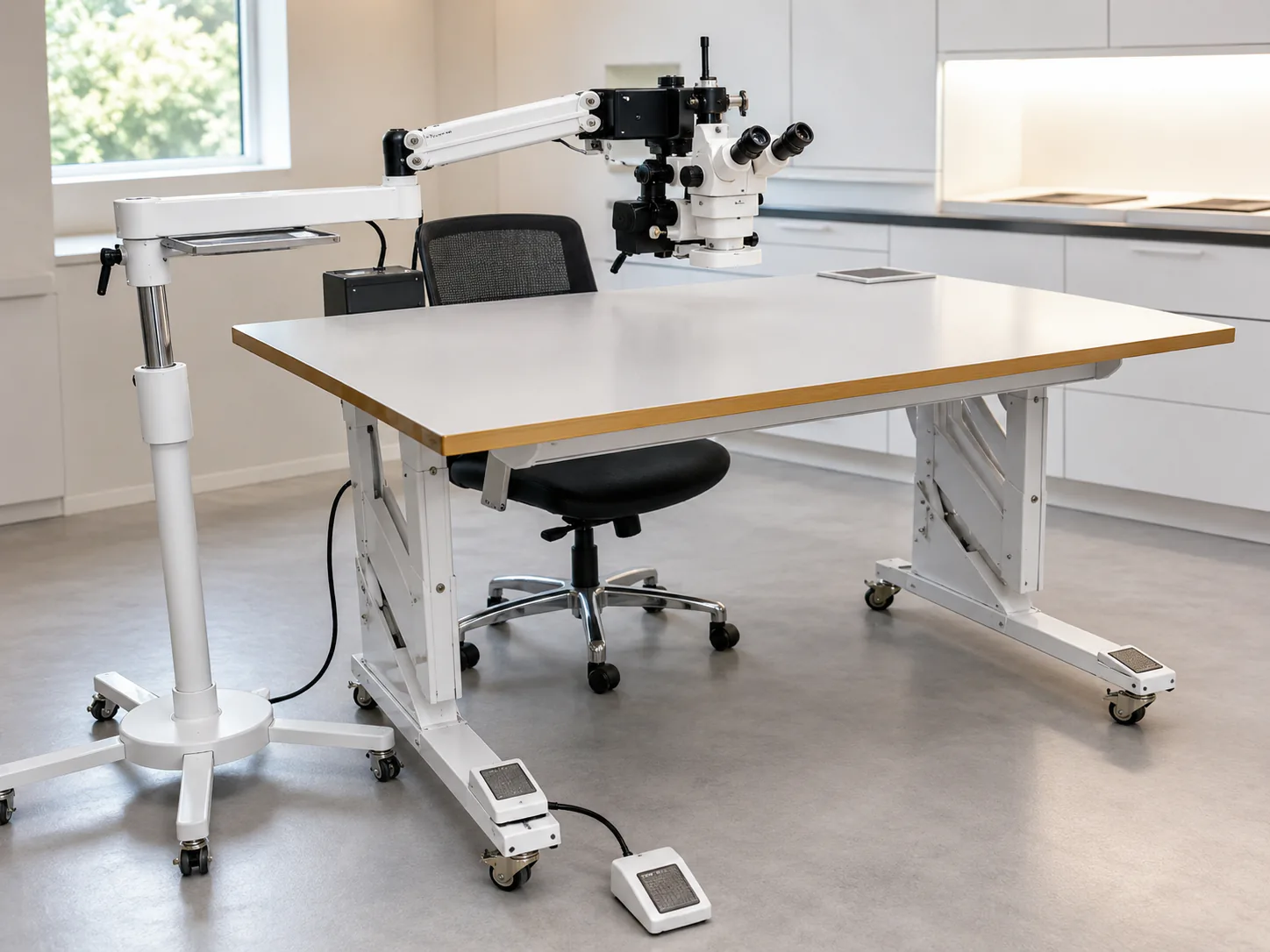
Wall benches
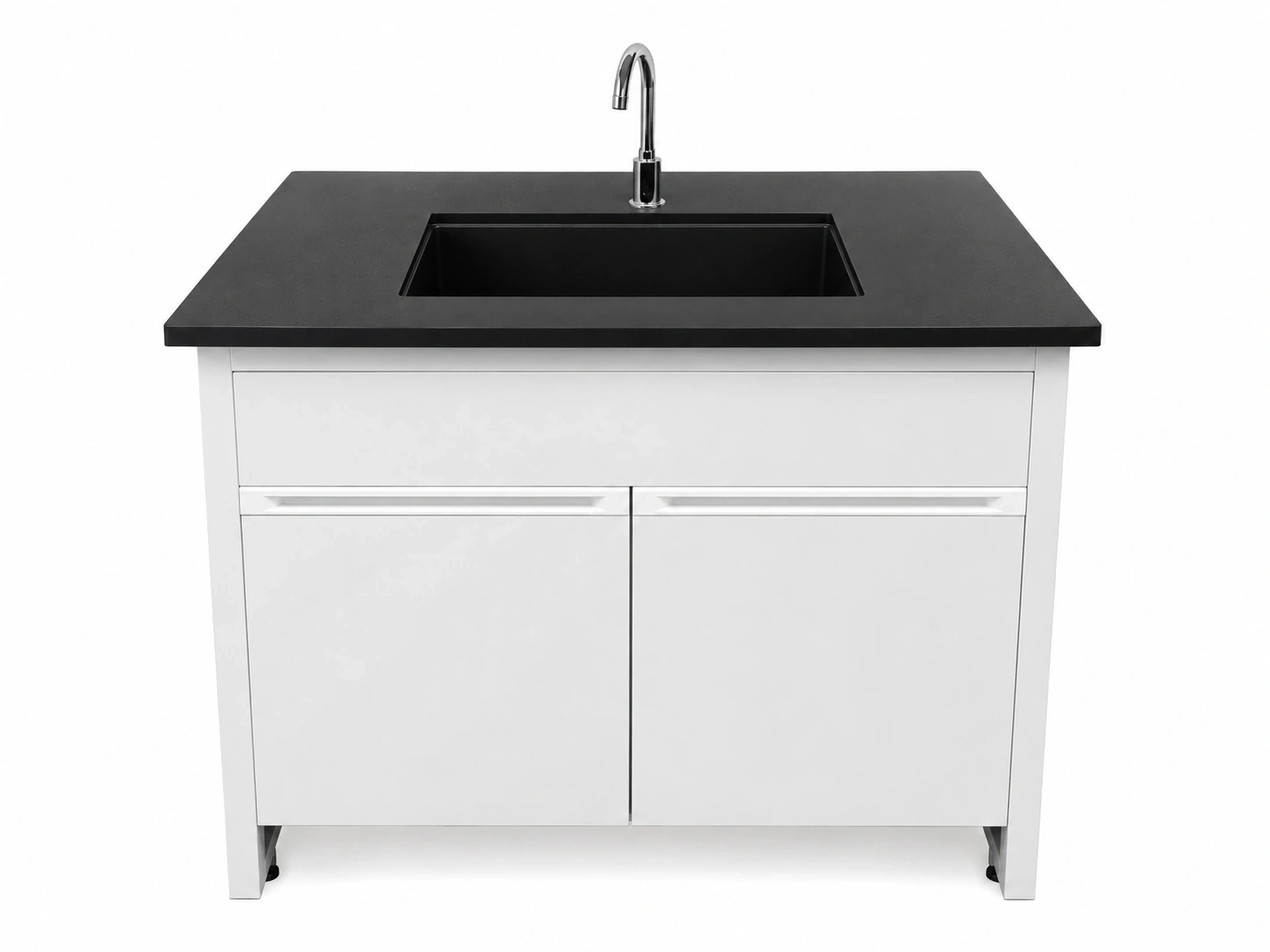
Wall benches work well where utilities and fixed services are required.
They are useful near sinks, extraction points, cabinets and fixed equipment. Because connections stay close to the wall, plumbing and electrical installation can also be easier to manage.
Central benches
A central bench gives staff access from several sides.
This can be valuable when working with large sheets, maps, textiles, books, group projects or objects that require more than one conservator.
It can also improve collaboration because several people can work around the same object.
Mobile workstations
Mobile furniture adds flexibility.
UCL's conservation laboratories use mobile laboratory-grade tables that can be combined into one large work surface or separated for smaller projects. Its laboratories also combine flexible tables with local extraction, wet-work facilities and deionized water.
For laboratories that teach, change projects often or work with objects of very different sizes, this flexibility can be more useful than filling the room with fixed benches.
A good laboratory may therefore use all three types.
Choose the Worktop for the Process
There is no universal "best conservation laboratory worktop."
The correct surface depends on what will happen on it.
A worktop used for clean paper repair has different needs from a sink-side surface used for wet treatment. A cutting or fabrication station also has different requirements from a table used for examining fragile manuscripts.
For dry paper work, the priorities may include a smooth surface, stability and easy cleaning.
For wet work, water resistance, sealed joints and cleanability become more important.
Where solvents or other chemicals are used, the surface material should be selected according to the chemicals involved and local safety requirements.
For cutting or fabrication work, a replaceable protective layer may be more practical than allowing tools to contact the main worktop.
The key principle is simple:
Choose the worktop for the treatment—not the treatment for the worktop.
This is also why a laboratory furniture schedule should identify the intended task for each bench rather than specifying one material across the entire room.
Plan Water and Drainage Before the Furniture
Wet-treatment requirements should be identified early.
A paper or book conservation laboratory may require water for washing, humidification, cleaning, equipment or material preparation.
Depending on the work, the design may need to consider sinks, purified or deionized water, drainage, splash control and safe movement of wet materials.
Do not complete the furniture layout first and then ask where the water connections can fit.
That often creates poor working positions, long plumbing routes or unnecessary compromises.
A better sequence is:
Treatment requirement → Water point → Drainage → Work zone → Furniture
UCL, for example, combines dedicated wet-work space with a large sink and deionizer in its conservation laboratories.
Water risk also matters beyond the sink itself. Heritage facility guidance recommends careful control of drainage, water sources and flood exposure wherever collections are handled or stored.
Room Ventilation Is Not the Same as Local Extraction
This distinction is easy to miss.
HVAC controls the room. Local extraction controls the process.
A building's heating, ventilation and air-conditioning system manages general environmental conditions and air movement.
Local extraction captures dust, particles or fumes close to the point where they are produced.
A conservation laboratory may need both.
For example, a room may have excellent air conditioning but still require local extraction above a dust-cleaning workstation.
CCI specifically recommends extraction or filtration in areas where dust is generated and identifies climate control and filtration as wider facility requirements.
NARA takes the same source-control approach for contaminated records by using biosafety cabinets, controlled ventilation and HEPA equipment in its decontamination workflow.
This distinction should be discussed with the building engineer early in the project.
Lighting Must Support Examination, Not Just Visibility
A conservation laboratory needs enough light to work safely.
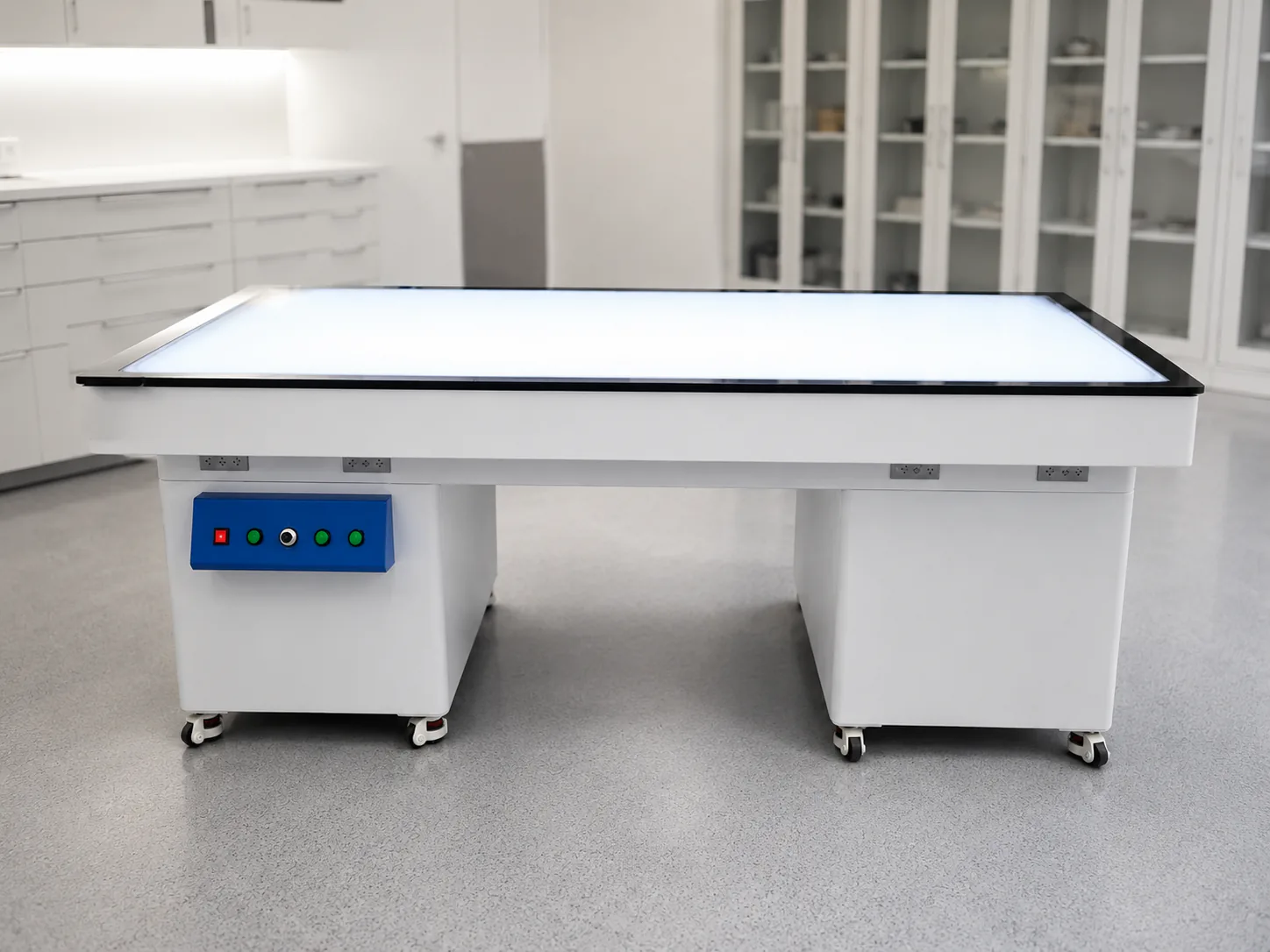
But "bright enough" is not the only requirement.
Different activities may need different lighting.
General room lighting supports movement and routine work. Task lighting helps with close examination, repair and documentation.
Good lighting design should also consider glare, heat and the quality of light used when evaluating materials and colours.
CCI recommends low- or no-UV lighting for heritage collection spaces and treats lighting as part of the wider preservation environment rather than only as an architectural feature.
For a conservation workstation, this usually means combining good ambient lighting with adjustable task lighting instead of relying on one very bright ceiling source.
Plan for Large Objects Before the Room Is Built
The largest object can expose weaknesses in an otherwise good laboratory plan.
Ask early:
Can it enter the building?
Can it pass through the door?
Can it turn in the corridor?
Can it reach the laboratory?
Can staff place it on the work surface safely?
Is there enough room to work around it?
CCI specifically recommends planning doorway, hallway, elevator and ceiling clearances around the largest collection objects expected to move through a facility.
This is particularly relevant for large maps, framed works, textiles, oversized books, panels, furniture and archaeological material.
A useful rule is:
If the largest object cannot reach the workstation safely, the workstation is in the wrong place.
The same logic applies to equipment.
A large treatment chamber may physically fit inside a room but still be difficult to install, service or load if the surrounding clearance is too small.
Ergonomics Is More Than Bench Height
Conservation work can involve long periods of detailed hand work.
Some tasks are performed sitting down. Others are easier standing. Large objects may require staff to work from several sides of a table.
For this reason, ergonomics should not be reduced to one standard bench height.
Historic AIC discussions of conservation laboratory ergonomics highlight adjustable workbenches and chairs, mobile furniture and knee space around sinks and fume hoods as useful ways to support different users and tasks.
Where practical, laboratories can benefit from furniture that allows staff to change posture or reconfigure the working area.
This can include height-adjustable benches, mobile carts, adjustable chairs and removable accessories.
The best solution depends on the work being performed.
Do Not Forget Quarantine and Temporary Storage
An object often spends more time waiting between treatments than actually being treated.
That creates two planning questions:
Where will incoming objects wait?
Where will work-in-progress be stored safely?
Quarantine is especially important when incoming collections may contain insects, mould or other contamination.
CCI recommends a dedicated quarantine and inspection space for incoming objects, particularly where collections contain materials at higher risk of pest infestation.
The major professional guide to planning book and paper conservation laboratories also treats quarantine and segregation rooms as a separate laboratory-design issue.
Quarantine should therefore not be treated as an empty corner that happens to be available.
It should be part of the collection workflow.
For institutions developing a wider pest-management programme, this space should also connect logically with inspection and any required treatment process.
Design for Change
A conservation laboratory rarely performs exactly the same work forever.
Collections change. Staff change. New treatment methods appear. Equipment is replaced. Teaching or project work may increase.
This makes flexibility valuable.
Fixed elements still need careful planning. Sinks, drains, extraction ducts and some large equipment cannot simply move across the room.
Furniture often can.
UCL's reconfigurable worktables are one example of this approach. AIC conservation-lab discussions have also highlighted mobile and adjustable furniture as useful tools for changing workloads and staff needs.
A useful principle is:
Fix the services that must be fixed. Keep the working space flexible where you can.
Seven Common Conservation Laboratory Design Mistakes
| Mistake | Why it causes problems |
|---|---|
| Buying benches before mapping workflow | Furniture begins to control the process |
| Mixing dirty and clean work | Dust or contaminants can spread |
| Treating HVAC as local extraction | Pollution is not captured at source |
| Ignoring oversized objects | Objects cannot move or be handled safely |
| Adding utilities after the layout is frozen | Plumbing, power and extraction become compromises |
| Using one bench type for every process | Different tasks have different working needs |
| Forgetting quarantine and temporary storage | Incoming and in-process collections have nowhere suitable to go |
These mistakes are usually not caused by a lack of equipment.
They are caused by making equipment decisions before the workflow is understood.
Conservation Laboratory Planning Checklist
Before freezing the layout, the project team should be able to answer the following questions.
| Area | Questions to confirm |
|---|---|
| Collection | What objects will be treated? What is the largest object? |
| Workflow | Where do objects enter, move, wait and leave? |
| Zoning | Which processes are dirty, wet, clean or controlled? |
| Furniture | Which work needs wall, central or mobile benches? |
| Water | Where are sinks, purified water and drainage required? |
| Extraction | Which processes need local dust or fume extraction? |
| Environment | Where do collections need temperature and RH control? |
| Lighting | Which areas need dedicated task lighting? |
| Storage | Where are incoming and in-process objects kept? |
| Access | Can large objects and equipment move safely through the building? |
| Ergonomics | Can staff work comfortably in seated and standing positions? |
| Future use | Can furniture or work zones adapt as needs change? |
A laboratory does not need the most equipment.
It needs the right equipment in the right place for the work it actually performs.
Frequently Asked Questions
What should a conservation laboratory include?
A conservation laboratory should include the spaces, utilities and equipment required by its actual treatment programme. Common needs may include examination space, dry-cleaning areas, wet-treatment facilities, repair benches, temporary storage, local extraction and environmental monitoring. Not every laboratory requires every function.
How should a conservation laboratory be laid out?
Start with object flow. Identify where objects enter, how they are examined, which treatments they receive and where they wait between stages. Separate processes that create dust, water, fumes or contamination from cleaner treatment areas where necessary. Furniture should be selected after this workflow is clear.
What is the difference between a wall bench and a central laboratory bench?
A wall bench is useful where fixed utilities, sinks, extraction or storage are required. A central bench provides access from several sides and is often useful for large objects, paper, textiles or collaborative work. Many laboratories use both.
What worktop material is best for a conservation laboratory?
There is no single best material for every process. Dry paper work, wet treatment, solvent work and cutting have different surface requirements. Choose the worktop according to chemical exposure, moisture, cleanability, working method and maintenance needs.
Does a conservation laboratory need local dust extraction?
It depends on the work. Laboratories that clean dusty collections or carry out processes that release particles should assess the need for source extraction. General room HVAC should not automatically be treated as a replacement for local extraction.
Should wet and dry conservation work be separated?
They should at least be planned as different processes. Separation may involve different zones within one laboratory or separate rooms, depending on scale, contamination risk and treatment type. Wet work also requires specific consideration of water supply, drainage and the movement of damp objects.
Planning a Conservation Laboratory Project?
A good laboratory starts with the collection and the workflow.
Before specifying workstations or treatment equipment, define what objects will be handled, what work will be carried out and what risks each process creates.
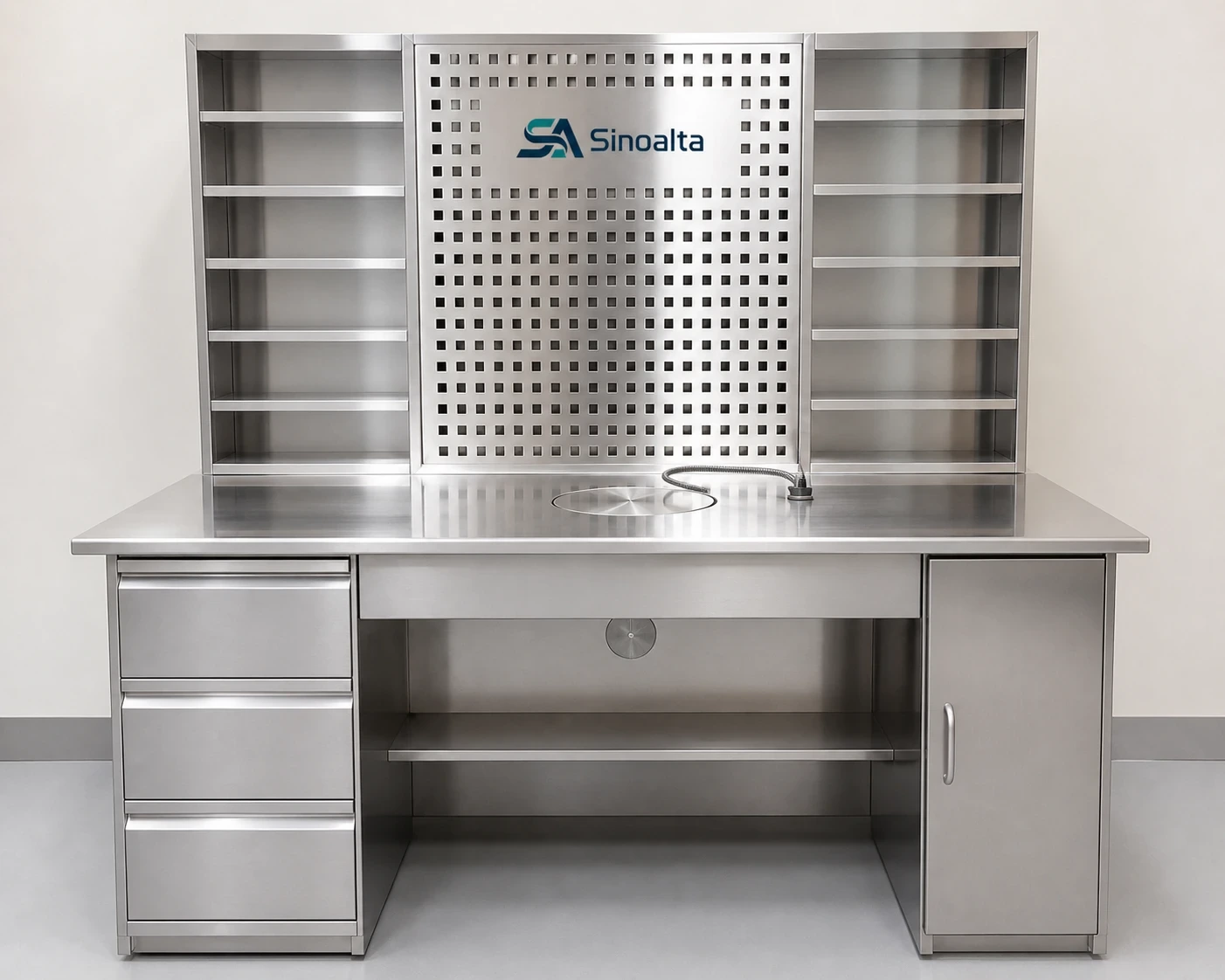
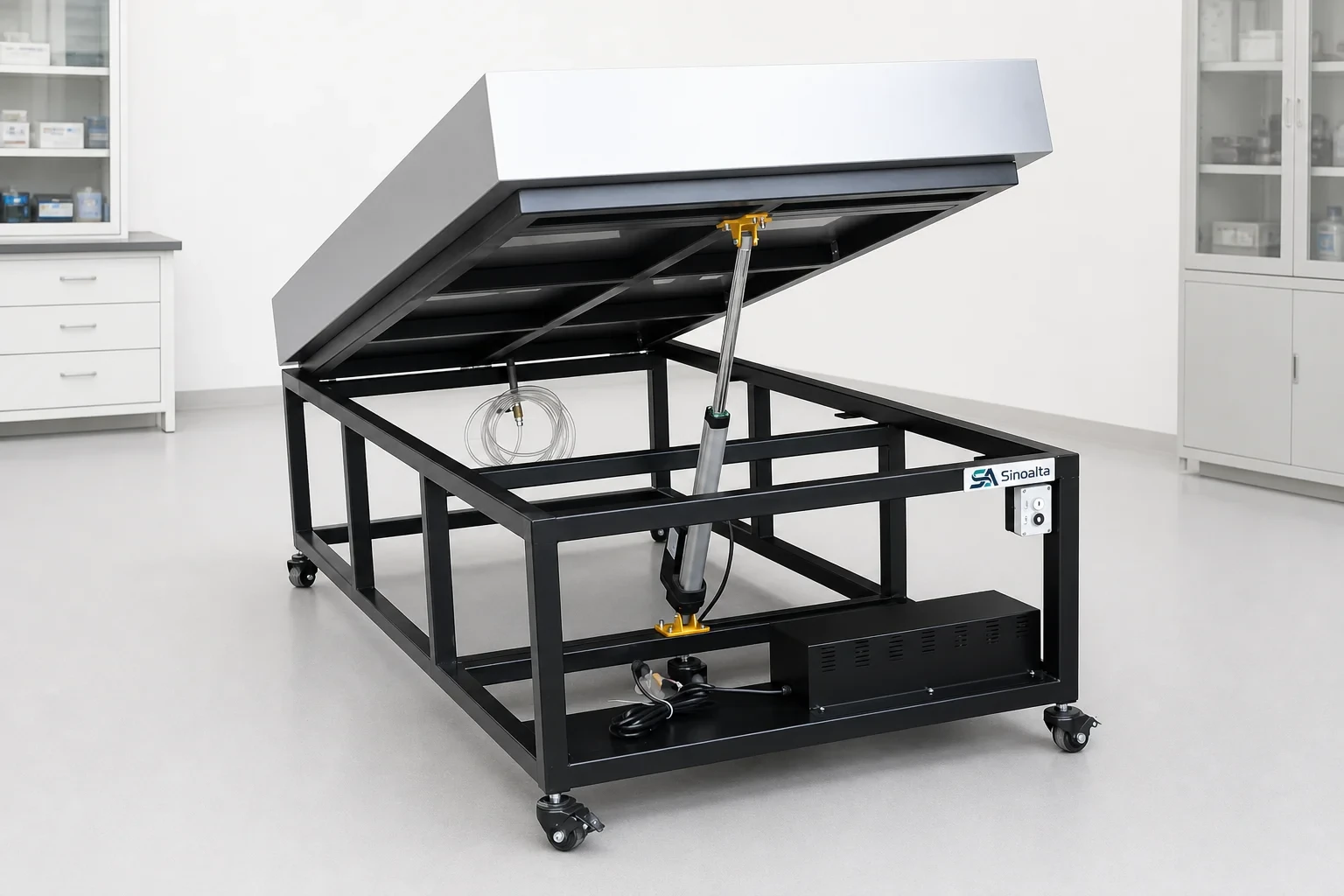
Sinoalta supports conservation laboratory projects with configurable conservation workstations, specialist treatment equipment and project-specific system planning.
Explore Conservation Laboratory Solutions → View Conservation Laboratory Workstations →
Related Technical Resources
- Archive Cleaning & Dust Removal — for planning dry-cleaning areas, dust control and local extraction.
- Integrated Pest Management for Museums — for planning incoming-object inspection, quarantine and pest-risk workflows.
- Leafcasting for Paper Conservation — for understanding equipment and workflow requirements for paper-loss repair.
- Suction Table Applications in Paper Conservation — for planning specialist paper-treatment workstations and controlled suction processes.
Selected Technical References
- Canadian Conservation Institute, Design Considerations for Preventive Conservation in Heritage Facilities: https://www.canada.ca/en/conservation-institute/services/preventive-conservation/design-considerations.html
- Smithsonian Institution Libraries, Planning and Constructing Book and Paper Conservation Laboratories: A Guidebook: https://www.si.edu/object/siris_sil_992698
- U.S. National Archives, Conservation Treatment — St. Louis Preservation Branch: https://www.archives.gov/preservation/about/st-louis-preservation-branch/conservation-treatment
- UCL, Conservation Laboratories: https://www.ucl.ac.uk/social-historical-sciences/archaeology/research/our-facilities-and-archaeology-collections/conservation-laboratories
- AIC Book and Paper Group, conservation laboratory ergonomics discussion: https://cool.culturalheritage.org/coolaic/sg/bpg/annual/v23/bpga23-19.pdf