Product Positioning
Designed to capture local dust and odours produced while organizing, mechanically cleaning and treating bronze, iron and other metal artifacts, ceramics and suitable three-dimensional collection objects. Its articulated extraction arm and negative-pressure work surface support work around three-dimensional objects and distinguish it from book-and-document workstations configured for paper handling, manual surface cleaning and related localized extraction. HEPA filtration reduces pollutant dispersion around the operator.
Product Overview
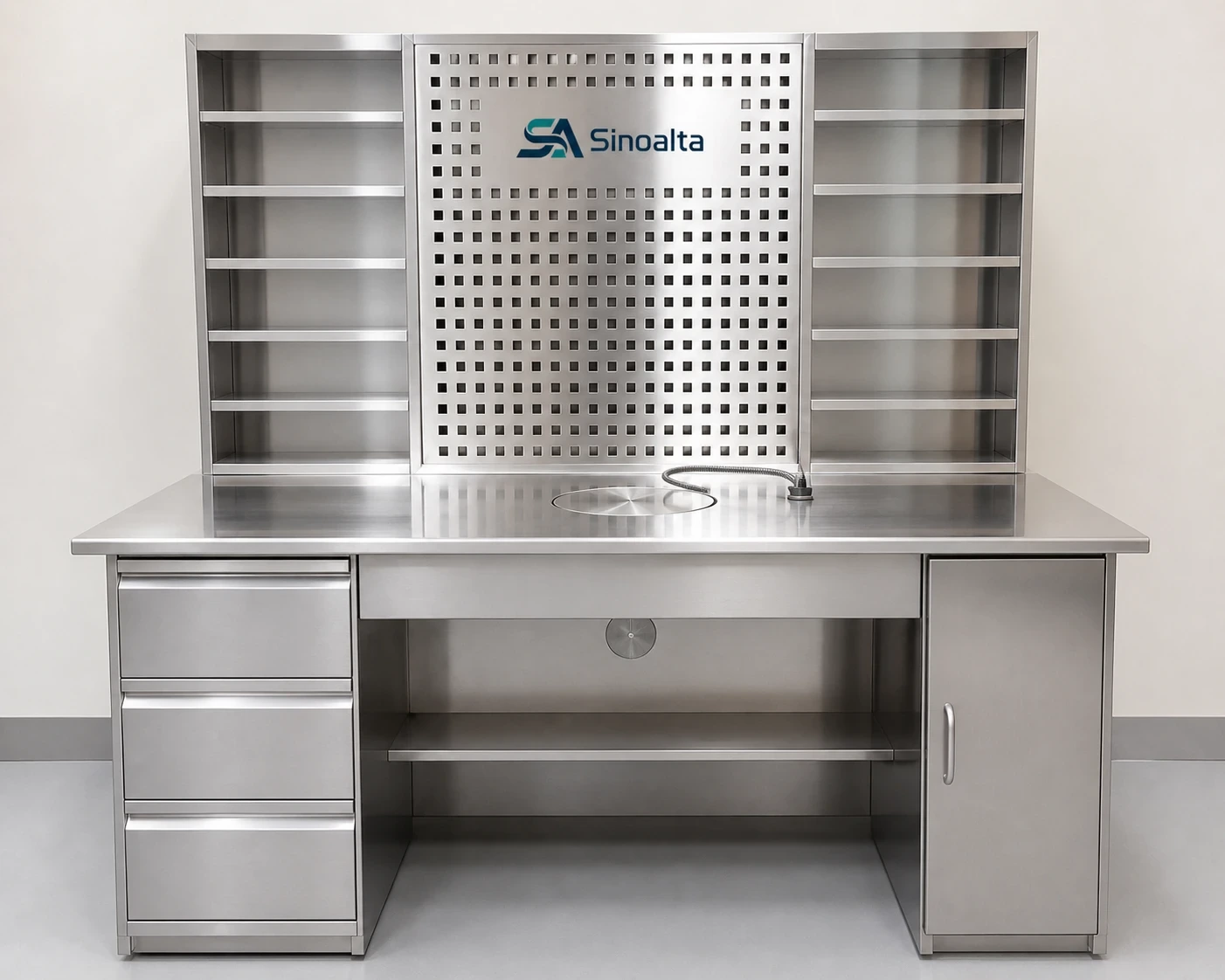
The workstation collects dust, particulates and odours using an overhead articulated extraction arm and a perforated negative-pressure work surface, then filters the extracted air through an H11 HEPA medium.
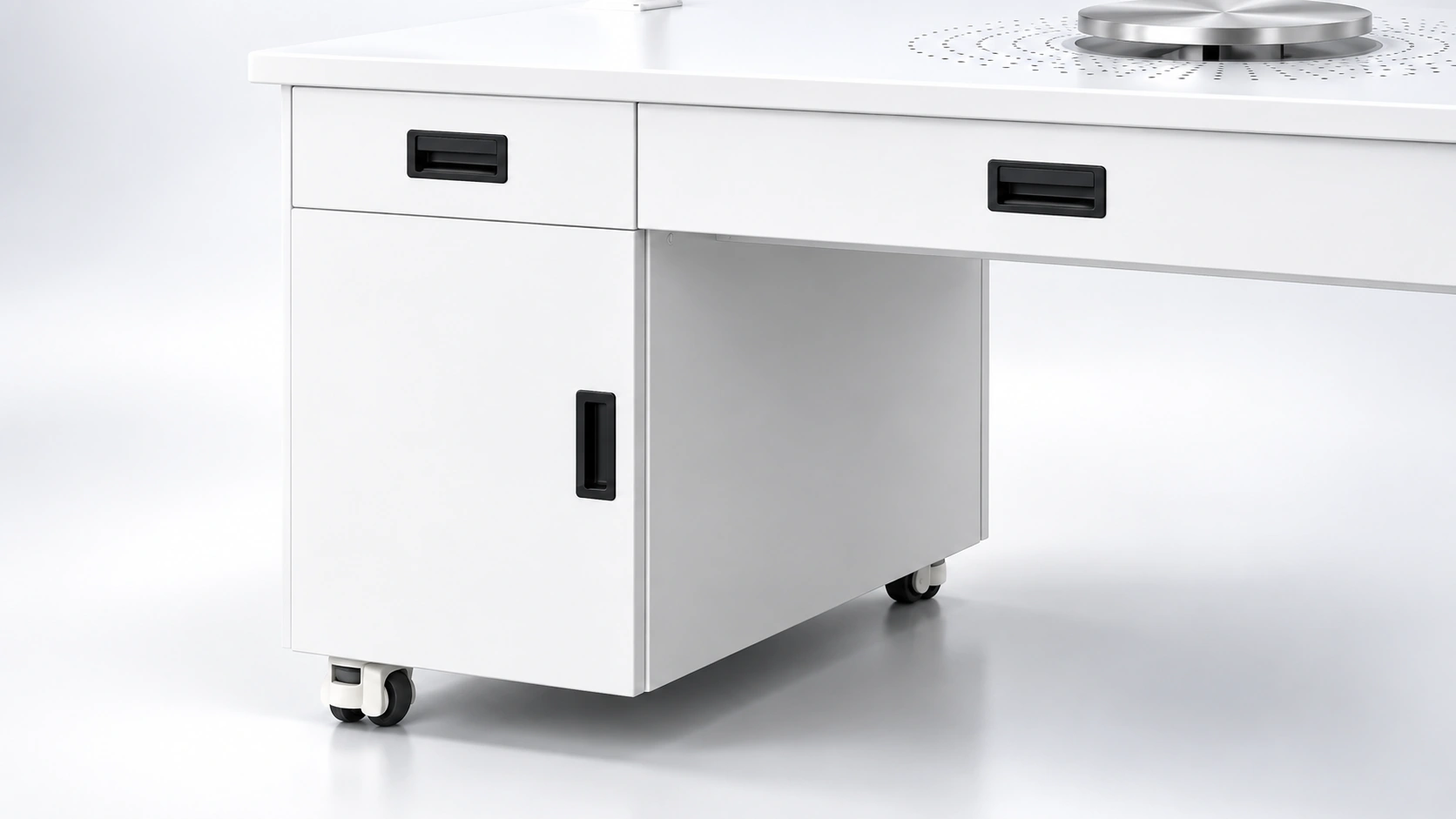
A rotating, height-adjustable and lockable work platform provides a stable, adaptable position for bronze, iron, ceramic and other three-dimensional objects.
Dust Extraction System
Articulated Extraction Arm
The upper extraction arm can be repositioned in direction and angle so the hood remains close to the active treatment area.
Negative-Pressure Work Surface
Dust generated during treatment passes through perforations in the worktop into the negative-pressure extraction system.
HEPA Filtration
The system uses an H11 HEPA filter medium for extracted-air filtration.
Technical Specifications
| Item | Specification |
|---|---|
| Filter | H11 HEPA medium |
| Extraction arm | Articulated mechanical arm with extraction hood |
| Worktop extraction | Perforated negative-pressure work surface |
| Work platform | Rotating, height-adjustable and lockable |
| Storage | Four drawers on the left |
Suitable Applications
- Bronze conservation
- Iron and other metal-artifact conservation
- Metal surface cleaning
- Localized corrosion removal and mechanical cleaning
- Ceramic conservation
- Treatment of other three-dimensional collection objects
- Operations producing local dust, particulates or odours
- Museum conservation laboratories
- Professional conservation workshops
Key Features
- Local dust extraction for metal-artifact conservation
- Upper articulated extraction arm
- Negative-pressure worktop extraction
- H11 HEPA filtration
- Rotating work platform
- Height-adjustable and lockable work platform
- Four-drawer tool storage
- Suitable for bronze, iron, ceramics and other three-dimensional collection objects
Selection & Customization
The following can be configured according to the specific treatment object, object dimensions, operating workflow and laboratory conditions:
- Overall workstation dimensions
- Extraction-arm position and quantity
- Extraction-hood form
- Negative-pressure worktop structure
- Work-platform dimensions
- Work-platform lifting range
- Filtration module
- Storage structure
- Work-area layout
Selection Questions
Which operations fit this workstation? It is intended for localized cleaning and mechanical treatment of bronze, iron, ceramics and other suitable three-dimensional objects where dust, particulates or odours are generated near the work area. It is not a room-wide dust-control system.
What should be assessed before use? Review object stability, the proposed tool and treatment method, expected particulate or odour load, and whether H11 HEPA filtration is appropriate for the material generated. Hazard-specific controls may still be required following the laboratory risk assessment.
Which details affect configuration? Confirm object dimensions and weight, operator reach, extraction-arm position, hood form, work-platform size and lifting needs, storage, filtration access and room layout. These determine whether the standard workstation or a project-configured arrangement better supports the treatment workflow.