
Emergency Stabilization
Prioritize site safety, remove standing water, separate affected materials, and slow further deterioration.
By Risk / Damage
Plan the incident-to-storage workflow for water-damaged books and archives: assess and triage collections, choose temporary stabilization and drying routes, document batches, review outcomes and coordinate safe return to storage before specifying recovery equipment.
Preservation Challenges
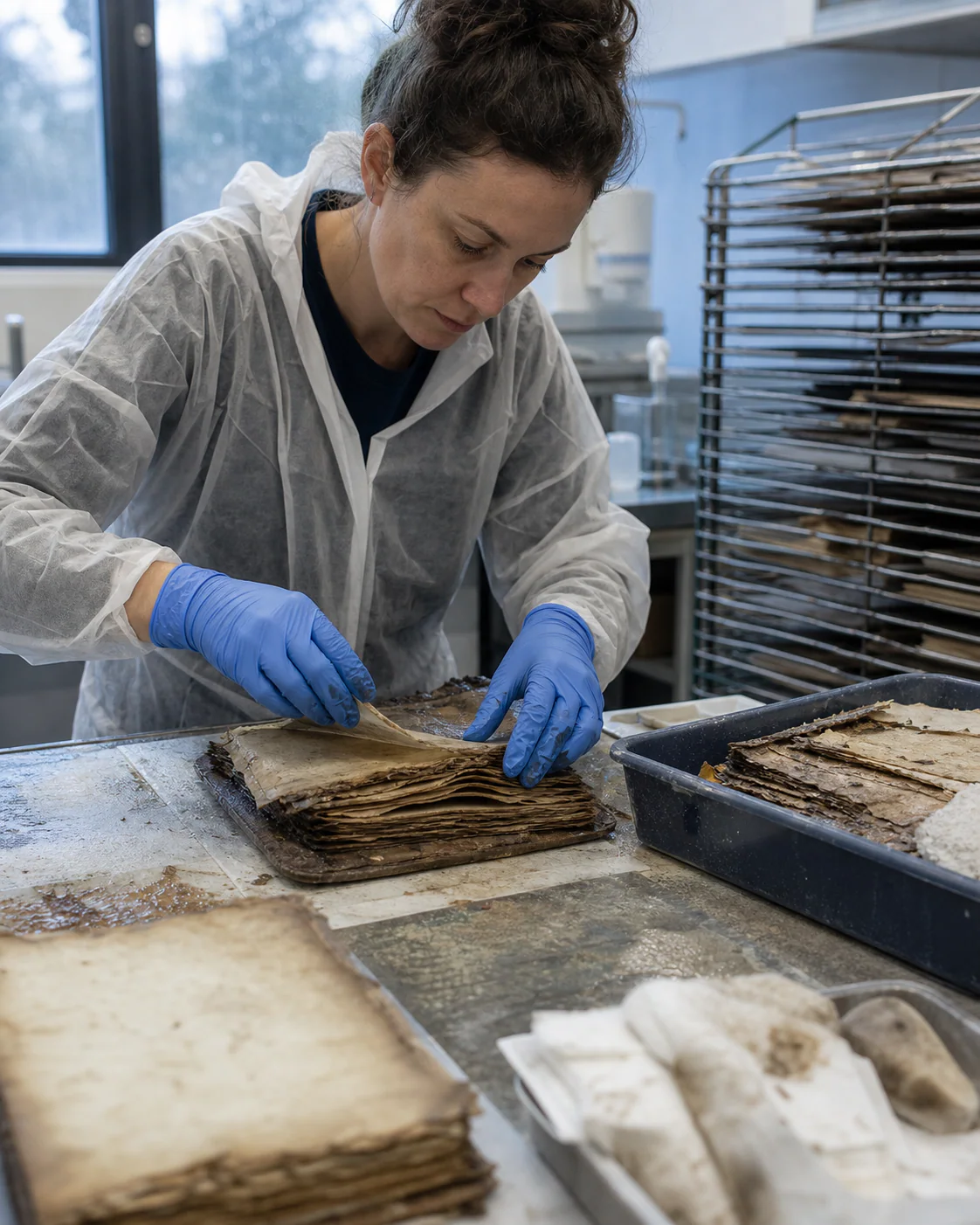
Prioritize site safety, remove standing water, separate affected materials, and slow further deterioration.
Manage moisture, isolation, airflow, and environmental conditions to reduce mold and cross-contamination risks.
Select an appropriate drying pathway around material type, condition, water exposure, and collection volume.
Work to reduce adhesion, distortion, staining, structural damage, and loss of collection information.
Recommended Systems
Match emergency recovery equipment and workflows to material sensitivity, water exposure, contamination, collection volume, available time, and the condition of each affected batch.
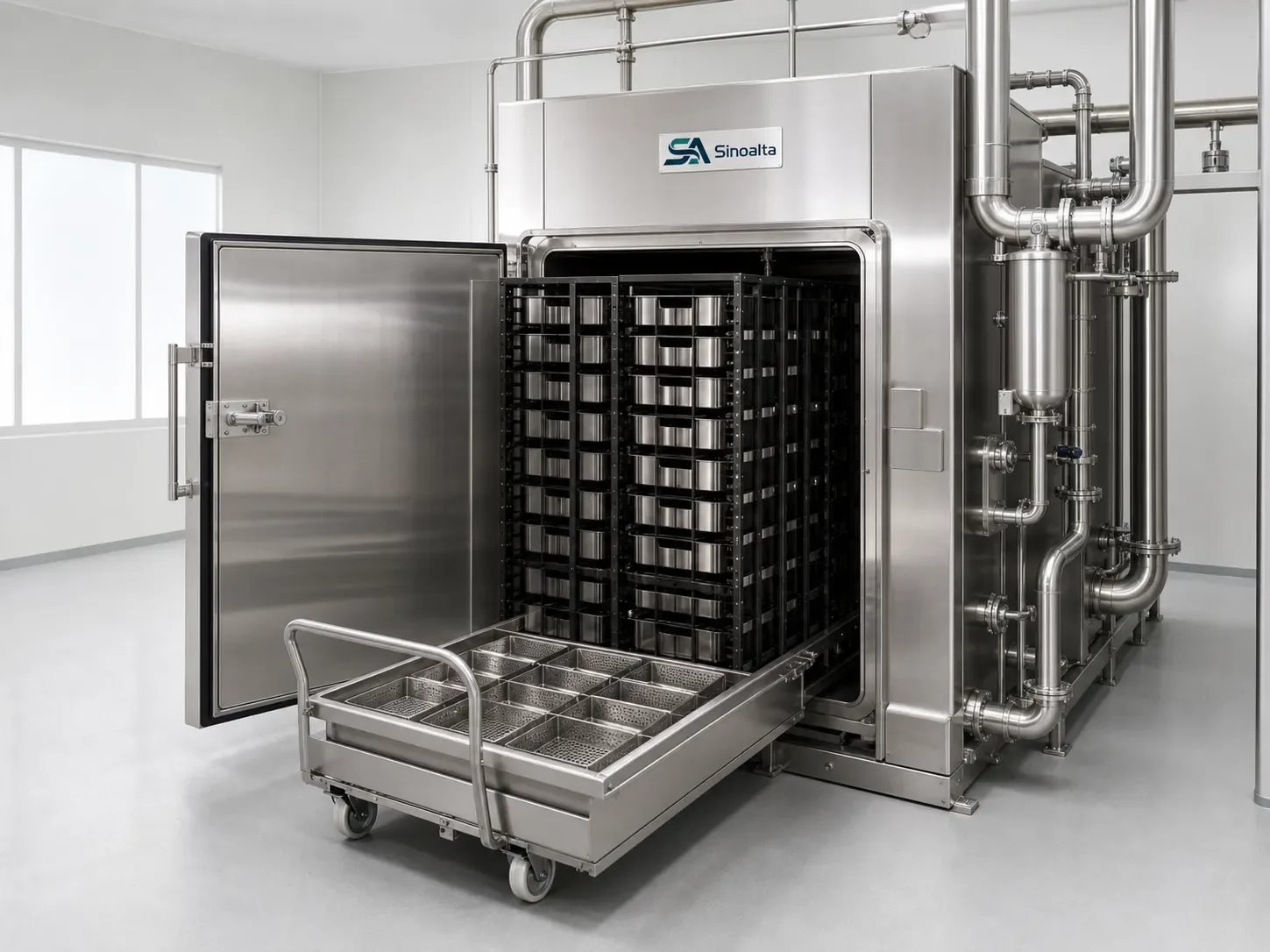
Controlled freeze-drying equipment for suitable frozen books, documents, and archival materials.
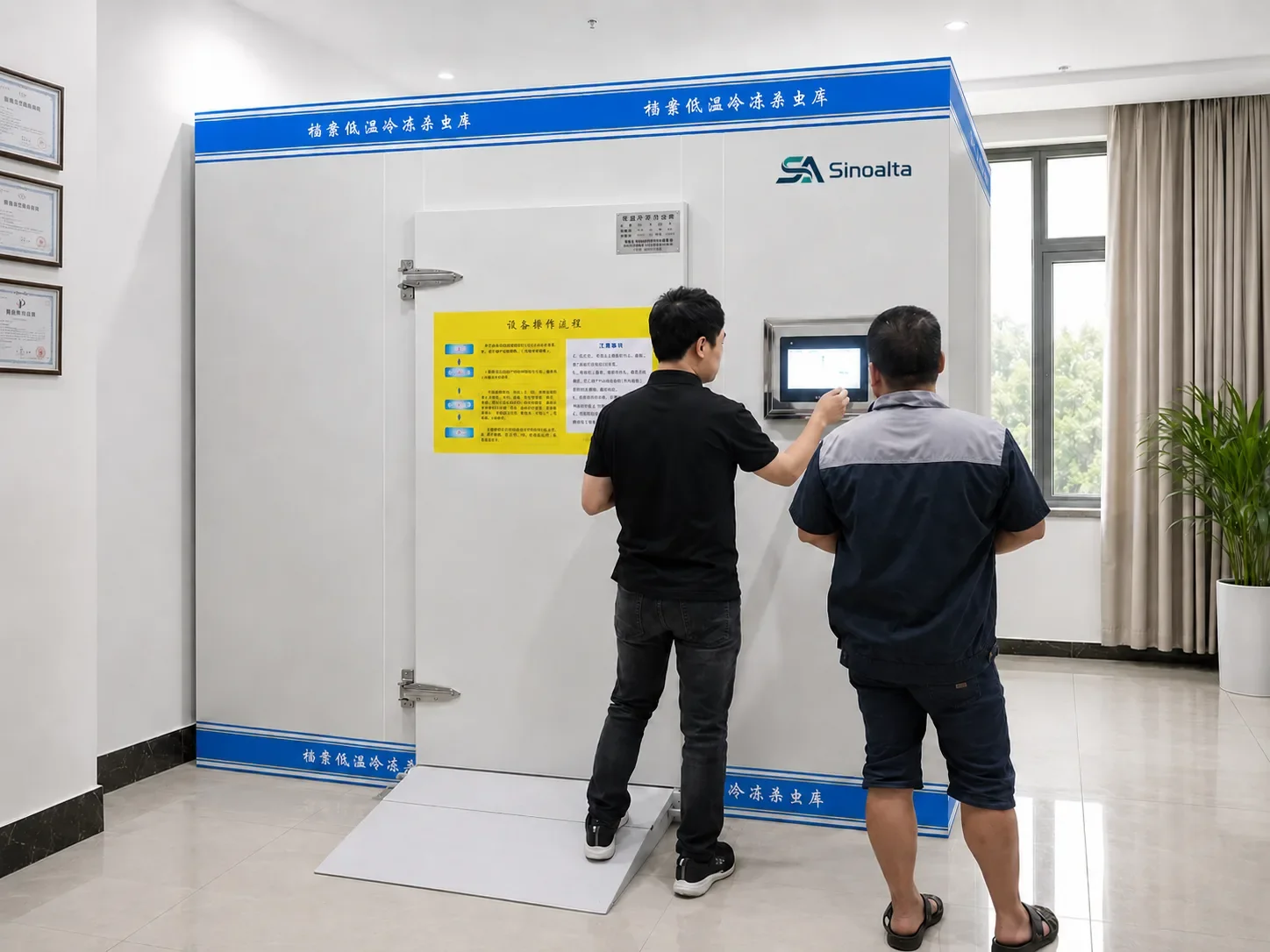
A controlled low-temperature environment supporting larger-scale drying and archive recovery workflows.
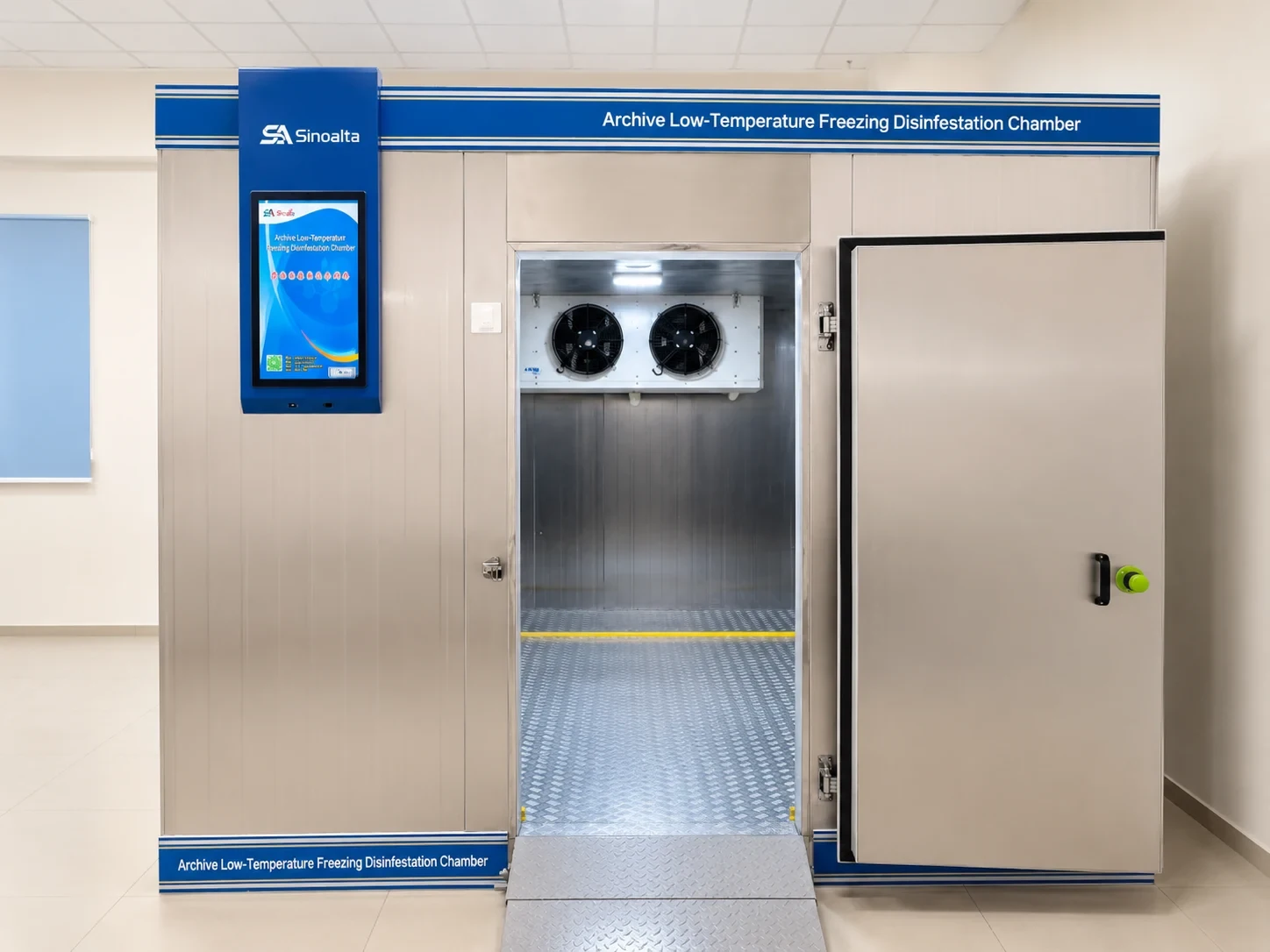
A coordinated pathway from incident assessment and stabilization through drying, review, and rehousing.
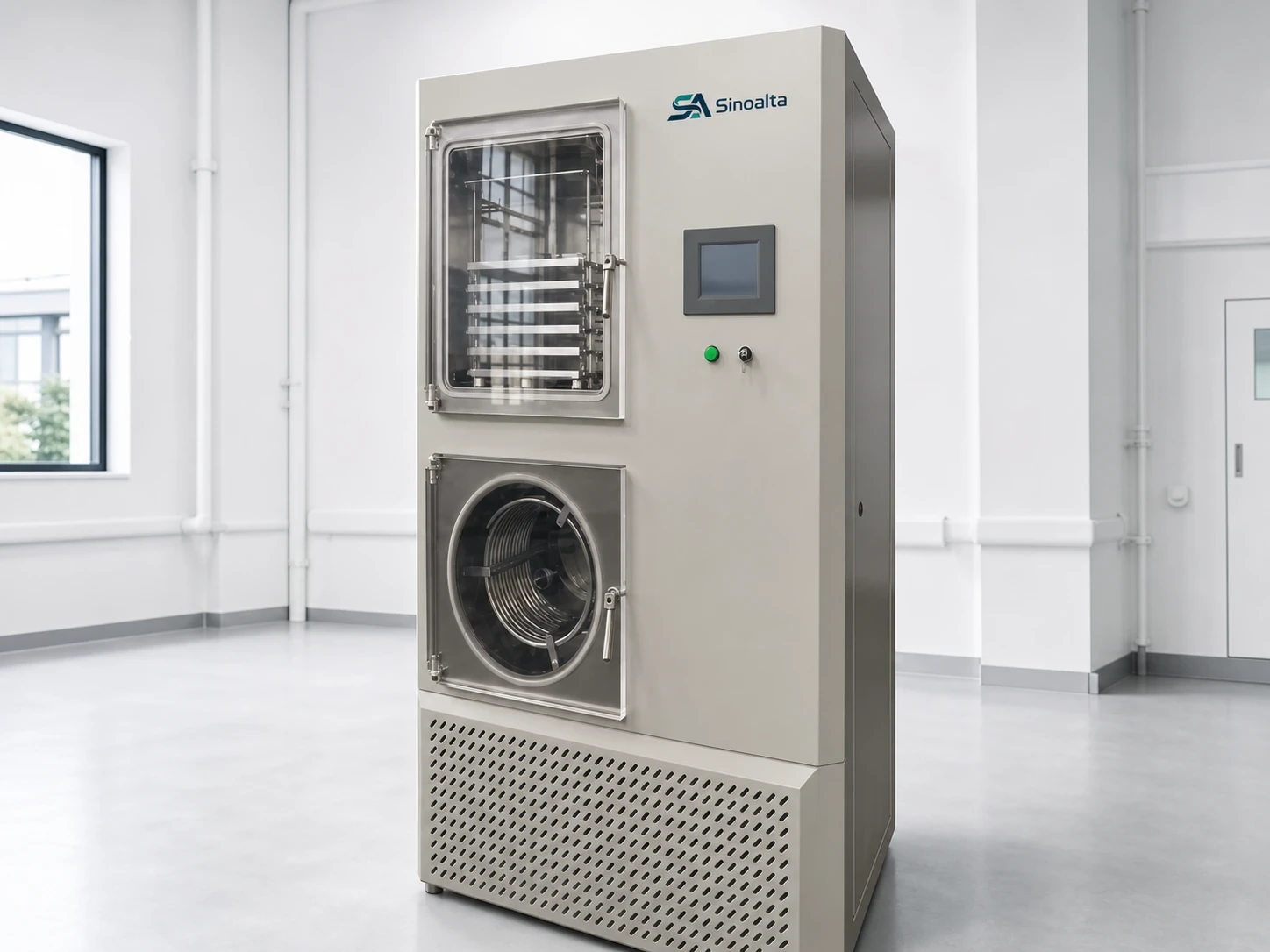
Project records that connect collection identification, condition, treatment decisions, outcomes, and next steps.
Typical Applications
Supporting institutions and response teams that stabilize, dry, document, and return collections to safe storage.
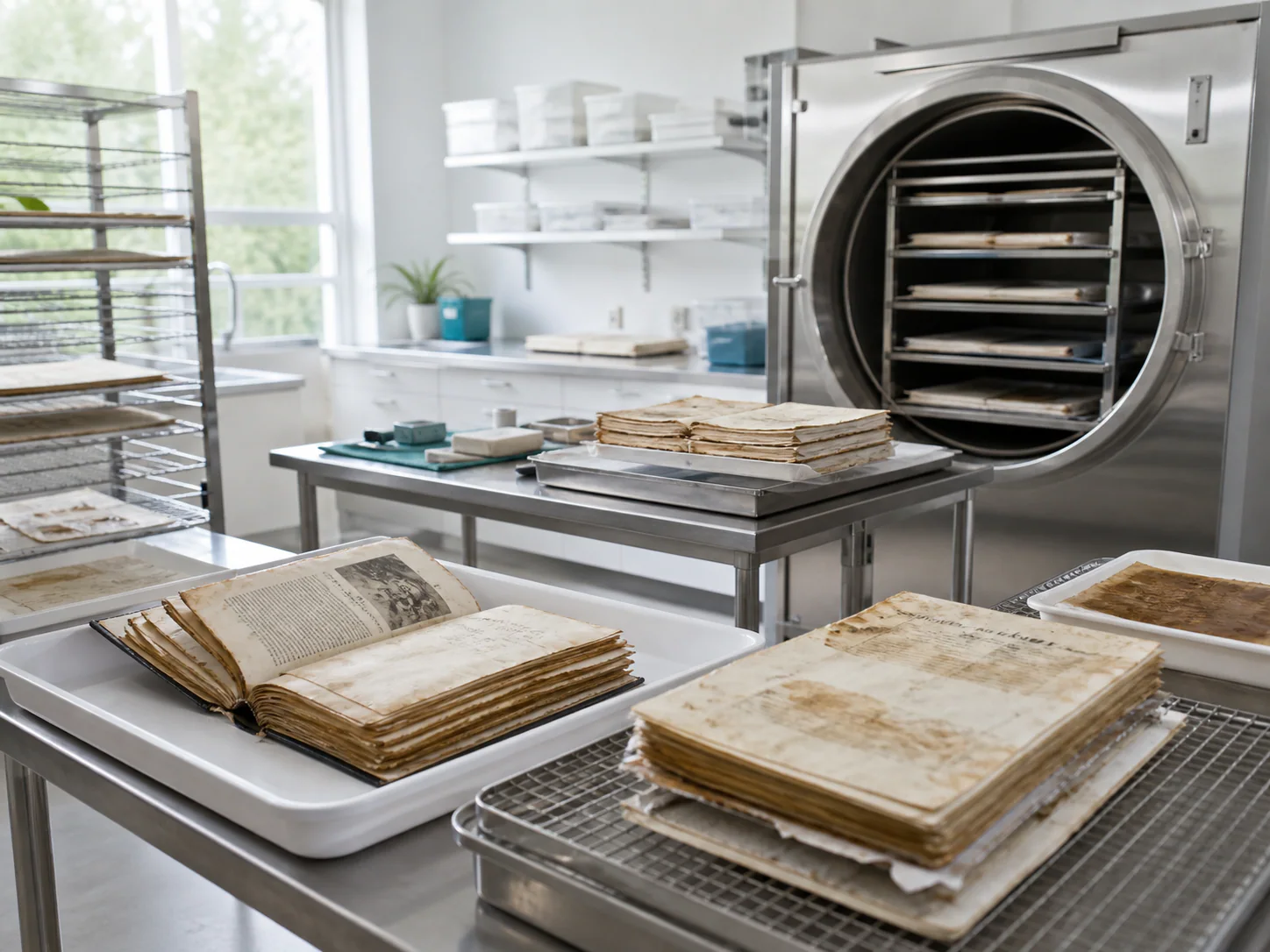
Books, manuscripts, maps, photographic materials, and documentary collections affected by water.
Emergency recovery planning for circulating and special collections.
Records, ledgers, contracts, files, and business archives requiring stabilization.
Structured handover between incident response, conservation, drying, and storage teams.
Mixed archive and paper collections affected by leaks, floods, or emergency discharge.
Our Approach
Make the site safe, remove free water, separate materials, prioritize risks, and slow further damage.
Move collections into planned holding conditions and manage temperature, humidity, airflow, and isolation.
Apply the selected freeze-drying, low-temperature, or other approved recovery pathway.
Inspect outcomes, document work, rehouse materials, and plan continued monitoring.
Resources & Guides
Review stabilization, freezing and freeze-drying considerations for affected books and archives.
Read Guide →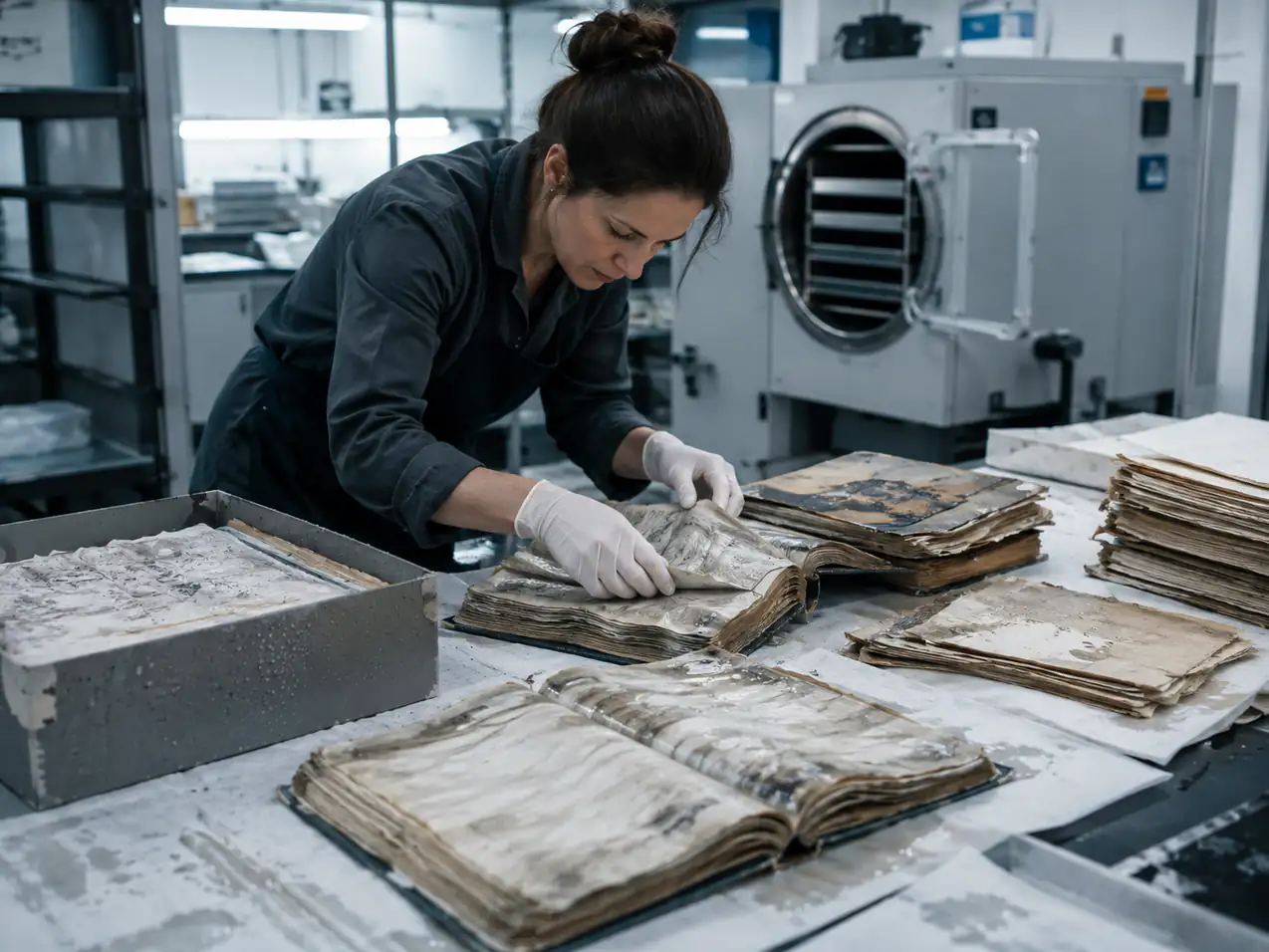
Prepare initial assessment, triage, movement, batch and documentation steps for recovery.
Explore Guides →
Explore confidential-project references for collection recovery and workflow planning.
Explore Cases →
View published equipment and factory content, with more recovery topics in preparation.
Watch Videos →
Common Questions
Confirm that the site is safe, stop or isolate the water source where authorized, and contact the institution’s emergency and conservation leads. Record affected areas, identify priority collections, separate wet materials from unaffected holdings, and establish clean handling routes. Avoid opening stuck volumes or pulling apart adhered sheets. The initial goal is stabilization and informed triage; drying decisions should follow assessment of materials, contamination, exposure, volume, and available capacity.
Freezing can provide temporary stabilization when the volume exceeds immediate drying capacity, priorities are still being sorted, or suitable materials cannot be treated promptly. It can slow further change and create time to plan batches, logistics, and the final drying route. Freezing is not appropriate for every collection component. Coated papers, photographs, vellum, composite objects, sensitive media, and contaminated materials require specialist screening before any batch is frozen.
Air drying is generally suited to manageable quantities that can be safely handled and spread out with adequate space and supervision. A controlled low-temperature room supports larger organized workflows with planned airflow and environmental management. Freeze drying removes moisture from suitable frozen materials under controlled equipment conditions and can support substantial batches. Selection depends on materials, binding and media, wetness, contamination, volume, urgency, space, and acceptable handling risk.
These materials should not be grouped automatically with ordinary paper and books. Coated sheets may adhere, photographic materials can contain sensitive layered structures, and vellum can distort substantially as moisture changes. Their condition, construction, media, exposure, and current state must be assessed before freezing or freeze drying. Separate handling or a different drying method may be required. When material identification is uncertain, isolate the item and obtain specialist conservation advice.
Priorities combine significance, uniqueness, access needs, material vulnerability, condition, contamination, and the likelihood that timely action will improve the outcome. Capacity planning considers affected volume, batch separation, handling space, equipment availability, packaging, staffing, and downstream rehousing. Records should link collection identifiers to initial condition, exposure, stabilization decisions, selected drying route, batch history, outcome review, and follow-up needs so that recovery remains traceable from incident response to safe storage.
Need Help Now?
Share the incident, collection materials, water exposure, volume, and site conditions so the recovery pathway can be assessed.