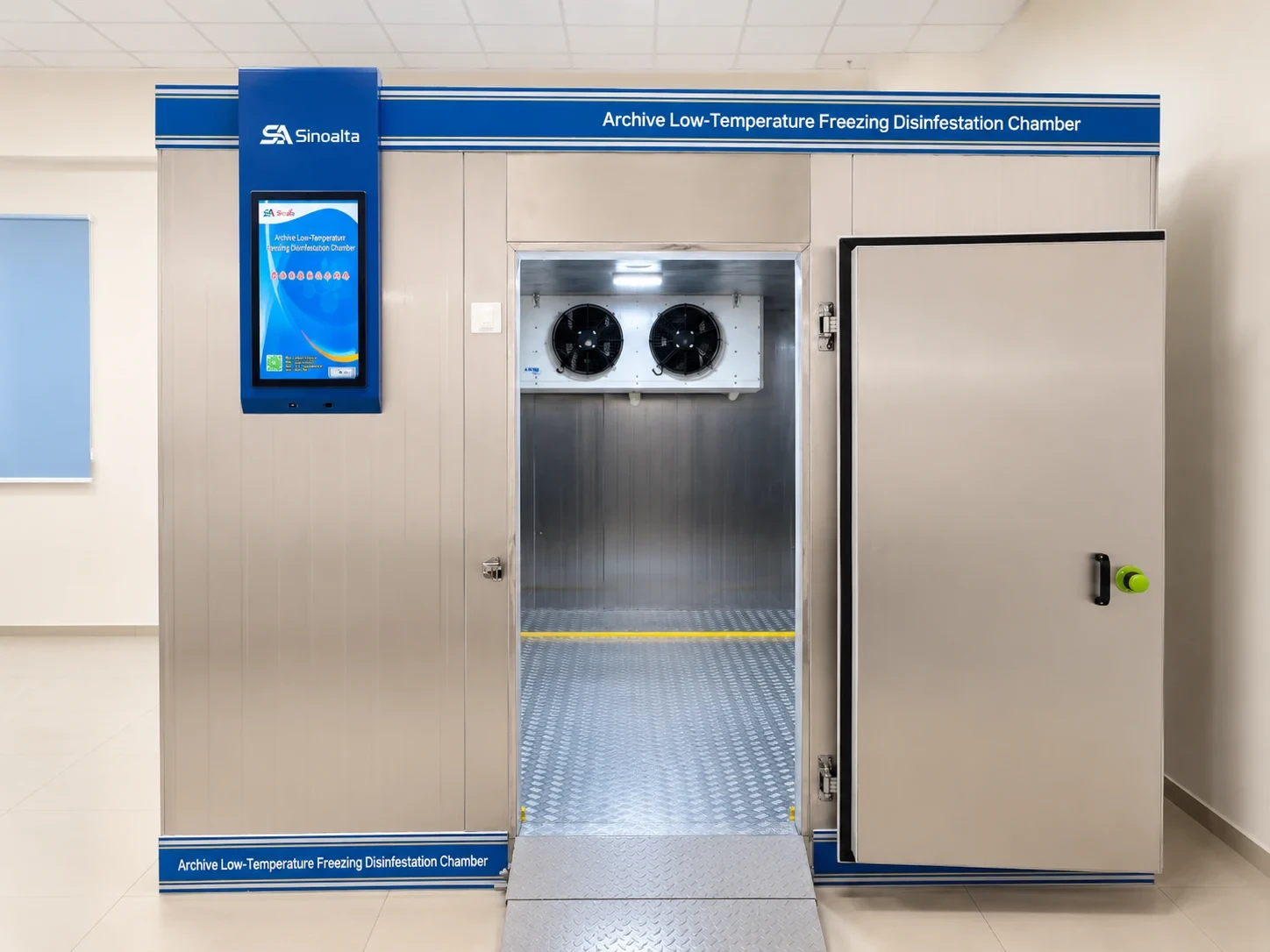
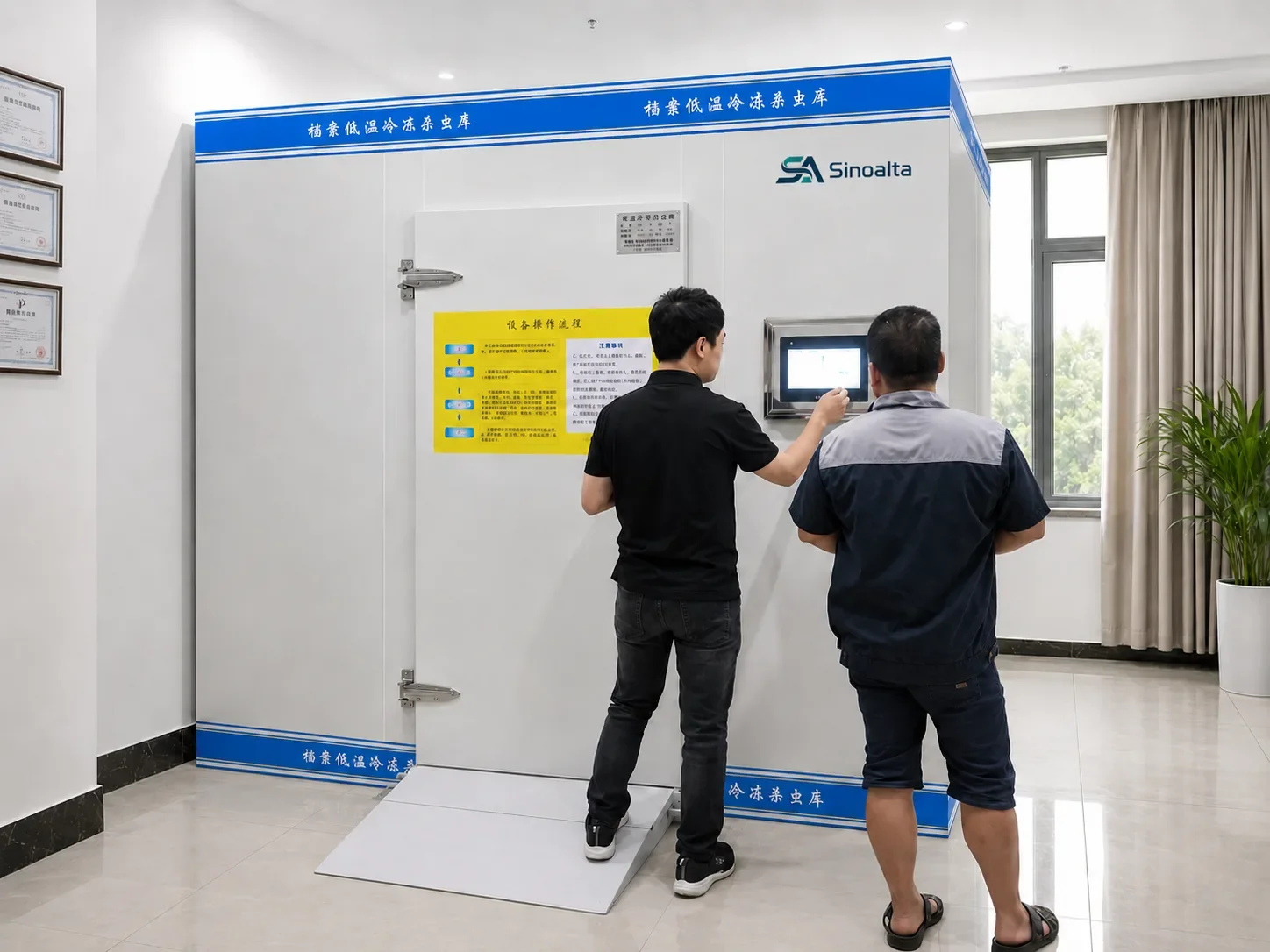
Product Positioning
For low-temperature treatment, temporary isolation and pre-conservation processing of collection materials; the system can be designed according to the treatment objects, space and workflow.
Product Name and Application Positioning
Original Chinese product name: Archive Low-Temperature Disinfection and Recovery Room
Application names: Book-block/archive-block separation and recovery equipment; disaster-damaged archive emergency recovery equipment
Primary uses: separation and release of archive blocks, recovery of damp and water-immersed archives, atmospheric-pressure low-temperature drying and recovery, and restoration of the original archive form.
The archive-block separation and recovery equipment is used to separate, release and recover archive blocks. Under low-temperature conditions, the archive block is opened and adhered sheets are separated without manual opening, enabling non-destructive recovery and restoration of the original archive form.
The disaster-damaged archive emergency recovery equipment is used to recover and rescue disaster-damaged archives. It uses low-temperature drying to recover damaged archives and restore their original form, providing efficient, safe and non-destructive recovery to rescue and protect archival resources.
Disaster-damaged archives refer to archives affected by flooding, inundation or immersion, in which paper pages are highly susceptible to adhesion and offsetting of written content.
Core Technology and Working Principle
Atmospheric-pressure low-temperature drying is used as the core technology. The recovery temperature is -10–20°C and the recovery humidity is 10%–40% RH, enabling non-destructive recovery of archive blocks.
Under atmospheric-pressure low-temperature conditions, archive blocks are separated, released and dried. During recovery, the archives are protected from physical and chemical damage, ensuring that physicochemical properties including writing, tensile strength, folding endurance, bursting strength, tear strength and pH value are not affected.
Non-destructive recovery of disaster-damaged archives uses atmospheric-pressure low-temperature drying at a recovery temperature of -20°C and a drying level equivalent to 10%–40% RH. Compared with conventional air drying, sun drying and hot-air drying, low-temperature drying slows decomposition of water-immersed archive paper, slows migration of aqueous writing and offsetting between pages, and causes moisture between sheets to expand and increase the sheet spacing, preventing archive blocks from forming.
Low-temperature drying prevents water-immersed archives from becoming a single frozen mass after freezing and inhibits archive pests and mould. It fixes writing so that it does not bleed, spread or migrate, preserving recorded information. Atmospheric-pressure low-temperature drying does not harden the paper surface and keeps the archive form essentially unchanged.
Archive-Block Recovery Process
- Cleaning and dust removal
- Soaking and separation
- Freezing contraction
- Thawing expansion
- Drying and layer separation
- Fine separation
- Backing and mending
- Trimming
Process Description
- Freezing contraction: freezing contraction below the freezing point of 0°C releases and separates the archive block.
- Thawing expansion: thawing expansion above the freezing point of 0°C opens and separates the archive block.
- Low-temperature drying: drying and recovery under low-temperature conditions restores the original archive form.
Product Functions and Technical Advantages
- Efficient recovery: Archive blocks are opened and recovered quickly and efficiently, with batch-recovery capability.
- Non-destructive recovery: Low-temperature drying and release technology eliminates manual opening and avoids secondary mechanical damage, preserving archive integrity.
- Low-temperature protection: Archive blocks are opened at low temperature to prevent mould and ageing; low-temperature preservation protects archives from damage.
- Low-temperature recovery of disaster-damaged archives: Low-temperature technology dries and recovers disaster-damaged or water-immersed archives.
- Rapid rescue of disaster-damaged archives: Disaster-damaged archives are recovered within 12 hours and water-immersed archives within 24 hours, rescuing damaged archives and protecting archive safety.
- Non-destructive recovery function: Proprietary patented atmospheric-pressure low-temperature drying and recovery technology prevents adhesion, block formation, mould and pest infestation.
- Archive recovery quality: Under low-temperature drying, archive writing does not bleed, spread or migrate, preserving recorded information and completely restoring the original archive condition.
- Intelligent recovery: One-button startup, simple operation, intelligent control, automatic recovery and unattended management throughout the process.
- Simple operation: Intelligent control allows general personnel to perform archive-block recovery.
Configuration and Project Selection
Treatment-space capacity, layout, loading arrangement, environmental control and operating workflow are configured according to the archive condition, recovery process and installation space. Project selection should confirm the treatment protocol, handling method and acceptance criteria before implementation.
Application Solutions
Book-Block / Archive-Block Separation and Recovery
Used to separate, release and recover archive blocks. Freezing contraction, thawing expansion and low-temperature drying separate adhered sheets layer by layer, followed by fine separation, backing and mending, and trimming to restore the original archive form.
Emergency Recovery of Disaster-Damaged Archives
Used to rescue and recover archives affected by flooding, inundation and immersion. Atmospheric-pressure low-temperature drying reduces paper decomposition, aqueous-writing migration and page offsetting, prevents archive blocks from forming, and restores recorded information and the original form.