Product Positioning
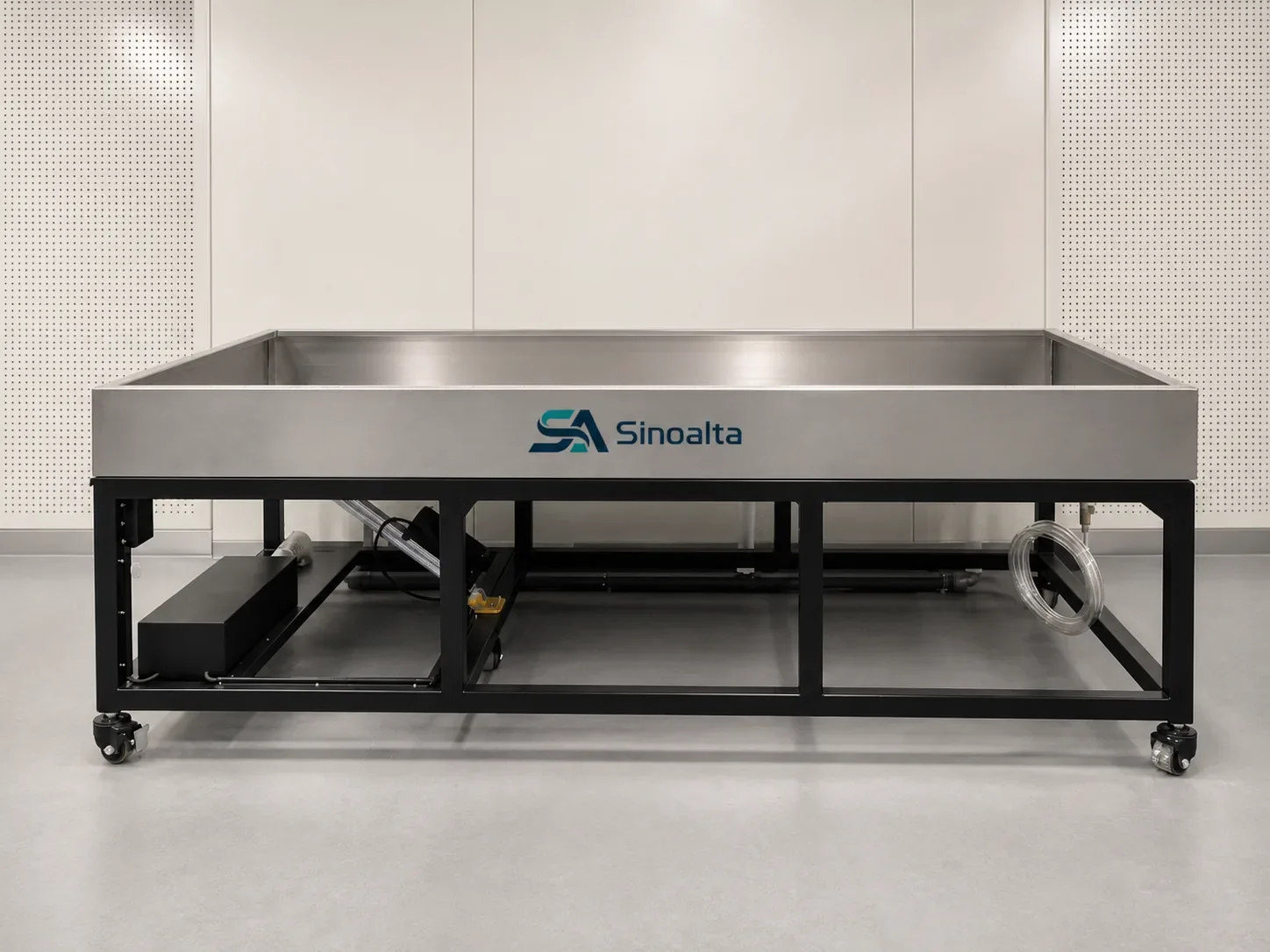
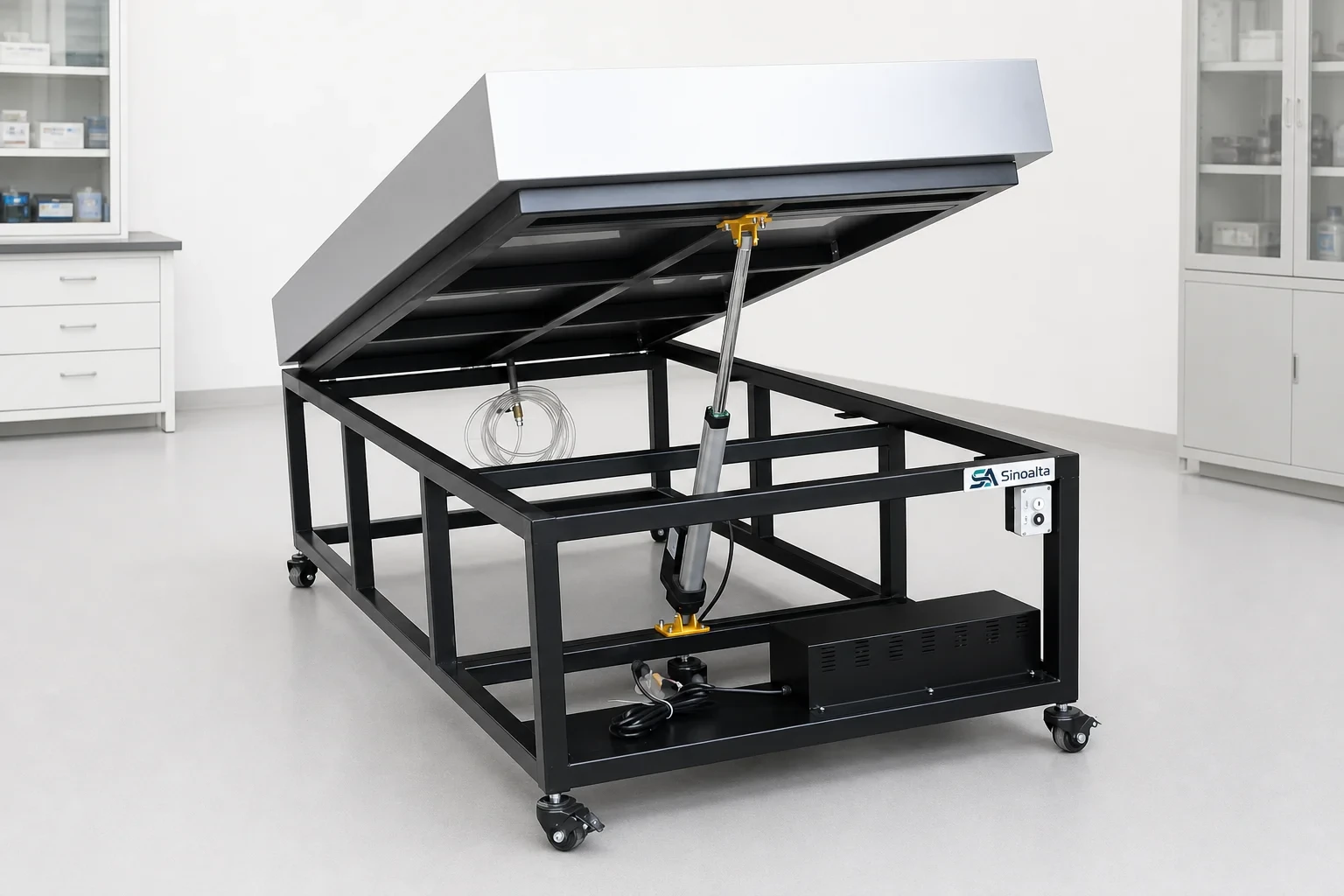
Designed for conservation laboratories that carry out controlled washing, humidification and other aqueous procedures on paintings, paper artworks and related flat objects. Unlike a fixed horizontal washing surface, its adjustable basin orientation supports process and operator requirements. Selection should consider object dimensions, planned wet-treatment steps and the available laboratory space.
Product Overview
The table provides a dedicated work area for wet treatment where the basin angle can be adapted to the procedure. It is intended for objects already assessed as suitable for aqueous intervention; conservators should evaluate media stability, supports, previous repairs and treatment objectives before use. The table supports the workflow but does not determine whether washing or humidification is appropriate for a particular object.
Main Functions
- Painting washing
- Wet treatment of flat cultural objects
- Humidification of paper artworks
- Washing operations during treatment
- Support for wet-treatment processes
Equipment Form
| Item | Description |
|---|---|
| Equipment form | Tilting conservation washing table |
| Primary use | Washing and wet treatment of paintings and related flat cultural objects |
| Process configuration | Configured around the conservation workflow |
Suitable Applications
- Controlled washing of paintings assessed for aqueous treatment
- Humidification and wet treatment in Chinese-painting conservation
- Aqueous procedures for compatible paper artworks
- Wet treatment of appropriately assessed flat cultural objects
- Laboratory workflows needing a dedicated washing surface
- Processes where an adjustable basin orientation aids handling
Customization
Washing-table dimensions, tilting structure and related operating configurations can be specified around the largest expected treatment objects, handling sequence, operator access and laboratory conditions. Project review should also confirm how the table will fit the intended aqueous-treatment workflow. Final suitability remains dependent on object-specific examination and the conservation method selected by the responsible professional.
Selection Questions
Which objects are appropriate for this washing table? It is intended for paintings, paper artworks and related flat objects that a conservator has already assessed as suitable for aqueous washing, humidification or wet treatment. Water-sensitive media or unstable constructions require a different treatment decision.
Why choose a tilting table rather than a fixed surface? The adjustable basin orientation supports workflows where angle affects access, handling or liquid movement. A fixed washing surface may be sufficient when the procedure does not require this adjustment.
What must be confirmed for a project? Define the largest treatment-object dimensions, required basin orientation, operator access, room conditions and the sequence of aqueous procedures. Allowance for loading, drainage and adjacent wet-handling work should also be reviewed. These details guide table dimensions, tilting structure and operating configuration without predetermining the treatment method.