Finding an insect beside a display case, inside a storage box or on a collection object does not automatically mean the whole collection needs treatment.
The correct first response is to contain the potential problem, preserve evidence, determine whether the infestation is active and then choose the least disruptive effective action.
That sequence matters. Museum integrated pest management (IPM) is not simply a list of eradication methods. It is a risk-based process that combines exclusion, housekeeping, quarantine, monitoring, identification, targeted treatment and documentation.
The following workflow is designed for museums, archives, libraries and collection stores that have discovered possible insect activity and need to decide what to do next.
1. Do not begin with treatment
The temptation after finding insects is to move immediately to fumigation, freezing or anoxia. That can create three problems:
- staff may treat material that is not actively infested;
- moving objects before containment can spread pests;
- treatment may be selected before object compatibility and pest biology are understood.
Getty Conservation Institute pest-management training places integrated pest management within preventive conservation and gives equal importance to pest identification, prevention, monitoring and eradication options such as inert gases and freezing.
The first objective is therefore control of movement and information, not immediate eradication.
2. Isolate the affected object or group
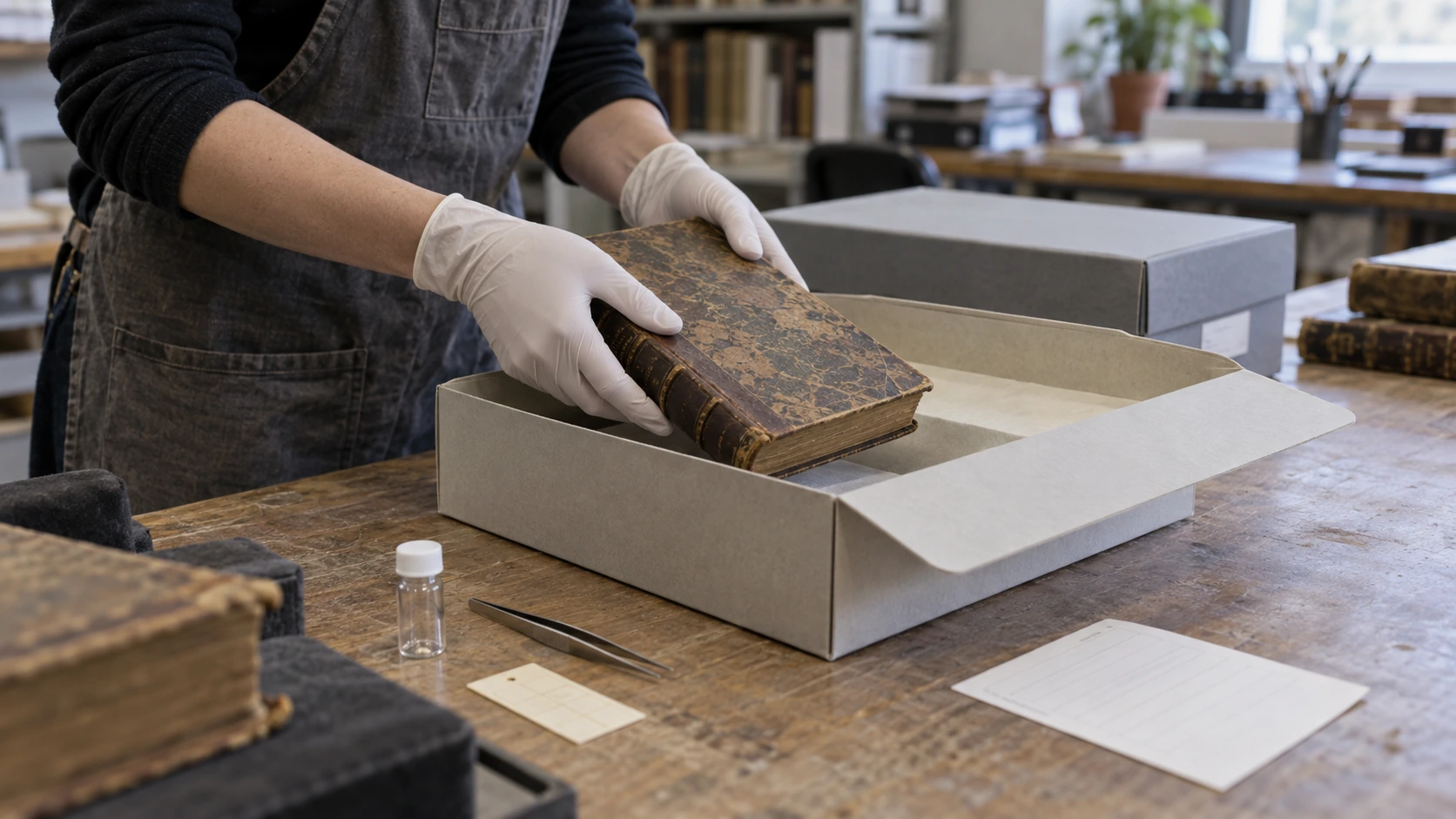
If an object is suspected of active insect infestation, separate it from the rest of the collection as soon as this can be done safely.
Isolation should be planned so that staff do not carry insects, larvae or debris through storage areas while moving the item.
For movable objects, a temporary quarantine enclosure may be appropriate. CCI guidance recommends quarantining and examining incoming or suspect objects and notes that containment in heavy polyethylene can be used when infestation status is uncertain.
During isolation:
- keep the object identification and location record with it;
- avoid aggressive cleaning before evidence has been documented;
- contain loose debris where possible;
- record the date, room and exact place where the evidence was found;
- inspect packaging, shelves and adjacent objects.
If the object is too large or fragile to move safely, isolate the immediate zone and bring the inspection process to the object instead.
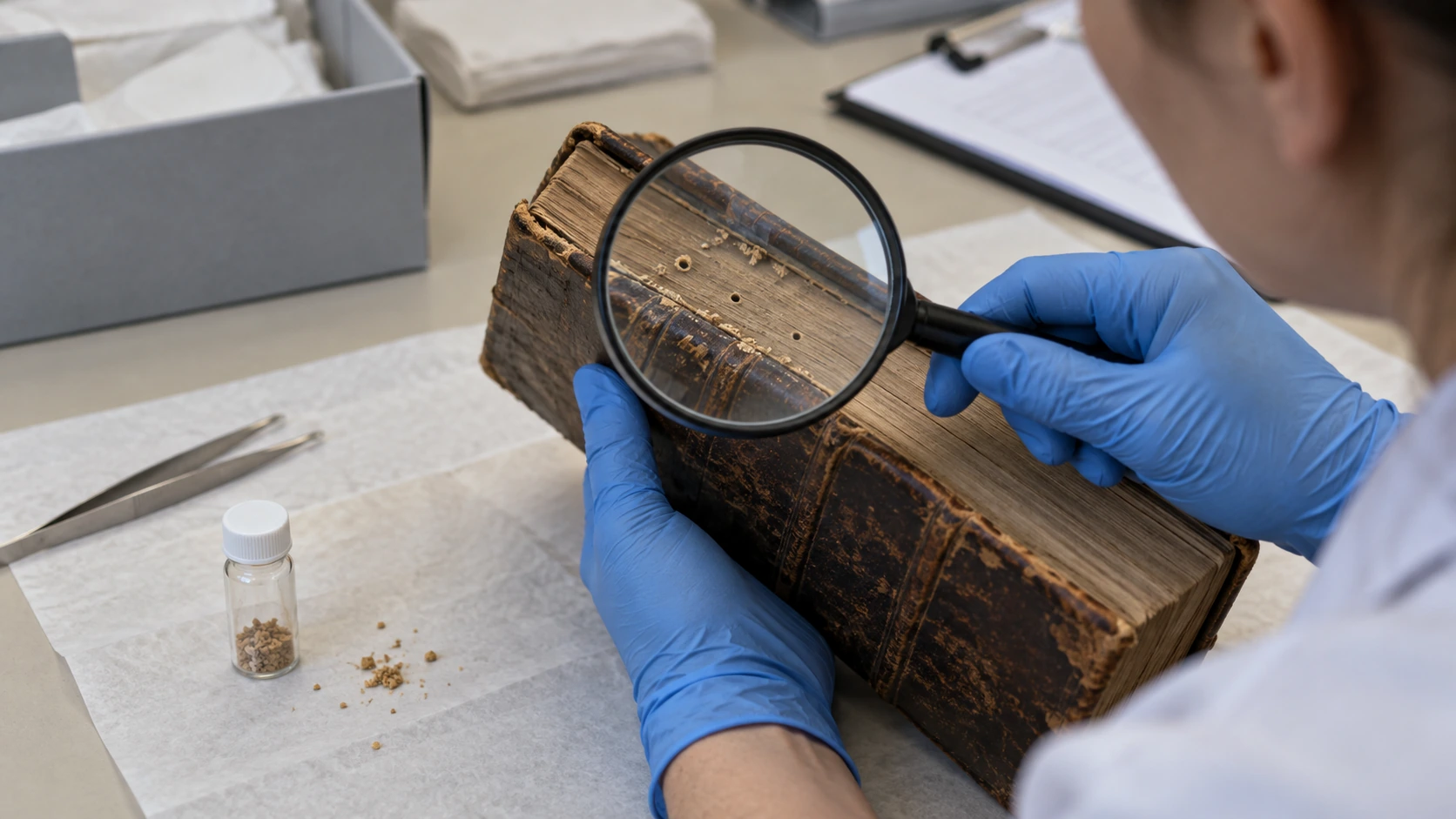
3. Preserve and document evidence
Before vacuuming or discarding anything, document what was found.
Useful evidence includes:
- live adult insects;
- larvae;
- eggs;
- cast skins;
- frass or powdery debris;
- webbing;
- fresh exit holes;
- damaged fibres, paper, wood or other organic material;
- trap catches from nearby monitoring points.
Take clear photographs and, where practical, retain insect specimens in a labelled container for identification.
A useful pest record contains:
| Field | What to record |
|---|---|
| Date | when evidence was found |
| Location | room, cabinet, shelf, case or trap |
| Object | accession or collection reference |
| Evidence | adult, larva, frass, damage, trap catch |
| Quantity | approximate count |
| Pest ID | confirmed, suspected or unknown |
| Action | isolated, monitored, treated, no action yet |
CCI guidance on pest detection stresses the value of logs and records because they reveal patterns over time and support better decisions than isolated observations.
4. Identify the insect before choosing a treatment
Not every insect found in a museum is a collection pest.
Some insects are accidental visitors. Others may indicate a building issue rather than an object infestation. Treatment decisions should therefore be based on identification as far as possible.
Important questions include:
- What species or pest group is present?
- Which life stage was found?
- What material does it feed on?
- Is the collection material actually susceptible?
- Could the insect have entered from outside?
- Is there evidence of reproduction inside the collection area?
Common museum pest risks include insects that attack keratin, cellulose, starch, wood or stored organic material. Different collections have different vulnerabilities. CCI guidance for textiles, natural-history collections and plant materials illustrates why pest risk must be tied to material rather than treated as one generic problem.
If staff cannot identify the specimen confidently, use a specialist, an established museum-pest identification resource or a qualified pest professional familiar with heritage collections.
5. Decide whether the infestation is active
Old damage is not the same as active infestation.
An old exit hole in a wooden object may record an infestation from decades ago. Fresh frass, larvae, live adults, repeated trap catches or new damage provide stronger evidence of current activity.
Look for:
- fresh, pale or loose frass;
- live insects at different life stages;
- repeated catches over several inspections;
- new holes or feeding damage;
- pest evidence in adjacent objects or furniture;
- activity associated with a specific microenvironment, packaging material or food source.
If evidence is uncertain, containment and monitoring may be more appropriate than immediate treatment.
6. Inspect the surrounding collection and environment
Once active or probable infestation is identified, the next question is scale.
Inspect:
- objects immediately adjacent to the affected item;
- the cabinet or shelving unit;
- floor-wall junctions;
- dark, undisturbed areas;
- packing and wrapping materials;
- display plinths and case interiors;
- nearby traps;
- food, plant material or waste sources;
- routes from loading docks, doors, vents and service spaces.
The objective is to distinguish a single-object infestation from a localised room problem or a building-level pest pathway.
This is where IPM becomes more important than treatment alone. If the source is not addressed, successfully treating one object may simply reset the cycle.
7. Use monitoring to define the pattern
Traps are useful when they answer a question.
A monitoring plan should help determine:
- where activity is concentrated;
- whether the population is increasing or declining;
- whether insects are associated with a specific route or collection;
- whether treatment and preventive measures are working.
Trap numbers, locations and inspection dates should be consistent enough that results can be compared over time.
Do not interpret a trap count in isolation. A single catch at a loading entrance and repeated catches inside a closed collection cabinet have very different implications.
8. Decide whether treatment is actually necessary
Treatment is appropriate when active infestation has been confirmed or when risk is sufficiently high that targeted eradication is justified.
Before choosing a method, define:
- pest species and life stage;
- object material and condition;
- dimensions and quantity;
- whether objects can be packed or moved;
- required treatment throughput;
- available quarantine space;
- time constraints;
- acceptable environmental exposure during treatment.
The treatment should be the result of this assessment, not the starting point.
9. Compare treatment routes by compatibility and process control
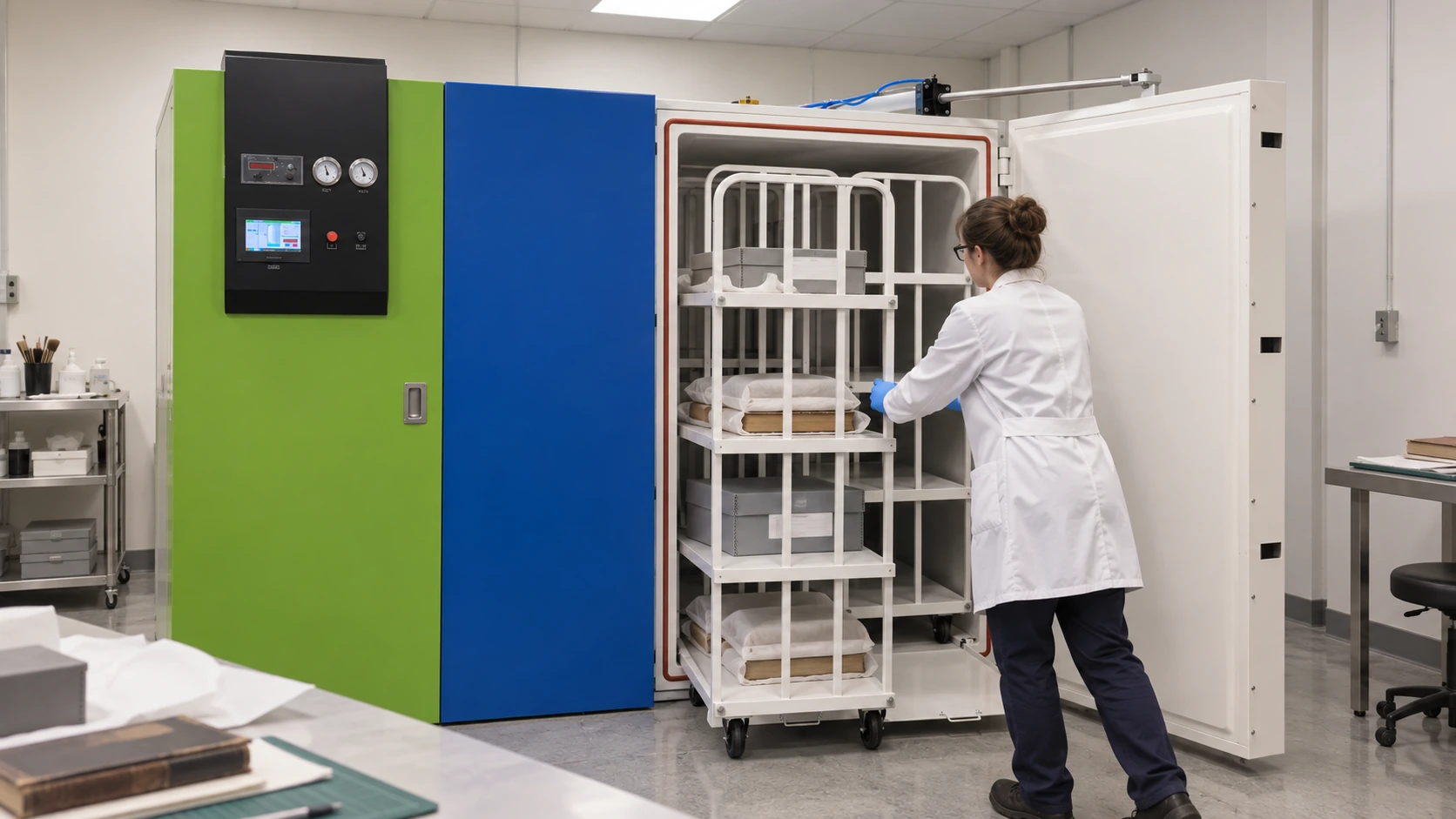
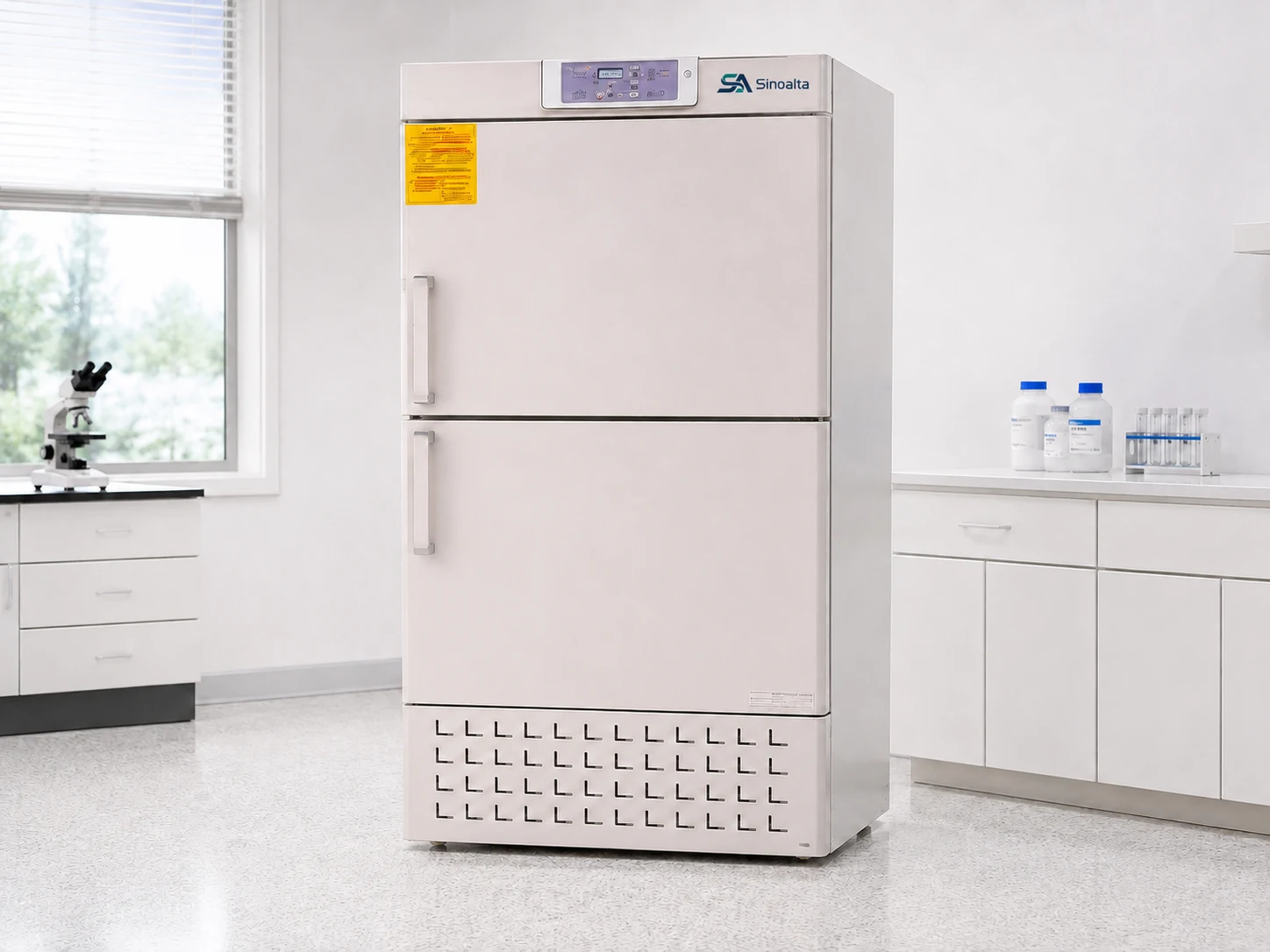
Museums may use different non-chemical methods depending on the pest and the collection. Two widely used routes are controlled low-temperature treatment and nitrogen anoxia.
Controlled low-temperature treatment
Freezing can be effective for susceptible insect pests when objects are compatible with the process and the treatment protocol is properly controlled.
Before selecting freezing, review whether the object contains materials that may be vulnerable to low temperature, condensation, dimensional change or repeated thermal cycling. Packaging and temperature control are part of the treatment, not secondary details.
Nitrogen anoxia
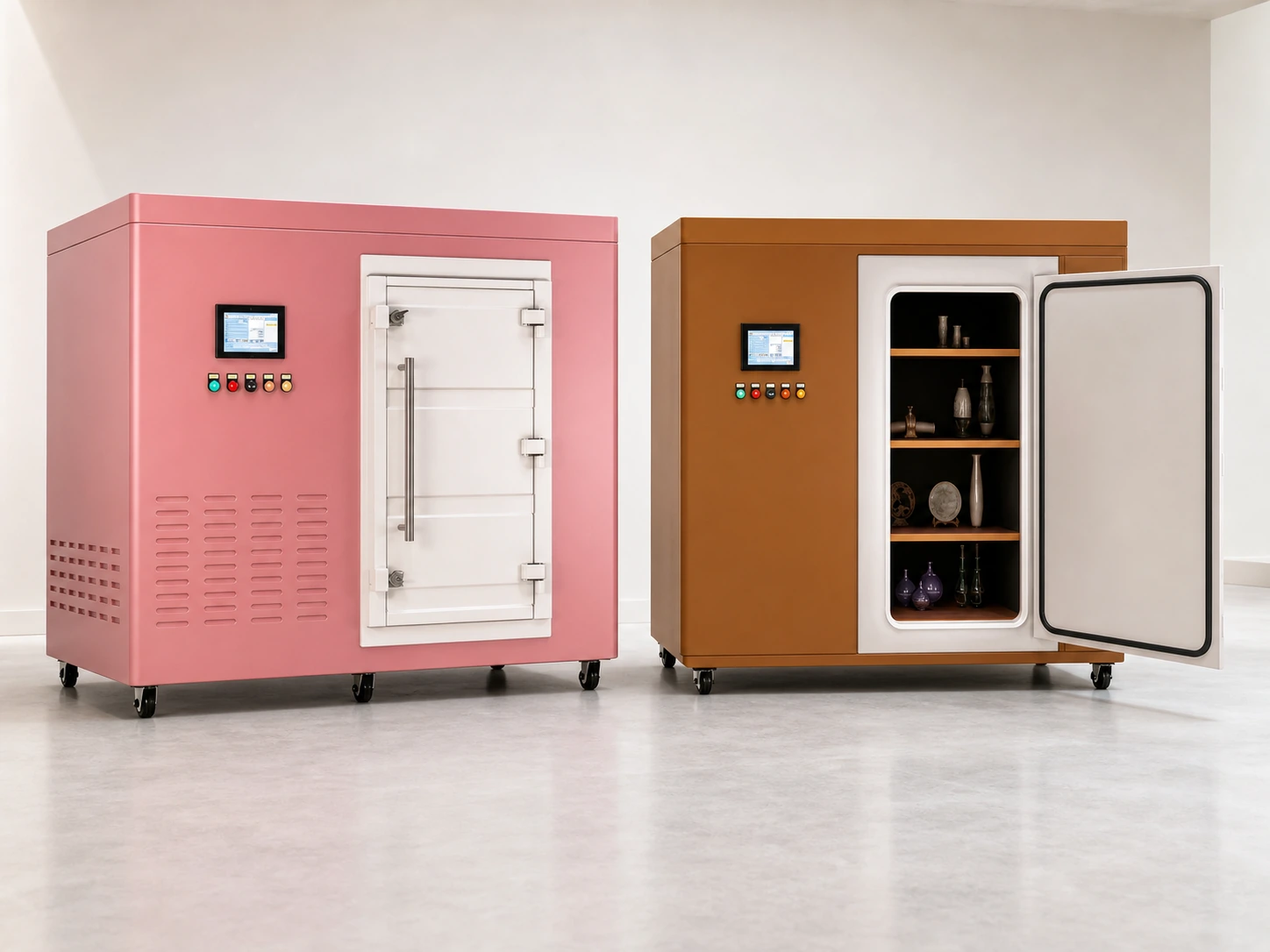
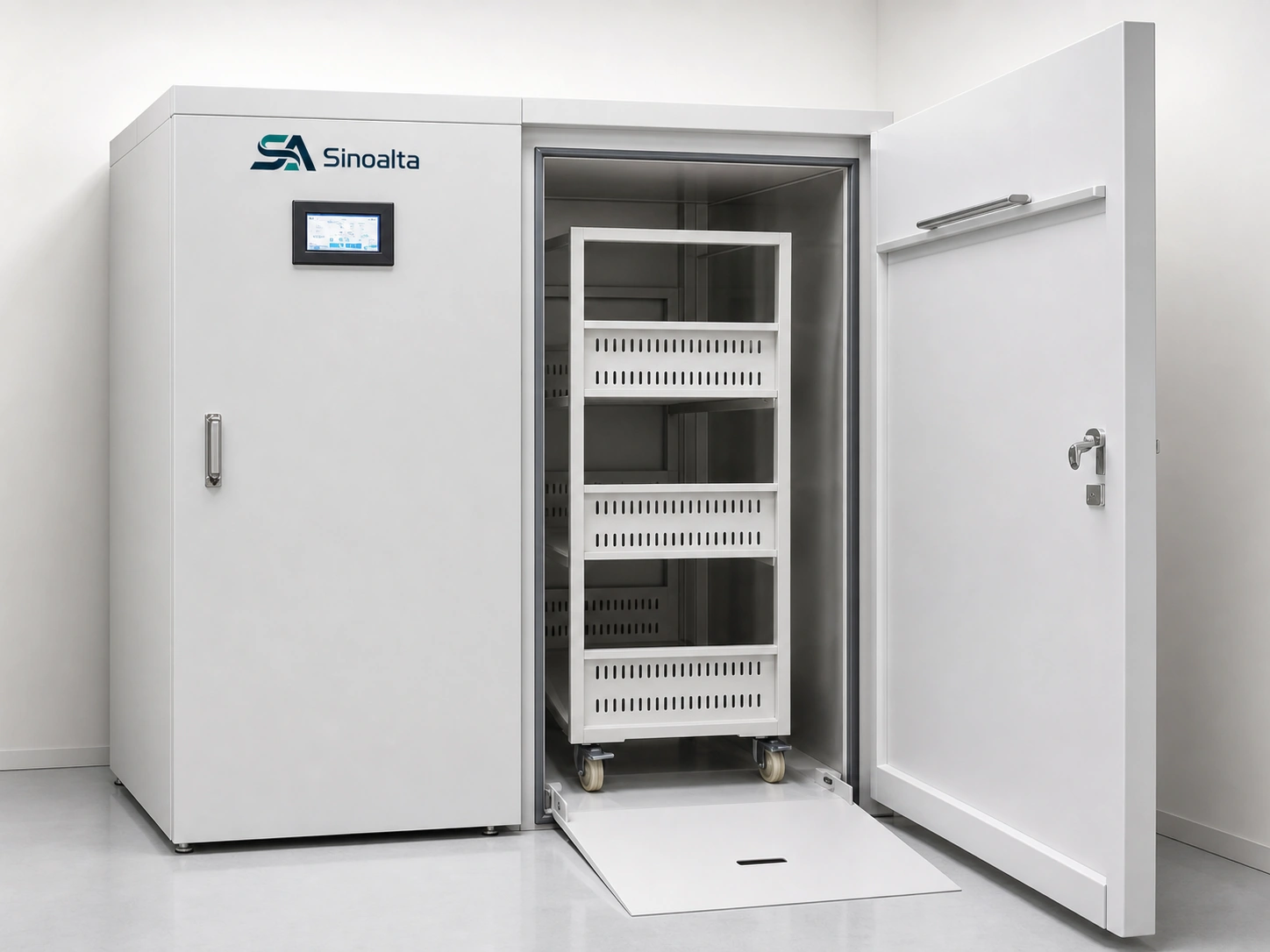
Nitrogen anoxia uses an oxygen-depleted atmosphere to eradicate susceptible insect pests. Getty Conservation Institute research demonstrated the effectiveness of oxygen-free or very low-oxygen environments for museum insect control and investigated both barrier-film bags and purpose-built treatment systems.
An anoxia process requires more than simply introducing nitrogen. It depends on:
- enclosure integrity;
- oxygen measurement;
- controlled gas supply;
- treatment duration;
- temperature and humidity conditions;
- documentation and verification.
The exact treatment parameters should be established for the target pest, object and system. They should not be copied as a universal number from another project.
Other routes
Depending on collection type and institutional policy, other specialist treatments may be considered. Chemical treatments may be subject to regulatory, health, object-compatibility and residue concerns and should only be used under appropriate professional control.
10. Treatment should include acceptance criteria
A controlled treatment programme should define what “complete” means before the batch begins.
Possible records include:
- batch ID;
- object list;
- start and end time;
- treatment conditions;
- sensor records;
- alarms or deviations;
- operator notes;
- post-treatment inspection;
- release authorisation.
For controlled-atmosphere systems, downloadable treatment records can be valuable because they turn the process into auditable evidence rather than an undocumented event.
11. Clean and rehouse after treatment
Eradication does not remove pest debris or correct the conditions that allowed infestation.
After treatment:
- inspect the object again;
- remove loose insect debris using an appropriate conservation-cleaning method;
- replace contaminated or unsuitable packing materials where necessary;
- clean the quarantine area and equipment;
- review storage hygiene;
- repair building gaps or routes where relevant;
- return the object only when release criteria are met.
Cleaning should be appropriate to object condition. Fragile, friable or mould-affected material may require a conservator rather than routine vacuuming.
12. Continue monitoring after the object returns
Post-treatment monitoring is essential because successful eradication does not prove the wider environment is pest-free.
Continue to review:
- traps near the original location;
- neighbouring objects;
- new acquisitions and loans;
- housekeeping issues;
- building access points;
- repeated pest species or seasonal patterns.
CCI describes an IPM programme as a way to move pest incidents from crisis response toward early detection and controlled management.
Decision tree: what to do after finding insects
Use this simplified sequence as a starting point:
Insect or pest evidence found ↓ Contain and document ↓ Identify pest and inspect object ↓ Is there evidence of active infestation?
- No / uncertain → quarantine + monitor + inspect surroundings
- Yes → assess material + pest + scale
↓ Is treatment required?
- No → correct source + continue monitoring
- Yes → select compatible treatment route
↓ Treat under a documented protocol ↓ Inspect, clean, rehouse and release ↓ Continue IPM monitoring
Questions to answer before selecting a treatment system
For institutions considering freezing or nitrogen-anoxic treatment equipment, collect the following information first:
- target pest or suspected pest;
- object material;
- maximum object dimensions;
- batch quantity;
- desired treatment throughput;
- current quarantine workflow;
- whether treatment must be documented electronically;
- installation space;
- gas, power and ventilation conditions;
- operator training requirements.
This information is more useful than asking for “a museum pest-control machine” without defining the process.
Frequently asked questions
Should a museum treat an object as soon as one insect is found?
Not necessarily. First contain the object or area, document the evidence, identify the insect and determine whether the infestation is active. Immediate treatment without diagnosis can result in unnecessary object exposure and may fail to address the source of the problem.
What is the difference between museum pest control and IPM?
Pest control often refers to actions taken against an active pest problem. Integrated pest management is broader: it combines prevention, exclusion, housekeeping, quarantine, monitoring, identification, targeted treatment and long-term review.
When should an infested object be quarantined?
Quarantine is appropriate when infestation is suspected or confirmed and the object can be isolated without creating additional handling risk. New acquisitions and incoming loans are also common quarantine candidates.
Is anoxia always better than freezing?
No. Both methods have advantages and limitations. Selection depends on pest biology, object materials, object size, treatment volume, environmental requirements and available equipment. Compatibility should be reviewed before treatment.
What records should be kept during treatment?
Keep an object or batch list, treatment conditions, sensor data where applicable, start/end times, deviations, operator notes and post-treatment inspection results. The goal is a traceable treatment history.
Related Sinoalta resources
- Integrated Pest Management for Museums: https://sinoalta.com/resources/technical-guides/integrated-pest-management-for-museums/
- Museum & Archive Pest Control Solution: https://sinoalta.com/solutions/museum-archive-pest-control/
- Nitrogen Anoxia Technical Guide: https://sinoalta.com/resources/technical-guides/anoxic-disinfestation-nitrogen-anoxia/
- Pest Control & Controlled Atmosphere Systems: https://sinoalta.com/products/pest-control-controlled-atmosphere-systems/
Sources and further reading
- Getty Conservation Institute, Pest Management: https://www.getty.edu/projects/pest-management/
- Getty Conservation Institute, Nitrogen Anoxia Research: https://www.getty.edu/projects/nitrogen-anoxia-research/
- Canadian Conservation Institute, Preventing Infestations: Control Strategies and Detection Methods: https://www.canada.ca/en/conservation-institute/services/conservation-preservation-publications/canadian-conservation-institute-notes/preventing-infestations.html
- Canadian Conservation Institute, Detect Pests: https://www.canada.ca/en/conservation-institute/services/agents-deterioration/pests/detect-pests.html
- Canadian Conservation Institute, Pests – Agent of Deterioration: https://www.canada.ca/en/conservation-institute/services/agents-deterioration/pests.html