
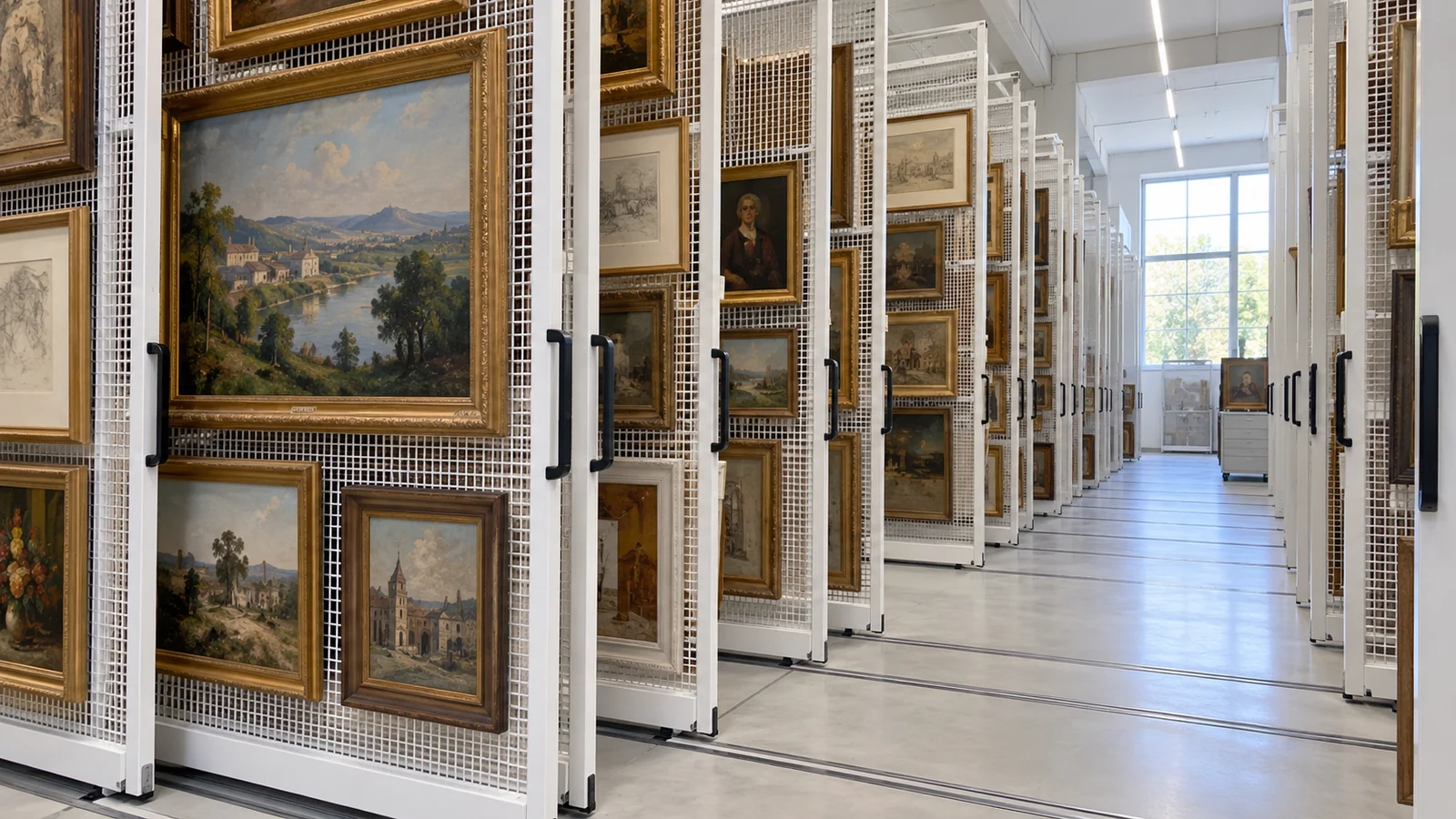
Pull-out screens can organise framed works in a limited space, but suitability depends on each work's structure, dimensions, weight and handling needs. Unframed, fragile or unusually large works may need another storage method.
Give the supplier the collection schedule, room conditions and planned handling procedure together.
Identify suitable works
Record framed works, frame stability, backing, size, weight and hanging hardware. A conservator should determine whether unframed paper, unstretched canvas or oversized works require flat, rolled or other specialised storage.
The Canadian Conservation Institute distinguishes storage needs for framed and unframed works and emphasises a stable environment, security and accessibility.
Do not judge a frame's suitability for hanging by appearance alone. Inspect existing fittings and frame condition, and record backing, support and special handling needs. Reserve separate provision where required.
Calculate screen count and usable space
Plan using the outside dimensions of each work and its hardware, spacing between objects and room for safe retrieval. Allow for collection growth and rearrangement.
Check overall dimensions against usable hanging area, screen travel and the aisle when extended. Fitting the rack in the room does not ensure there is space to operate it safely.
For works needing a turn or two handlers, simulate the entire route, including adjacent equipment, door swings and temporary resting space. This can reveal screens that would be inaccessible in practice.
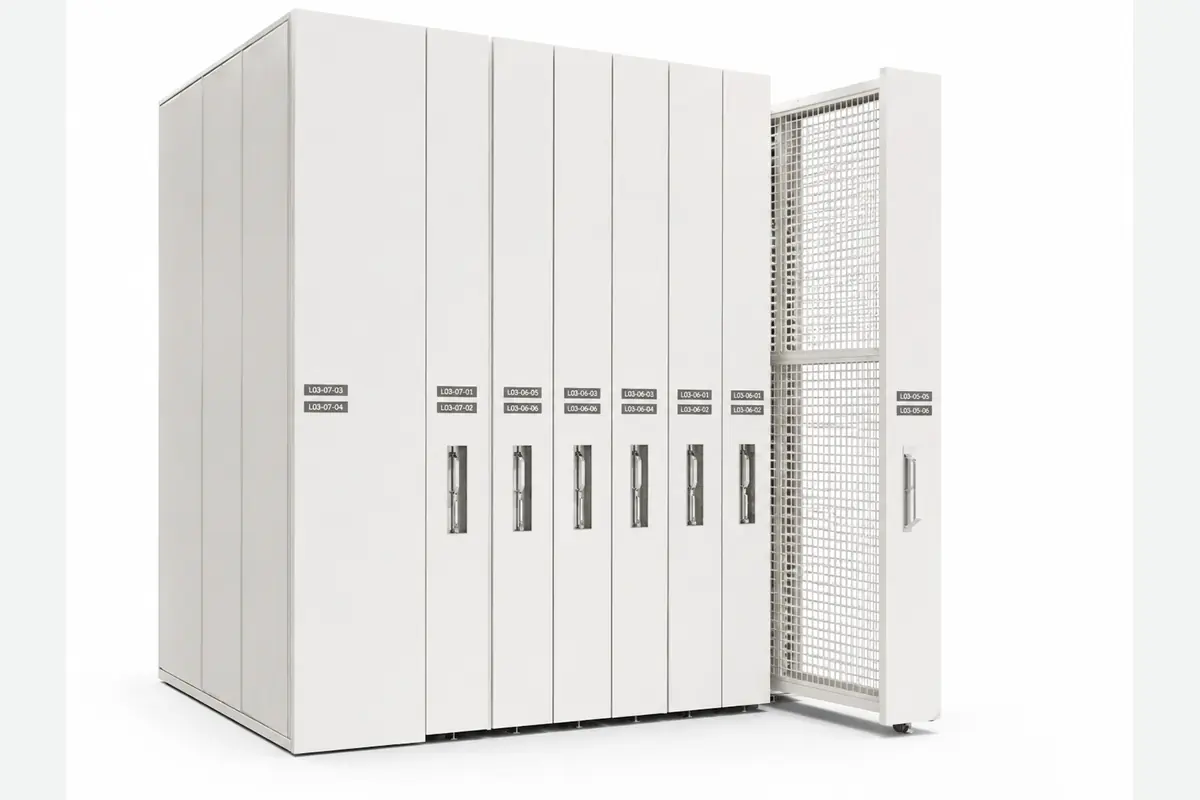
Check loads, hardware and collision risks
Provide maximum individual weight, total expected load per screen and distribution. Ask for rated conditions for screens, tracks and hangers and agree how project requirements will be verified.
Hardware must suit the frame and screen and prevent slipping or abrasion between works. Sensitive or unusual objects need a specific support strategy; standard hooks are not a universal solution.
Confirm building and installation conditions
Measure openings, lifts, floor, overhead clearance and the handling route. Check floor capacity, level, fixing and installation responsibilities, with a structural professional where needed.
Ask about track cleaning, screen maintenance, replacement parts and staff training. For powered movement, define electrical supply, controls and operation during faults.

Include trials and acceptance in the order
Inspect dimensions, screen count, finish, movement, fixings and identification. Use agreed test loads or mock objects to check access and handling space.
Before placing works on the rack, assess hardware, supports and handling procedures and record positions and responsibilities. Equipment performance and each artwork's suitability for hanging are separate decisions.
Prepare a hanging and retrieval schedule
Record representative works including frame and hardware dimensions, weight and number of handlers. Trial the screen arrangement with these figures rather than average sizes alone; identify oversized or unsuitable works separately.
Number screens according to the institution's collection system and record object locations. Single- or double-sided use requires checking clearance, support, visibility and staff access on each side; theoretical capacity should not simply be doubled.
For growing collections, ask about adding screens, hangers or modules and whether the room allows that expansion.
Frequently missed RFQ and installation details
Define who designs or installs track fixing, floor preparation, overhead clearance and anti-sway measures. Existing buildings may require coordination among surveyors and structural specialists; establish what is included in the quotation.
Checks should not be limited to an empty rack. A project may use agreed simulated loads to inspect movement, positioning and staff access, with conditions recorded. Actual loading must follow the equipment instructions and institutional procedure.
After installation, inspect hardware, frames and screen positions. If abrasion, looseness or difficult retrieval occurs, review support and workflow before deciding whether the layout or equipment needs modification.
Sources
Share an artwork schedule, maximum dimensions and weights, and a room plan to discuss screen layout and handling space.
Explore related equipment → · Discuss your project →