A quotation for conservation equipment is a starting point. Suitability for the collection, installation constraints, operator training and acceptance against the project requirements all affect long-term use.
A useful evaluation puts competing proposals against the same brief. Define the objective and constraints first, then ask each supplier to explain its configuration, delivery scope and outstanding assumptions.
Define the preservation objective and scope
Describe the collection materials, quantities, dimensions and known risks. Distinguish routine storage, conservation treatment, pest management and disaster recovery: equipment with a similar name may be configured very differently for each.
State whether the project includes design coordination, manufacture, installation, commissioning, training and maintenance. Ask suppliers to identify assumptions wherever a parameter has not yet been confirmed.
- Collection types, maximum dimensions and weights
- Risks to address, expected workload and frequency
- Site constraints, delivery schedule and professional involvement
Check that the proposal addresses the work
Ask how each item supports the workflow: how objects enter and leave, how staff observe, record, clean and maintain the equipment, and which tasks remain the institution's responsibility.
Where alternatives are offered, compare usable workspace, connections, maintainability, operation and future expansion. Request written reasons for the selection and its limitations rather than relying on external dimensions or a single feature.
Review technical documents and evidence
Request a layout, equipment schedule, utility interfaces, material information, instructions and suggested acceptance items. For requirements involving environmental control, sealing, load or treatment performance, agree on the method, measurement points, duration and pass criteria.
Certificates and reports should correspond to the equipment and configuration actually supplied. Similar projects or sample tests provide context, but do not automatically validate this project.
Compare delivery and site support
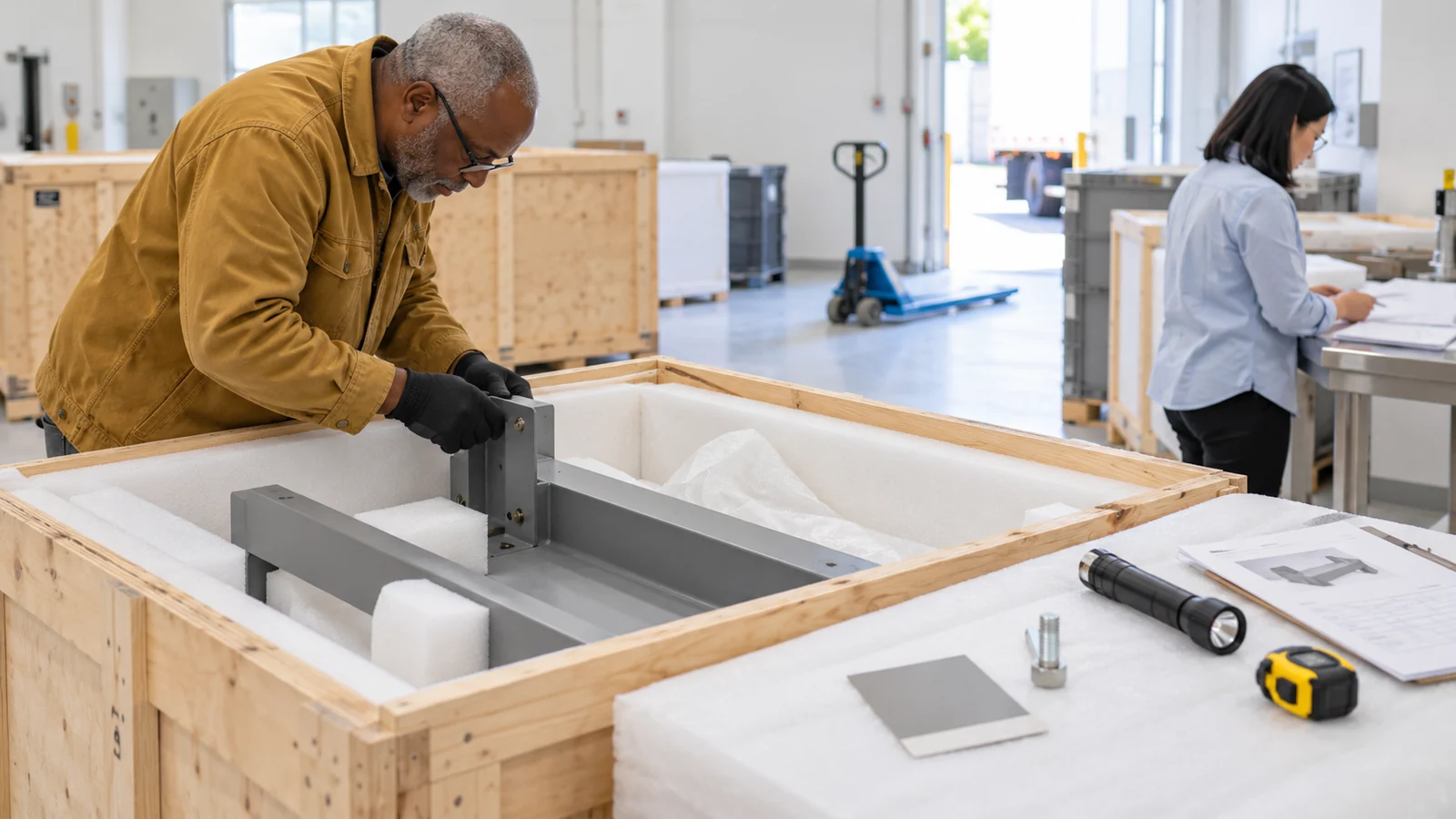
Clarify responsibility for packing, transport, unloading, handling, positioning, utility connections, commissioning and training. Large equipment also requires checks of openings, turning space, floor capacity and installation clearance.
Request spare parts, consumables, maintenance intervals, support arrangements and document language. International projects should identify trade terms, destination clearance and site services so an omitted cost is not mistaken for a lower price.

Use consistent evaluation and acceptance criteria
Give every bidder the same requirement schedule and ask them to mark compliance, deviations and items requiring clarification, together with inclusions and exclusions. Assess collection suitability, technical design, delivery support and total ownership cost separately.
The order should define factory inspection, site testing, training, document handover and resolution of outstanding items. Where a trial could affect collection safety, conservators should assess it first and use suitable test material.
What to clarify in supplier responses
Ask which items the supplier manufactures and which are supplied by partners, and identify who coordinates the interfaces. Either supply model can work, but the buyer needs a clear contact for drawing changes, quality issues and site faults.
For a reference project, check whether the objects, workload, equipment configuration and scope are comparable. Photographs illustrate an application but do not prove another unit's performance or local response time. Obtain project-specific commitments in writing.
When a parameter is unresolved, ask which assumptions affect price and schedule and how changes will be handled. If extraction is undecided, for example, clarify whether the equipment connection is included, who designs the ductwork and how a changed interface will be priced.
Common procurement questions
Should one supplier deliver the whole system? A single point of contact can simplify coordination, while multiple suppliers require clear interfaces. In either case, assign responsibility for each component and its acceptance.
Can the lowest total be compared directly? First check whether installation, consumables, spares, training and maintenance are included. Add missing items to a common comparison and identify costs that remain unknown.
Before contract award, hold a clarification meeting: conservators confirm application boundaries, facilities staff review utilities, procurement records delivery and payment conditions, and suppliers respond item by item.
Sources
- Canadian Conservation Institute: Basic Requirements of Preventive Conservation
- National Park Service: Museum Collection Storage
Prepare a one-page brief covering the collection, site, objectives and delivery scope to discuss an appropriate equipment package.
Explore related equipment → · Discuss your project →