
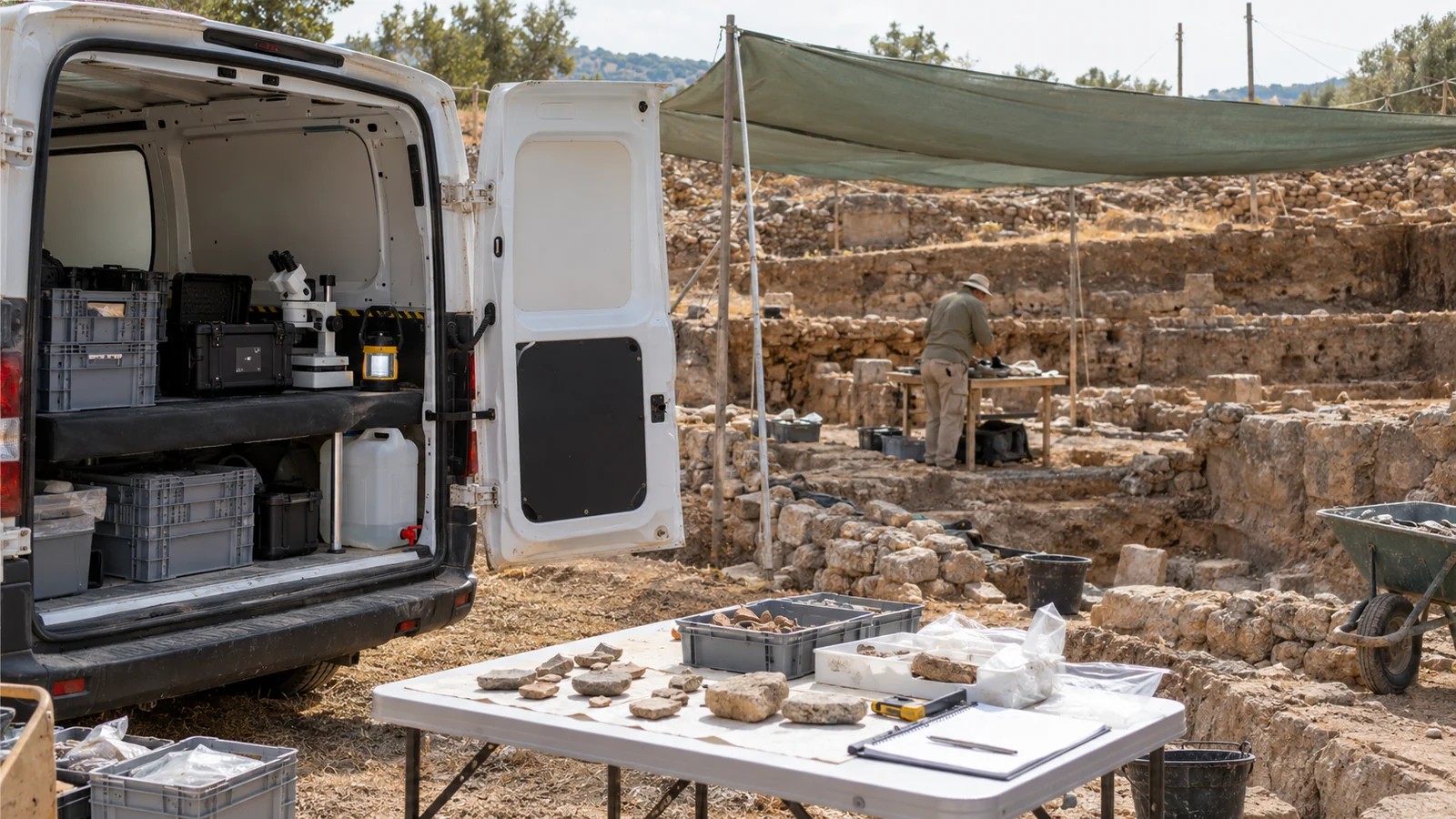
A mobile laboratory can bring initial examination, documentation and necessary conservation work to an archaeological site. Define the tasks, environment and onward transfer route before selecting space and equipment.
Roads, climate, power and excavated materials vary considerably between sites; budget around the actual project boundaries.
Define field tasks and the collection route
List whether receiving, registration, photography, microscopy, initial cleaning, packing, temporary storage or sample preparation is needed, and what remains for the fixed laboratory.
The Canadian Conservation Institute includes field planning, recovery of fragile objects, packing and storage in its archaeology services. Layout should support handovers and documentation across these steps.
Check transport and deployment conditions
Confirm road and vehicle access, unloading, ground conditions, available area and weather. Explain whether the unit moves frequently or remains on site, and consider securing and cushioning equipment in transit.
The supplier should verify vehicle or module dimensions, weight and formalities against the actual configuration and destination requirements.
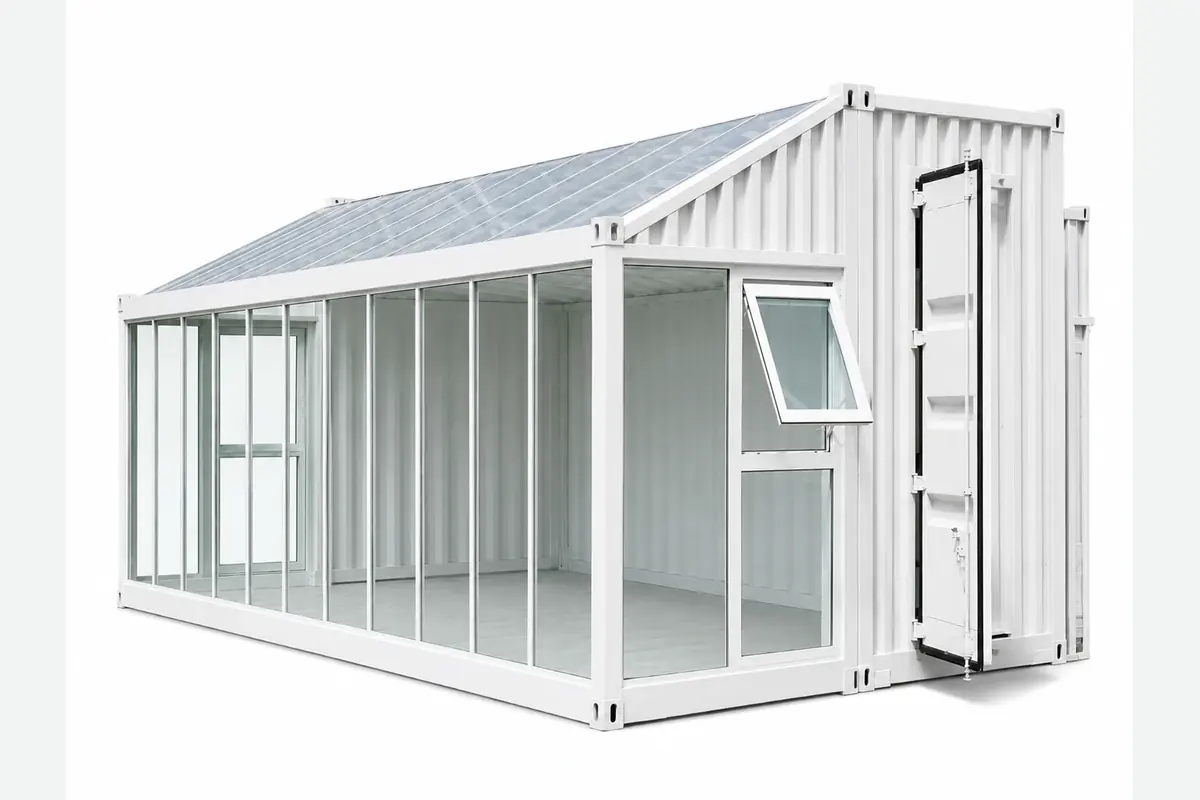
Plan layout and infrastructure
Arrange clean and pending-work areas, benches, storage, lighting, handwashing, ventilation and safe circulation for the number of staff. Assess local extraction for dust or chemical work so other tasks are not affected.
Confirm mains or alternative power, loads, water, drainage, connectivity and environmental control. Remote sites also need spares, maintenance and power-loss arrangements.
Identify cost factors
Quotations depend on vehicle or module type, size, equipment, environmental control, power, water treatment, transport distance, installation, training and destination requirements. Standardise scope before comparison.
Compare more than the base vehicle: include operation, maintenance, consumables, insurance and later relocation. Actual costs depend on the project quotation.
RFQ and acceptance inputs
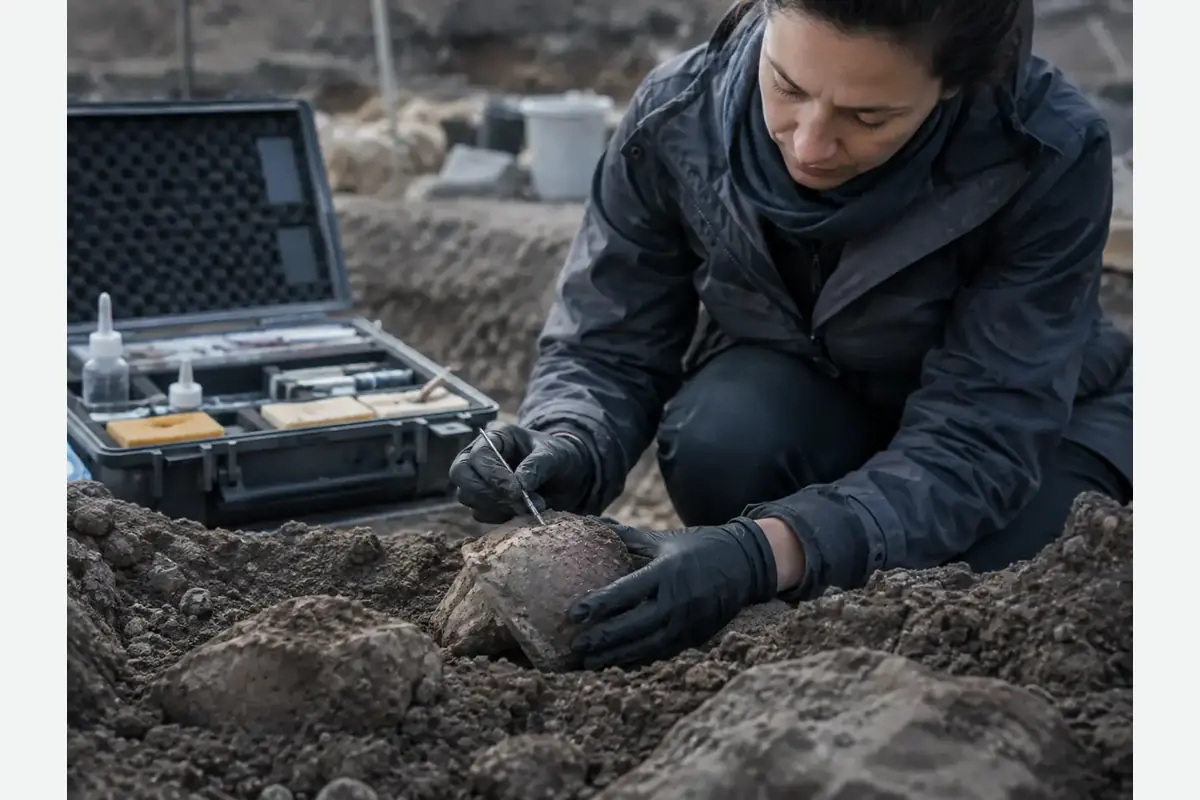
Provide site conditions, staff numbers, tasks, representative objects and deployment schedule. Request layouts, interfaces, weight schedules, configuration and exclusions.
Acceptance covers transport restraints, equipment functions, power, ventilation, safety and training. Define test conditions and assessment methods for environmental or treatment requirements.
Turn field constraints into design inputs
Record vehicle access, available area, ground, expected stay and service access. Mark work zones, routes, doors, windows, equipment and temporary storage, identifying what must be secured or removed in transit.
List simultaneous equipment, lighting and ventilation loads so the supplier can assess power and interfaces. For outages, establish which work stops, how collections are temporarily protected and who restores operation.
Check delivery scope when comparing quotations
Itemise the vehicle or module, interior, benches, equipment, transport, positioning, commissioning, training, spares and after-sales support. Record assumptions and confirmation methods where access or installation is unresolved.
Have users simulate receiving, documenting, observing, packing and handover during acceptance, checking interference between staff. Test extraction, power and alarms under agreed conditions and keep records rather than relying on photographs.
Discuss replacement parts, local service, reconnection after relocation and access to instructions. Plan alternative receiving and temporary packing if roads or weather prevent arrival.
Different sites may require different priorities. Recheck power, ventilation, access and staffing before redeployment; one configuration is not automatically suitable for all tasks.
Include a site plan, access route and schedule in the RFQ, including installation and training deadlines. Keep unconfirmed survey conditions on an issue list with agreed confirmation dates.
Sources
- Canadian Conservation Institute: Archaeological conservation and scientific services
- Canadian Conservation Institute: Care of archaeological collections
Share site location, field tasks, staff numbers and power conditions to discuss configuration and quotation scope.
Explore related equipment → · Discuss your project →