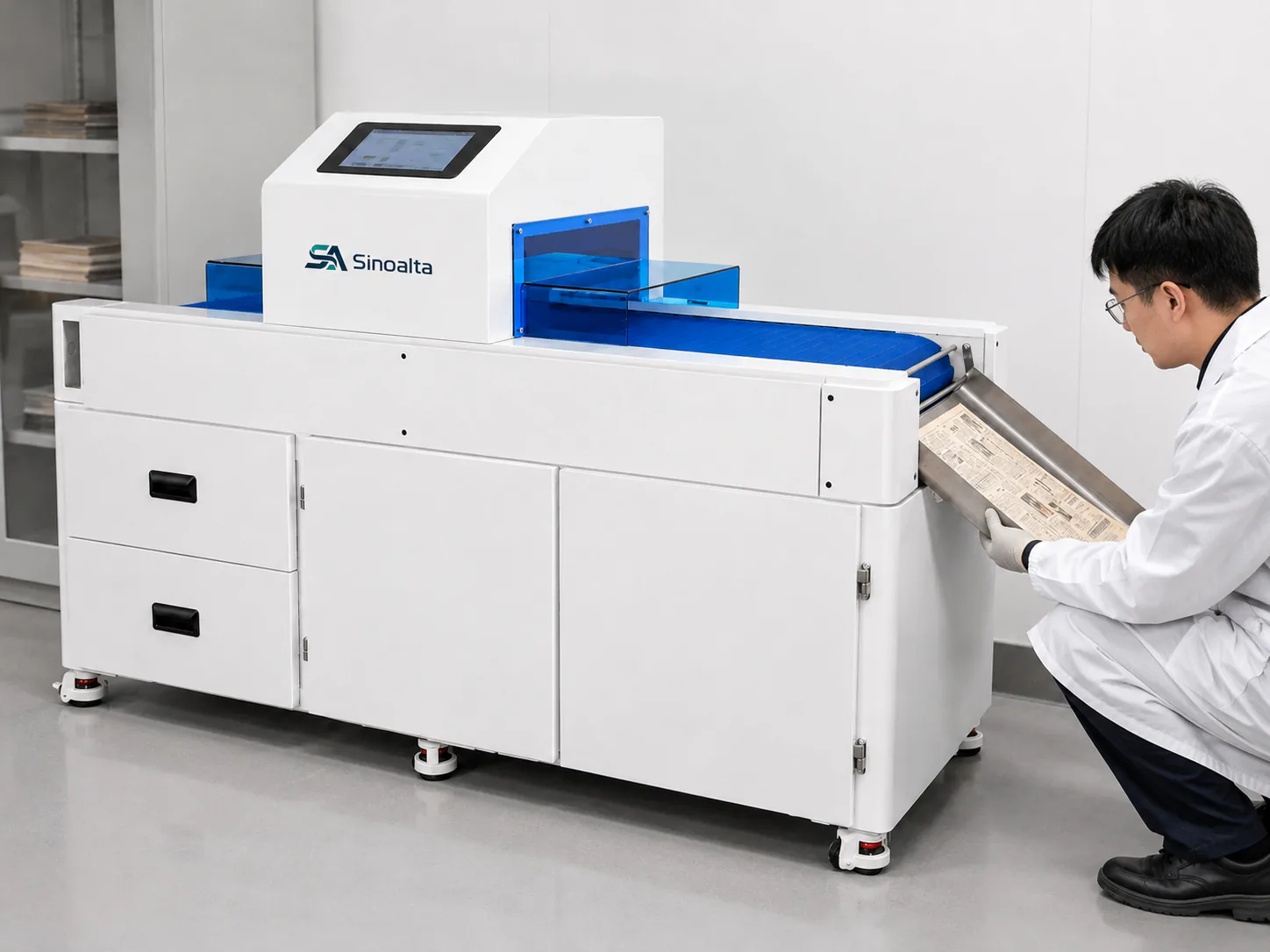
When a paper collection is acidic, the next question is often framed as a choice between mass deacidification, spray deacidification and immersion.
That comparison is useful—but it needs one technical correction.
“Mass” describes treatment scale. “Spray” and “immersion” describe ways a treatment chemistry can be applied.
They are not three perfectly separate scientific categories.
A large programme may use batch liquid treatment. A spray process may be used on single items or large numbers of sheets. Immersion may be carried out item by item or as part of a controlled batch workflow.
The right method therefore depends on more than the word used to describe the equipment. It depends on the object, the chemistry, treatment penetration, media sensitivity, binding structure, throughput and quality-control requirements.
Direct Answer: Which Deacidification Method Should You Choose?
Start with the condition of the paper.
Deacidification is most useful when paper is acidic but still has enough mechanical strength to benefit from slowing future acid-catalysed degradation. It does not rebuild paper that is already severely brittle.
Then ask how the object can safely receive the treatment.
- Mass deacidification is most useful when many suitable items can be screened and processed under one repeatable programme.
- Spray deacidification can be useful for selected single sheets, oversize material or objects that cannot be immersed, depending on the chemistry and media.
- Immersion deacidification can give strong contact and penetration for suitable paper, but water-based immersion may cause swelling, distortion or media movement and is usually more demanding for bound or water-sensitive objects.
The goal is not to choose the most powerful treatment.
The goal is to choose the lowest-risk process that produces the required preservation result.
First Decide Whether Deacidification Is the Right Treatment at All
Paper can be acidic, weak, dirty, stained, torn or chemically unstable in different ways.
Deacidification addresses one part of that problem: acid-related deterioration.
It can neutralize existing acids and, in many systems, leave an alkaline reserve that helps neutralize acids formed later.
It does not automatically:
- restore lost fibre strength;
- repair tears;
- remove stains;
- reverse embrittlement;
- correct poor storage;
- make all inks chemically stable.
NARA makes this distinction clearly. Deacidification can slow acidic degradation, but paper that has already lost much of its strength does not become strong again simply because its pH is raised.
This is the first screening rule:
Strong but acidic paper may benefit. Severely brittle paper may need a different preservation priority.
The Three Questions That Matter More Than the Equipment Name
Before comparing spray and immersion, answer three questions.
1. What is the object?
Is it:
- a loose sheet;
- a manuscript;
- a bound volume;
- a map;
- a poster;
- a mixed archival file;
- a large homogeneous book collection?
2. What is on the paper?
Check for:
- water-soluble inks;
- iron-gall ink;
- dyes;
- stamps;
- pressure-sensitive materials;
- photographs;
- coatings;
- thermal copies;
- adhesives;
- inserts.
3. What scale must be treated?
Ten sheets and 100,000 books are different preservation problems.
The chemistry may be similar, but the workflow, tracking, screening, loading and quality control are not.
Mass Deacidification: A Programme, Not Just a Machine
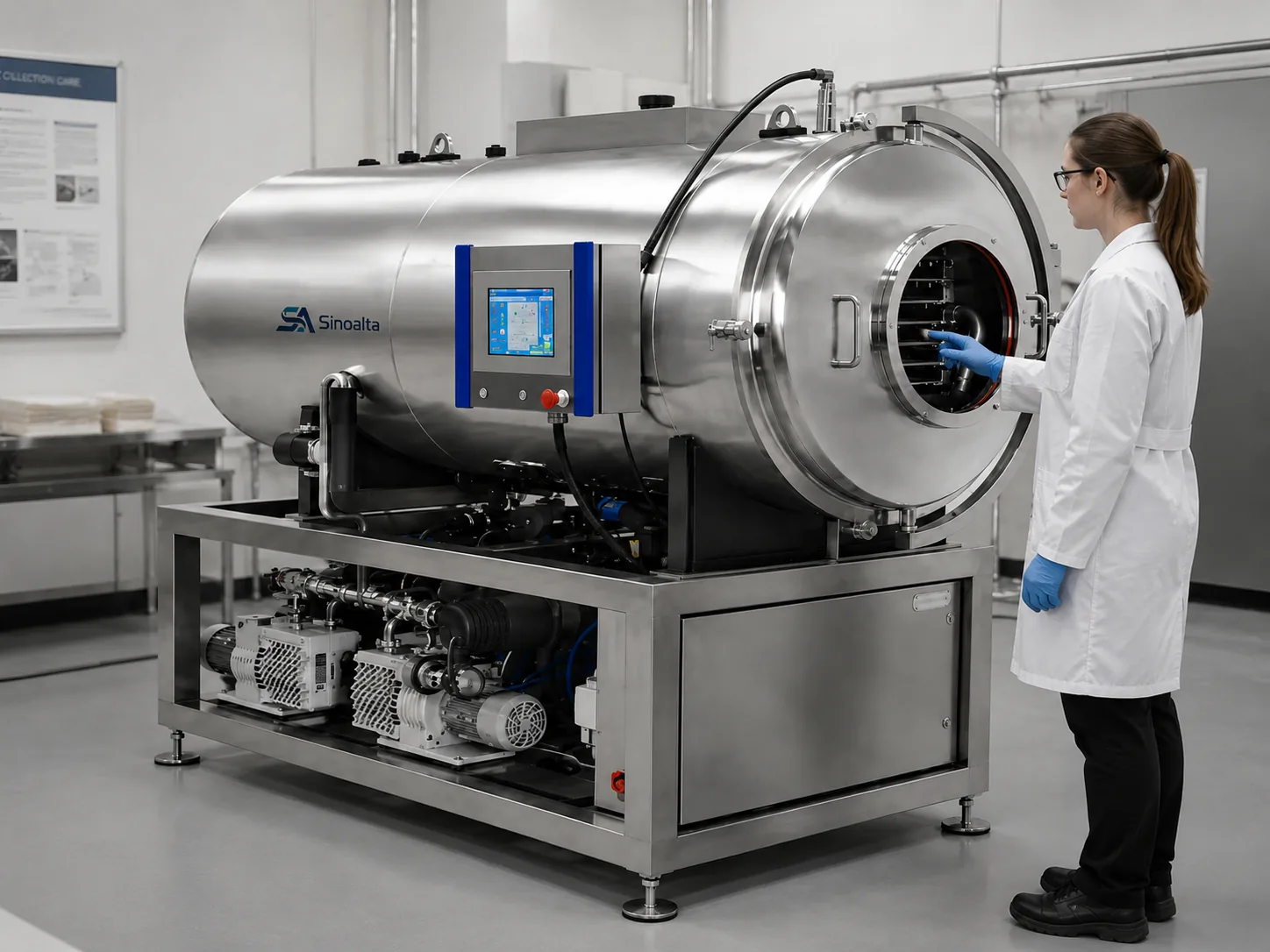
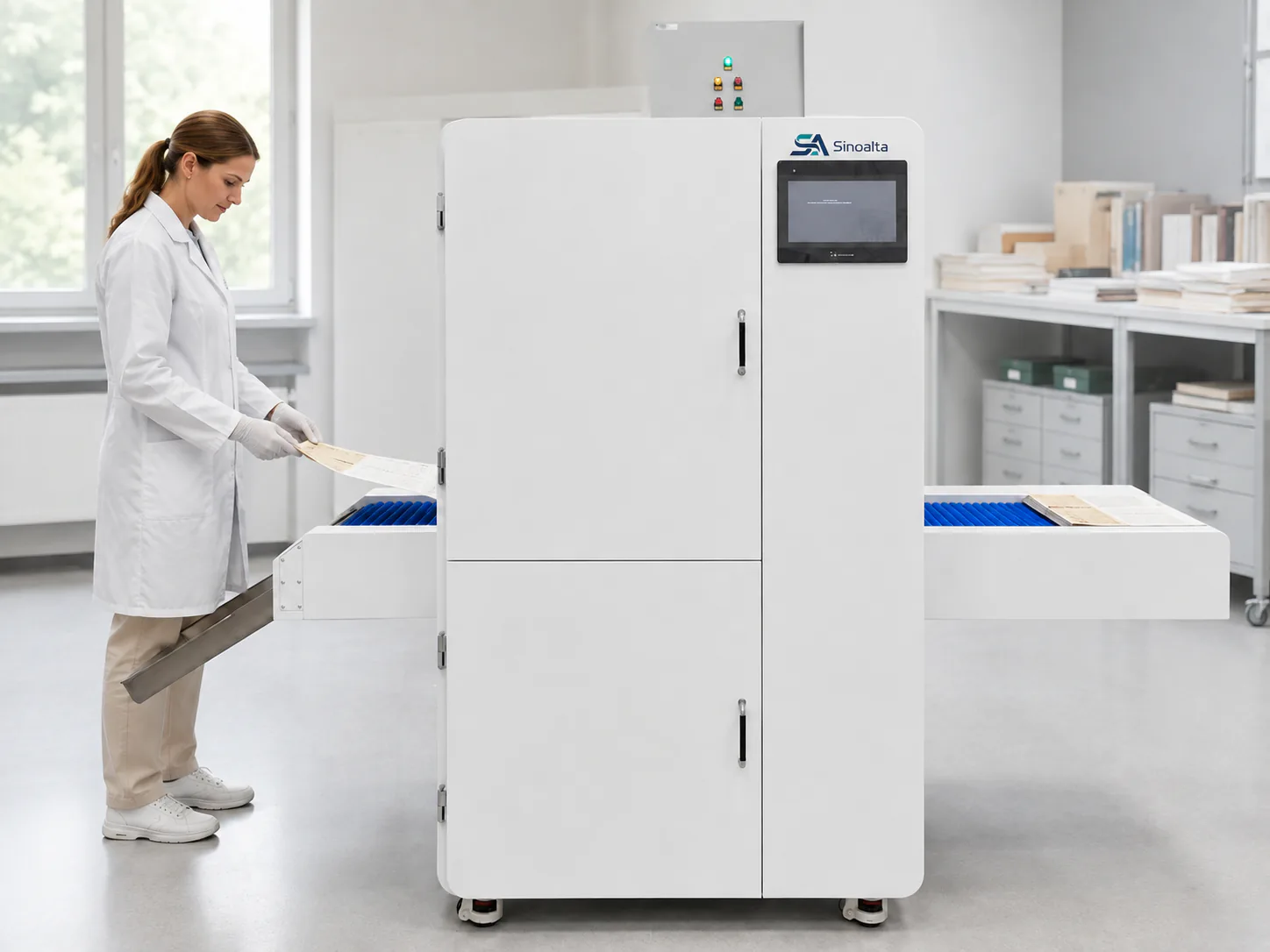
Mass deacidification is designed to treat large quantities of paper-based material efficiently.
The Library of Congress has used mass deacidification for large numbers of general-collection books and selected manuscript materials. Its programme includes selection criteria, treatment records and laboratory quality control.
The main advantage of mass treatment is economy of scale.
If many items have similar preservation needs and are compatible with the same process, batch treatment can reduce the labour required per item.
But scale introduces new risks.
A mass programme must manage:
- screening;
- collection order;
- batch identification;
- treatment uniformity;
- bindings and inserts;
- incompatible materials;
- post-treatment inspection;
- quality assurance.
This is why mass deacidification is not simply “spraying many books at once.”
It is a preservation programme with industrial-scale process control.
Good Candidates for Mass Treatment
Mass treatment is generally easier to justify when material is:
- genuinely acidic;
- mechanically sound enough for processing;
- sufficiently similar for batch treatment;
- expected to have long-term research or collection value;
- compatible with the selected chemistry;
- available for treatment without unacceptable disruption to access or order.
The Library of Congress screens out or deprioritizes some material that is already alkaline, coated, severely brittle or otherwise unsuitable for its selected process.
NARA also points out that archival collections can be harder to mass-treat than books because one box may contain paper, photographs, blueprints, microfilm, fasteners and other mixed media.
Mass Treatment Does Not Remove the Need for Screening
The larger the batch, the more important screening becomes.
A single incompatible insert can create a local treatment problem. A poorly tracked folder can create an intellectual-control problem even if the chemistry works perfectly.
For archives, maintaining order is a preservation requirement.
A good programme therefore defines:
selection → exclusions → tracking → treatment → QA → return to storage
Spray Deacidification: Useful When Local Control Matters
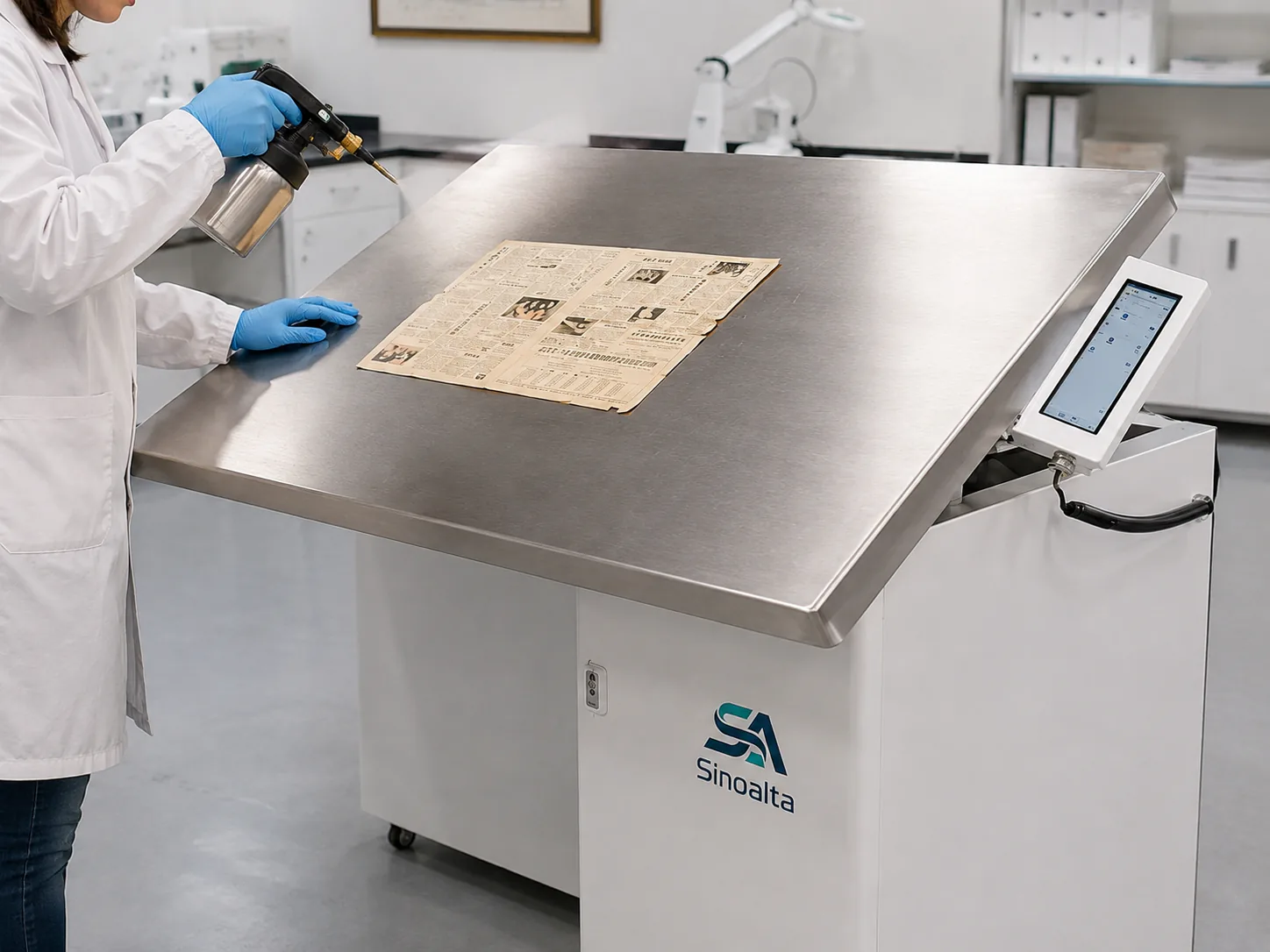
Spray deacidification applies a deacidifying agent to the paper surface using a controlled spray system.
It can be useful for objects that are difficult to immerse or for item-level work where the conservator wants more direct control over application.
The Library of Congress has used an on-site Bookkeeper spray booth for paper-based materials in non-book formats such as manuscripts, maps, music scores, pamphlets and posters.
This is a useful reminder that spray treatment is not only a small hobby method. It can be part of a professional institutional workflow.
Where Spray Can Be Attractive
Spray treatment may be considered when:
- the item is oversized;
- full immersion would be difficult;
- a nonaqueous chemistry is preferred;
- water-sensitive media limit aqueous treatment;
- treatment needs to remain at the institution;
- the object needs item-level assessment and handling.
Some nonaqueous spray systems can be used where aqueous treatment is unsuitable.
For example, Library of Congress conservation work on iron-gall ink has documented use of a Bookkeeper spray system for objects that cannot receive aqueous or ethanol-modified aqueous solutions.
That does not mean every spray chemistry is safe for every ink.
The Main Limitation: Surface Application Must Still Produce a Useful Treatment
A spray reaches the object from the surface.
The institution therefore needs evidence that the selected system achieves adequate:
- coverage;
- penetration;
- alkaline reserve;
- uniformity;
- compatibility.
Uneven application can create uneven treatment.
Some spray systems may also leave visible residue or alter surface feel. These effects depend on the chemistry and application method.
So the correct question is not:
Does it spray evenly?
It is:
Does the full process deliver the required chemical result without unacceptable physical or visual change?
Immersion Deacidification: Strong Contact, Higher Material Demands
Immersion places the paper or object into a treatment bath.
For suitable loose paper, aqueous alkaline treatment can provide good contact with the sheet. Washing may also remove some soluble acidic degradation products before or during the deacidification sequence.
This can be a major advantage for selected conservation treatments.
But water changes paper physically.
When paper is wetted, fibres swell. Sheets can distort. Inks and dyes can move. Adhesives can soften. Bound structures can respond unevenly.
NARA notes that aqueous deacidification is relatively straightforward for suitable flat sheets with no water-soluble components, but becomes more difficult for bound materials because paper swelling is constrained and liquid may be absorbed unevenly.
This makes immersion a powerful but more material-sensitive option.
When Immersion Can Be a Strong Candidate
Immersion may be appropriate when:
- paper is structurally strong enough for wet treatment;
- media have been tested and are stable in the treatment liquid;
- washing is also part of the conservation objective;
- the object can be safely supported in and out of the bath;
- drying and flattening are planned as part of the treatment;
- the binding or object structure can tolerate the process.
For loose sheets, these conditions can be manageable.
For an intact book, they become much more complex.
Bound Books Are a Different Problem
The question “Can bound books be deacidified by immersion?” does not have a universal yes/no answer.
A bound volume combines multiple materials and mechanical constraints.
Potential concerns include:
- uneven wetting;
- swelling of the text block;
- distortion at the spine;
- adhesive response;
- leather or cloth response;
- ink solubility;
- long drying time;
- page blocking.
Some treatment systems are designed specifically for bound materials, but their compatibility must be demonstrated for the actual book type and chemistry.
Do not treat “immersion” as automatically safer simply because the paper is fully surrounded by liquid.
Aqueous and Nonaqueous Are Often the More Important Distinction
Another common mistake is to focus only on spray versus immersion.
From a conservation perspective, the carrier system can matter just as much.
Aqueous treatment
Water-based processes can help wash out soluble degradation products and introduce alkaline material.
But they require careful attention to:
- water-soluble media;
- paper swelling;
- dimensional change;
- adhesives;
- drying and flattening.
Nonaqueous treatment
Nonaqueous or dispersion systems were developed partly to reduce some of the swelling and media-solubility problems associated with water.
But they create their own questions about:
- solvent compatibility;
- particle or reagent distribution;
- residue;
- penetration;
- health and safety;
- appearance changes.
There is no chemistry-free deacidification process.
Every method changes the chemical environment of the paper.
Decision Matrix: Which Route Fits Which Collection?
| Collection situation | Mass programme | Spray | Immersion |
|---|---|---|---|
| Large homogeneous book collection | Often strong candidate if process-qualified | Possible for exceptions | Usually not the first large-scale route |
| Valuable loose manuscripts | Possible with suitable single-sheet/batch system | Often useful for selected items | Useful where wet treatment is safe |
| Oversize maps and posters | Depends on equipment size | Often practical | Possible with large wet-treatment setup |
| Water-soluble media | Process-specific; screening essential | Nonaqueous spray may be considered | Often higher risk without fixation/testing |
| Bound books | Established mass processes exist | Possible depending on system | More complex because of swelling and drying |
| Severely brittle paper | Usually poor candidate | Does not restore strength | Does not restore strength |
| Mixed archival boxes | High screening burden | Selective item-level use | Selective only |
| Need to remove soluble degradation products | Depends on process | Limited in many spray systems | Aqueous washing/immersion can offer this advantage |
This table describes decision logic, not universal treatment rules.
Alkaline Reserve and QA Matter More Than a One-Time pH Reading
A responsible deacidification programme does not stop at “the paper is less acidic now.”
Many processes are designed to leave an alkaline reserve in the paper.
That reserve can help neutralize acids that form during future ageing.
Quality control may therefore include:
- post-treatment pH;
- alkaline reserve;
- treatment-agent distribution;
- colour or appearance change;
- paper strength;
- dimensional change;
- residue;
- binding condition;
- treatment records.
The Library of Congress uses surrogate test papers and other process checks in its mass-deacidification programme rather than destructively testing collection pages.
This is a strong model for equipment buyers.
A deacidification system should be evaluated by measurable treatment performance, not by chamber size or spray rate alone.
Drying Is Part of Immersion Treatment
Wet treatment does not end when the object leaves the bath.
The paper still needs to dry in a controlled way.
Depending on the object, post-treatment work may include:
- blotting;
- controlled drying;
- flattening;
- pressing;
- support during drying;
- binding adjustment;
- inspection for blocking or distortion.
This can make immersion more labour-intensive than it first appears.
When comparing equipment, include the full workflow:
prepare → treat → drain → dry → flatten → inspect
not just the treatment bath itself.
Do Not Confuse Deacidification With Strengthening
This distinction should stay visible throughout the project.
A paper can be:
- acidic and still strong;
- neutral but mechanically weak;
- both acidic and weak.
Deacidification addresses the first condition.
If the paper is already breaking during normal handling, treatment planning may need to prioritize repair, strengthening, housing, digitization or restricted use.
A system should not be sold as a way to “restore” brittle paper unless separate strengthening performance is supported by evidence.
A Practical Selection Framework
Use this sequence before selecting a deacidification system.
1. Confirm the preservation problem
Is acid hydrolysis a meaningful risk for this collection?
2. Check mechanical condition
Will the paper survive handling and treatment?
3. Identify media and mixed materials
Test inks, dyes, coatings, adhesives and inserts where relevant.
4. Decide whether wet treatment is acceptable
This narrows the choice between aqueous and nonaqueous routes.
5. Define scale
Is the need item-level, batch or mass programme?
6. Define the required result
Set criteria for pH, alkaline reserve, appearance, uniformity and physical condition.
7. Pilot representative material
Use low-risk test material before full implementation.
8. Plan post-treatment storage
Deacidified paper still needs good temperature, RH, housing and handling.
Problem → Condition → Compatibility → Chemistry → Scale → QA → Pilot → Storage
Common Deacidification Selection Mistakes
| Mistake | Why it matters |
|---|---|
| Treating mass, spray and immersion as equal categories | “Mass” is scale; spray and immersion are application modes |
| Treating brittle paper because it is acidic | Deacidification does not rebuild lost strength |
| Choosing aqueous treatment without testing media | Water-soluble inks or dyes may move |
| Choosing spray only because it avoids immersion | Coverage, penetration and alkaline reserve still need verification |
| Ignoring drying after immersion | Distortion and blocking can occur after the bath |
| Treating mixed archival boxes as homogeneous paper | Inserts and other media increase compatibility risk |
| Checking pH but not treatment uniformity | A surface reading alone does not prove a durable result |
Frequently Asked Questions
Is spray deacidification better than immersion?
Not universally. Spray can be useful where immersion is impractical or water sensitivity is a concern. Immersion can offer strong contact and, in aqueous treatment, can be combined with washing. The better method depends on media, paper condition, object structure and the treatment chemistry.
Is mass deacidification the same as immersion?
No. Mass deacidification describes treatment of large quantities. A mass process can use different application technologies. Immersion is one way treatment chemistry may contact the paper.
Can bound books be deacidified by immersion?
Some systems are designed for bound material, but bound books create added risks from swelling, uneven wetting, adhesives, media and drying. Compatibility must be established for the actual book and process.
When is spray deacidification useful?
It can be useful for selected manuscripts, maps, posters or other items that are difficult to immerse, especially when a suitable nonaqueous system is required. Treatment performance still needs to be verified.
Does deacidification make brittle paper strong again?
No. It can slow future acid-related deterioration, but it does not rebuild mechanical strength already lost.
What should be tested after treatment?
Depending on the programme, quality control may include pH, alkaline reserve, treatment uniformity, colour change, residue, physical condition and batch documentation.
Planning a Paper Deacidification Project?
Begin with candidate selection and treatment chemistry—not equipment size.
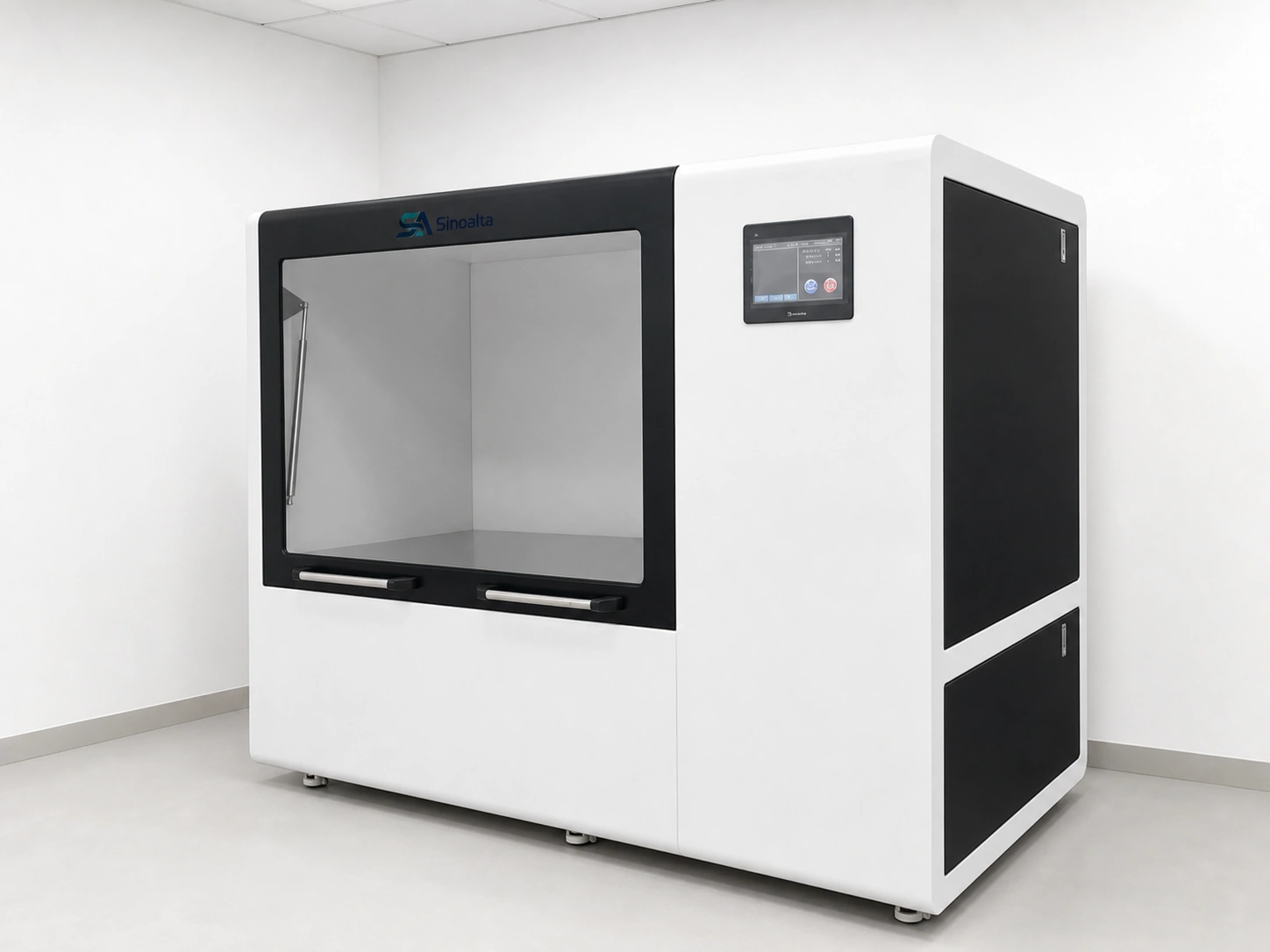
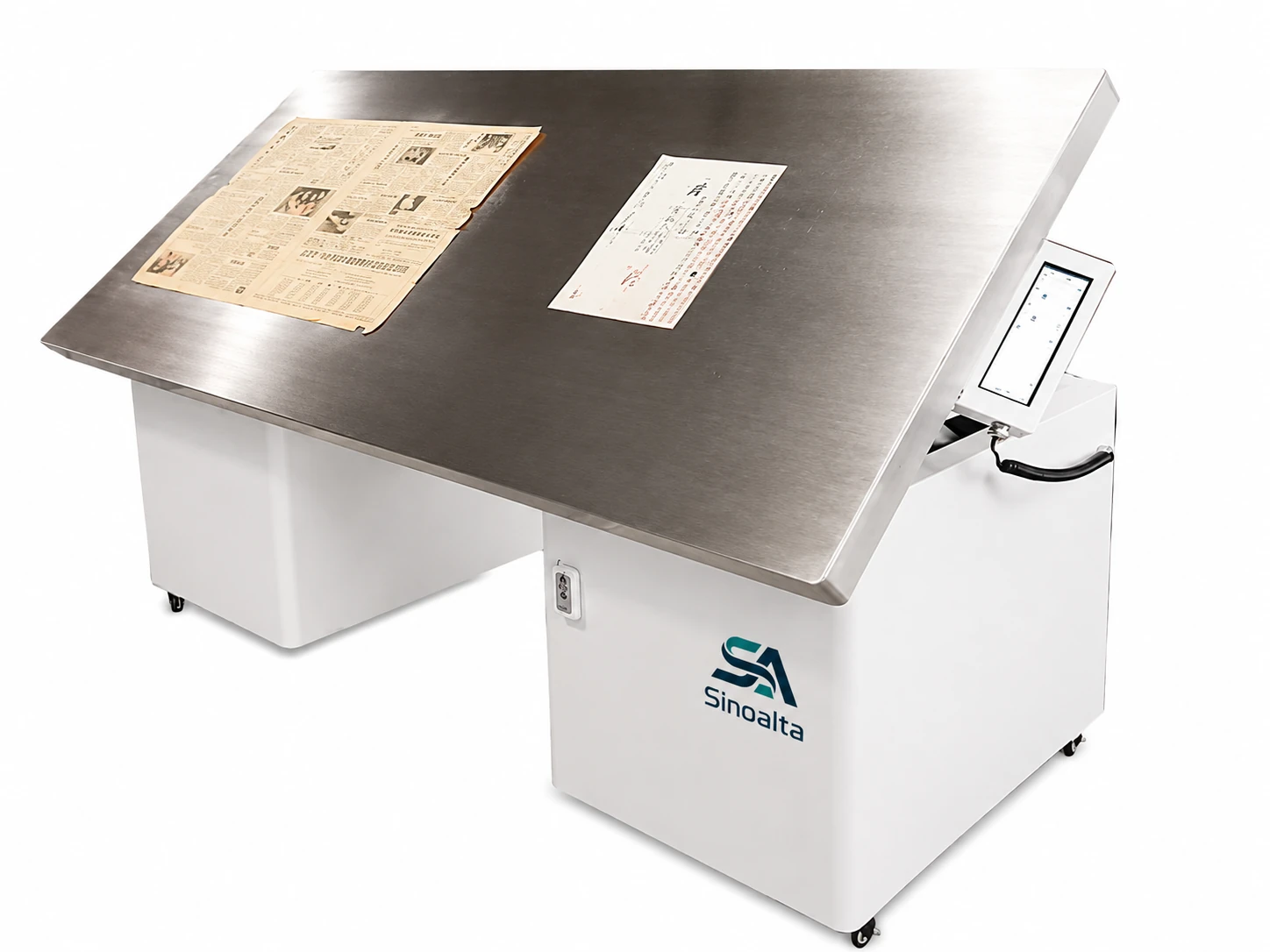
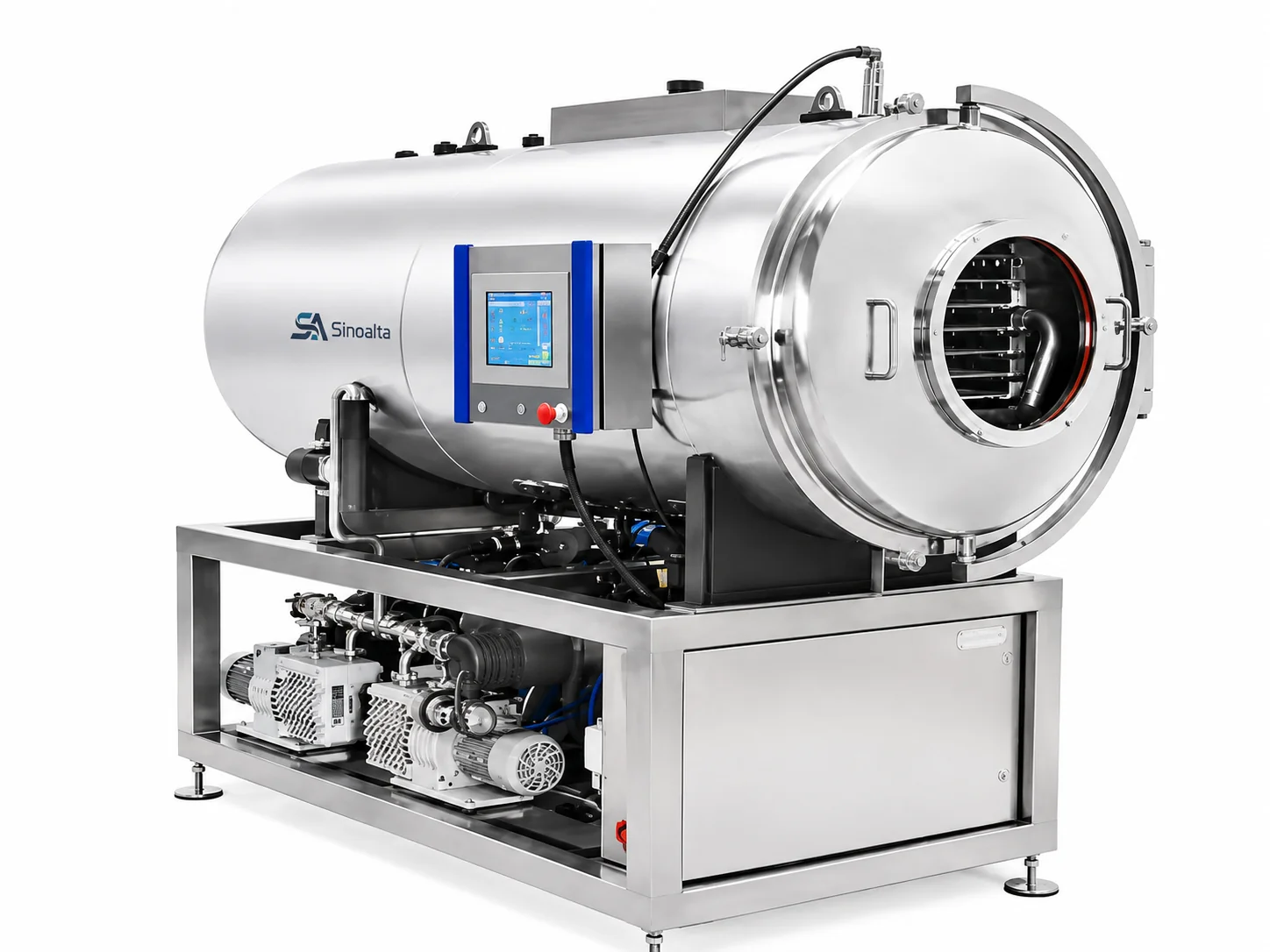
Sinoalta develops paper-deacidification configurations for item-level, batch and larger institutional workflows. The appropriate system depends on paper condition, media compatibility, treatment scale, drying requirements and quality-control targets.
Read Mass Deacidification for Paper Collections → Explore Paper Deacidification Solutions → View Manual Spray and Immersion Configurations →
Selected Technical References
- U.S. National Archives, Mass Deacidification: Considerations for Archives: https://www.archives.gov/preservation/conservation/mass-deacidification.html
- U.S. National Archives, Deacidification Reconsidered: https://www.archives.gov/preservation/conferences/15th
- Library of Congress, Mass Deacidification Program: https://www.loc.gov/preservation/about/deacid/index.html
- Library of Congress, Mass Deacidification of Paper and Books: https://www.loc.gov/preservation/about/deacid/detail/Deacidification01.html
- Library of Congress, Mass Deacidification Bibliography: https://www.loc.gov/preservation/resources/rt/massdeacbib.html
- AIC Book and Paper Group / Library of Congress, Developing Guidelines for Iron-Gall Ink Treatment at the Library of Congress: https://cool.culturalheritage.org/coolaic/sg/bpg/annual/v27/bpga27-20.pdf