Product Positioning
For immersion deacidification of bound books, large-format paper and archival materials; designable according to loading dimensions and process requirements.
I. Product Name and Functional Overview
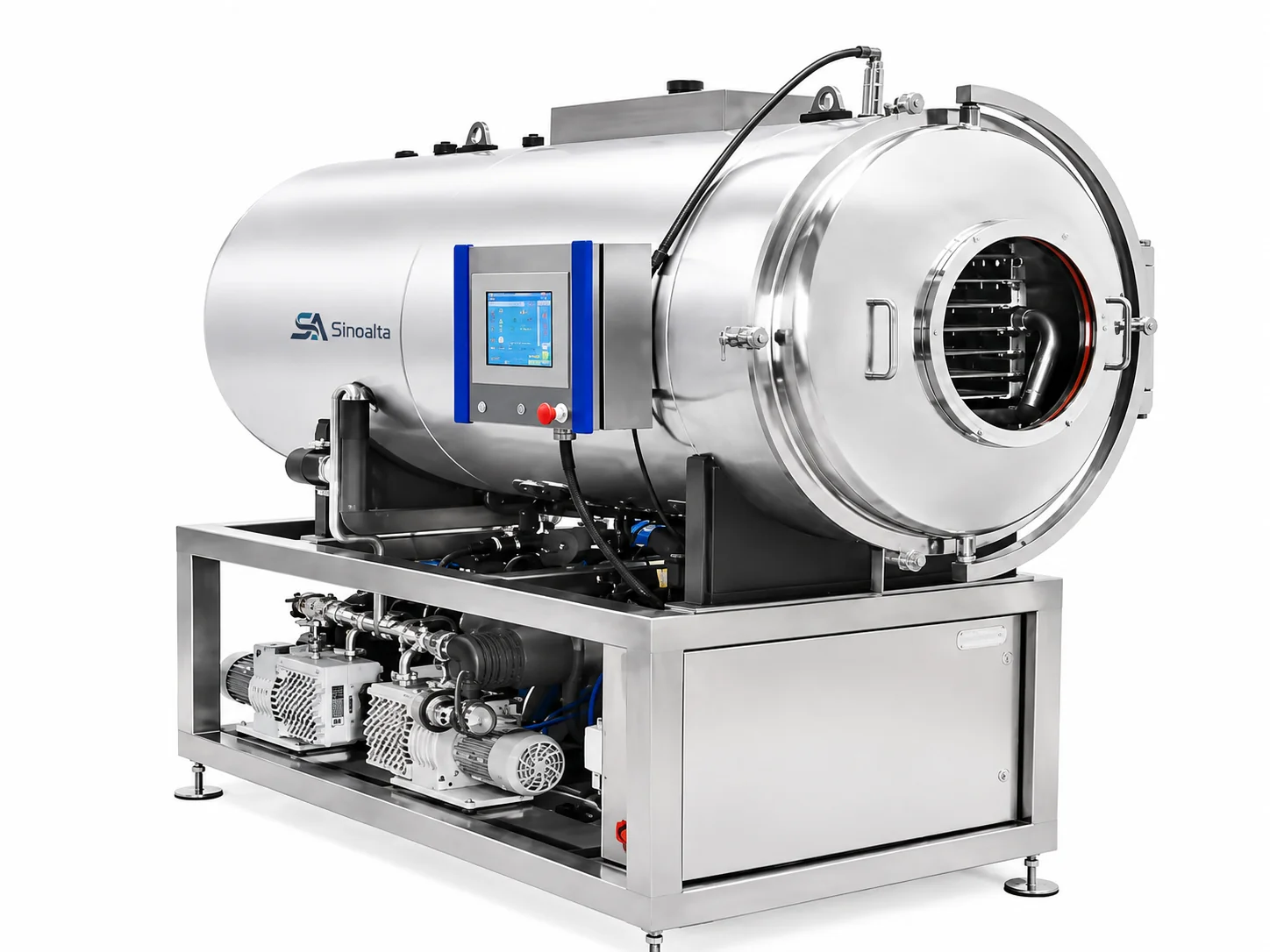
Original Chinese product name: Large Bound-Book Immersion Deacidification Machine
Product type: Immersion deacidification equipment
Main use: Whole-volume batch deacidification of bound or rolled paper documents including rare books, books, newspapers and periodicals, and archives.
The machine integrates immersion with vacuum-assisted processing, solution recovery and evaporation drying. Compatible bound and rolled paper documents can be batch-loaded without disassembly, subject to examination and testing of paper, media, bindings, adhesives and previous repairs.
The equipment is intended for indivisible archives and documents such as bound volumes, albums and newspapers when the responsible conservation team has approved immersion as the treatment route.
II. Deacidification Working Principle
The specified process combines pressure, electro-osmosis, low-power ultrasound and a calcium-based aqueous deacidification agent to support penetration into paper during immersion. Treatment settings and acceptance criteria must be established for the material group; penetration and final condition can vary with paper, construction, load and process selection.
III. Workflow
- Documents enter the immersion tank;
- Close the drying-chamber door;
- Prepare the deacidification solution;
- The deacidification solution enters the immersion tank;
- Depressurize and vent; perform negative-pressure immersion;
- Recover the deacidification solution;
- Vacuum-evaporate the deacidification solution;
- Condense and recover the deacidification solution;
- Repeat evaporation to complete drying;
- Raise the pressure, open the chamber and remove the documents.
IV. Main Features
- Supports treatment of compatible bound and rolled paper documents without disassembly.
- Supports planned batch immersion deacidification.
- Integrated immersion, vacuum and cyclic evaporation-drying process.
- Includes an evaporation-drying stage before unloading and post-treatment assessment.
- The deacidification solution can be recovered and circulated.
- The equipment can be configured to project loading and process requirements.
V. Technical Parameters
| Item | Parameter |
|---|---|
| Deacidification batch capacity | ≥80kg, approximately 500 books |
| Total process time | ≤6 hours |
| Deacidification-solution operating mode | Circulating operation |
| Solvent recovery rate from deacidification solution | ≥96% |
| Deacidification result | Average cold-water extraction of paper: 7.5≤pH≤10.0 |
| Customization | Customizable |
VI. Applicable Materials
- Rare books;
- Books;
- Newspapers and periodicals;
- Archives;
- Bound volumes and albums;
- Indivisible bound and rolled paper documents.
Selection Questions
When is immersion preferable to spray treatment? This system is intended for compatible bound or rolled materials selected for whole-volume immersion and the integrated vacuum-assisted process. Spray equipment may be more appropriate for individually handled sheets or materials excluded from immersion after assessment.
What must be tested before a batch? Review paper and binding condition, media and adhesive stability, previous repairs, dimensional response and compatibility with the selected aqueous agent. Representative testing and defined acceptance checks are necessary before treating collection material.
Which project parameters require confirmation? Confirm material formats, batch loading dimensions and weight, treatment solution, required process sequence, solvent-recovery and drying arrangements, utilities, drainage, ventilation and operator procedures. Published capacity and process time are equipment specifications and should not be treated as guaranteed outcomes for every load.