
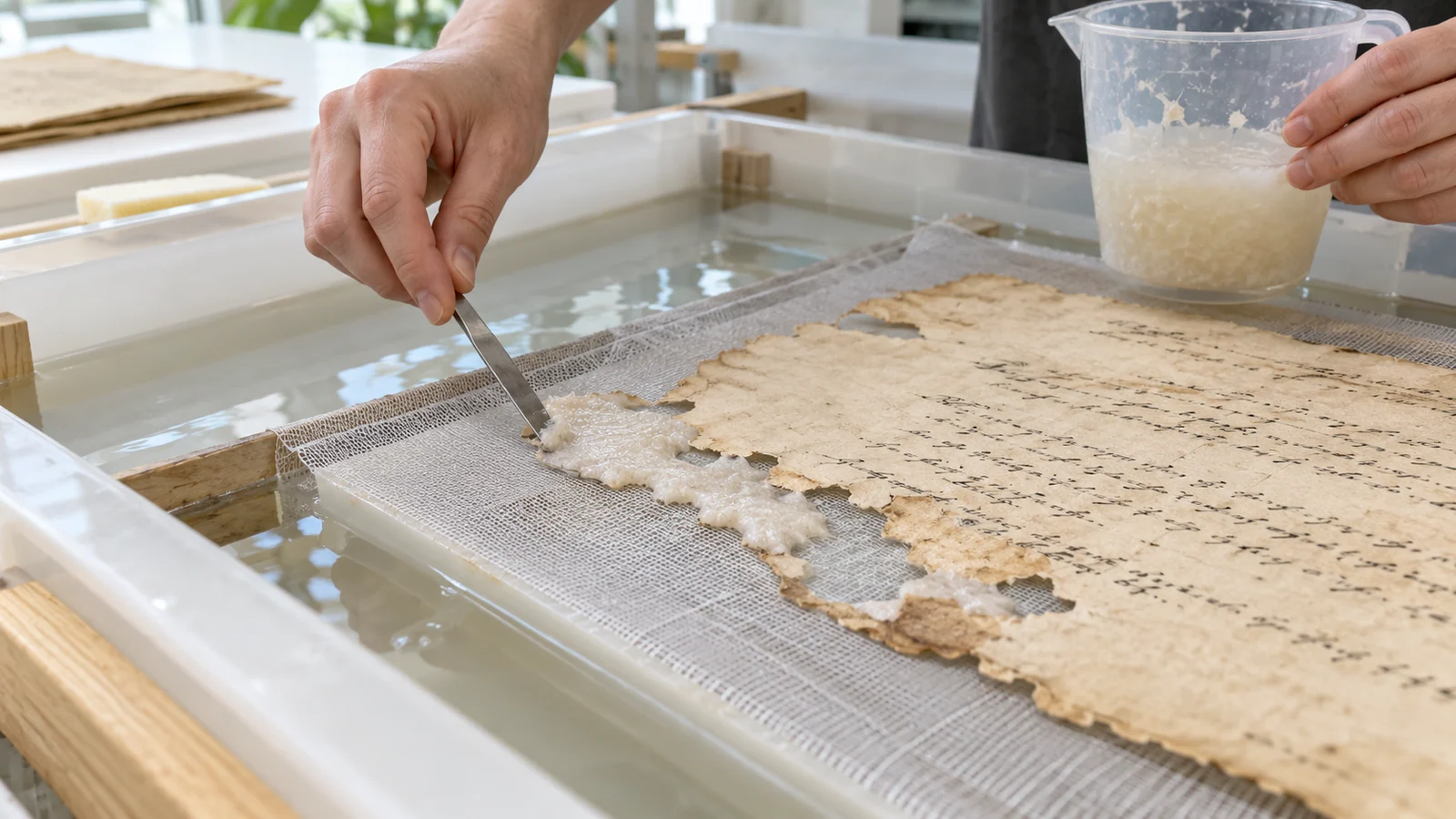
Leafcasting can repair some losses in paper objects, but suitability depends on the paper, media, damage and treatment objective. Understand the institution's objects and workflow before purchasing.
Equipment provides controlled working conditions; fibre selection, repair outcomes and treatment decisions still require conservator assessment and validation.
Define suitable objects and exclusions
Inventory dimensions and loss types in loose sheets, maps and other paper. Record fragile areas, water-sensitive inks or pigments, previous repairs and attachments.
Water treatment can cause irreversible changes. Conservators may consider alternatives for objects unsuitable for direct wet treatment; a Library of Congress case shows how a treatment was adapted for soluble inks.
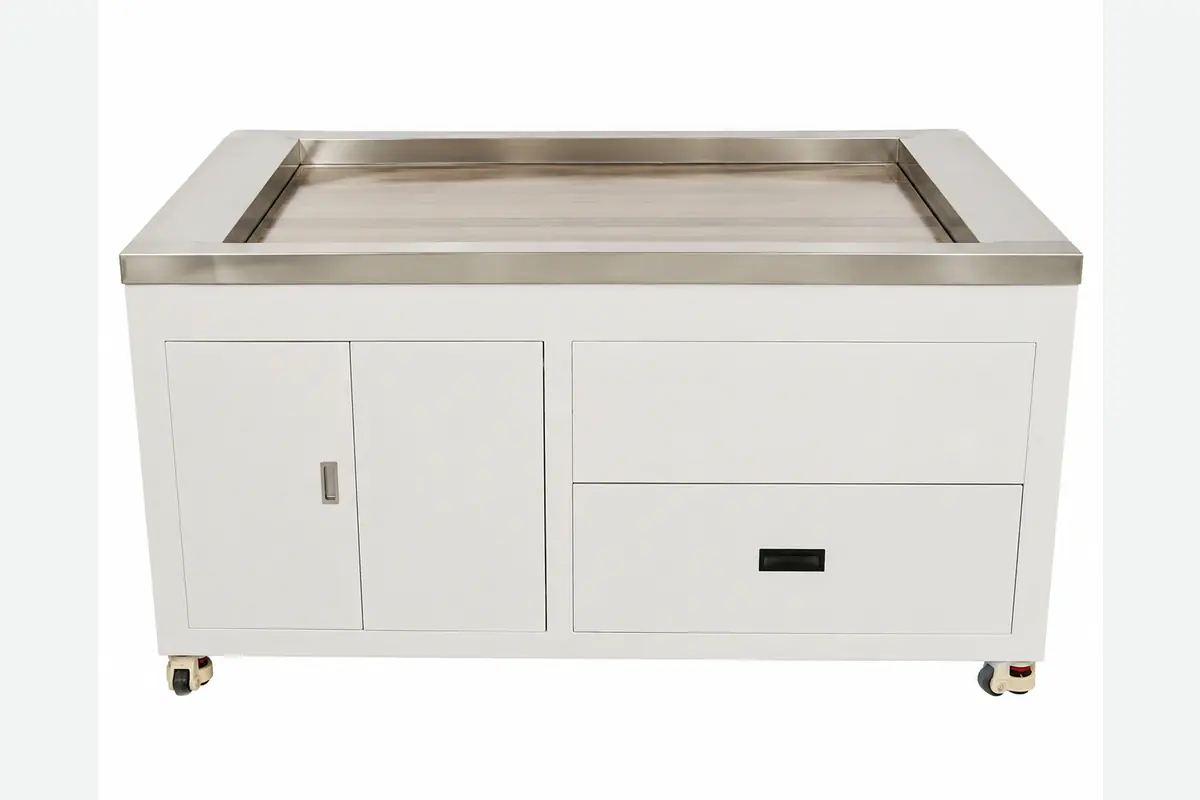
Confirm usable area and loading
Ask about working area, support, securing and removal, allowing space for the largest object, handling and subsequent drying.
Distinguish equipment dimensions, tank size and actual treatment area; ask whether support materials and accessories are included.
Discuss pulp, water and drainage
Ask how pulp is prepared, mixed and introduced, how liquid circulates or drains, and how equipment is cleaned between batches. Fibre type, colour and concentration depend on collection requirements and testing.
Check water supply, drainage, contact materials and maintenance so site interfaces or waste handling do not obstruct delivery.
Evaluate operation using representative samples
Choose simulated paper samples rather than collection objects and discuss loss shape, support, filling and drying. Evaluation may include repeatability, appearance and subsequent manual finishing.
If treatment results are contractual requirements, define samples, process, observation method and responsibility. A demonstration cannot guarantee results for all materials.
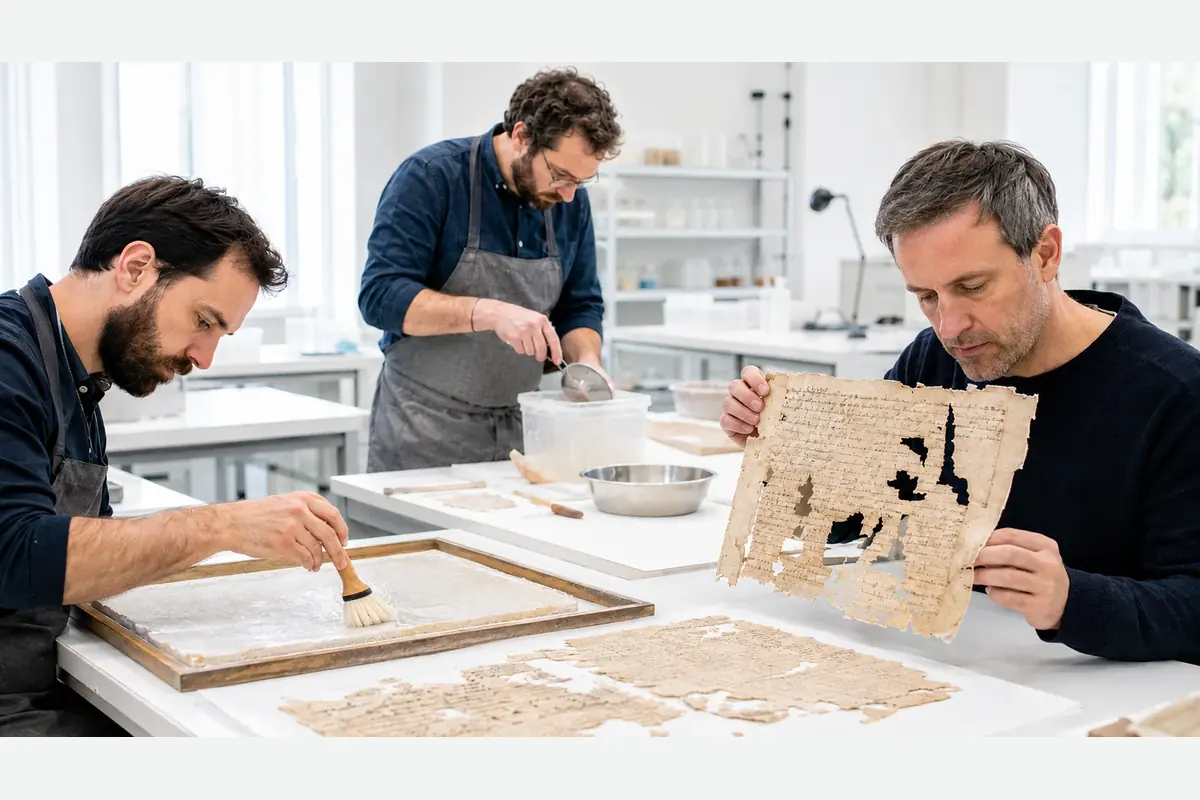
Include delivery and training in the RFQ
Provide typical and maximum object sizes, workload, site drawings, desired accessories and training scope. Request configuration, consumables, spares, installation and maintenance conditions.
Acceptance checks equipment functions, interfaces, documents and training and records outstanding issues. Complete material assessment and operational validation before treating collections.
Prepare sample information that explains the need
Group representative objects by size, thickness, loss location and condition. Explain whether the largest needs whole-sheet treatment and how fragile edges will be supported. Include inks, pigments and other water-sensitive factors; do not use actual objects for demonstrations before assessment.
Describe intended fibre preparation, staffing, water use and cleaning after each treatment. Ask suppliers to clarify the roles of equipment, accessories and staff; colour matching and manual finishing needs can differ between laboratories.
Check the complete operating sequence at acceptance
Use simulated paper to demonstrate placement, support, pulp addition, filling, removal and cleaning. Check operator access, water and drainage, accessories, controls and documents, and record settings.
One demonstration cannot establish suitability for every object. For a comparison, define sample shape, material, observation and allowed finishing, then agree assessment with procurement staff and specialists.
Leafcasting is more than pressing a button: pre-treatment inspection, fibre choice, removal and drying require skilled staff. Budget for training and trials so personnel can clean and maintain equipment independently.
For varied collections, prepare representative sample groups and ask whether working space and accessories are suitable, noting conditions requiring specialist judgement.
Compare whether support components, preparation tools, installation and training are included. Identify institution-provided water and drainage interfaces and responsibilities before delivery.
Sources
- Library of Congress: Conservation and leafcasting of the Jamestown records
- Library of Congress: Collections care treatment manual
Share paper sizes, typical losses and site water and power conditions to discuss leafcasting equipment.
Explore related equipment → · Discuss your project →