
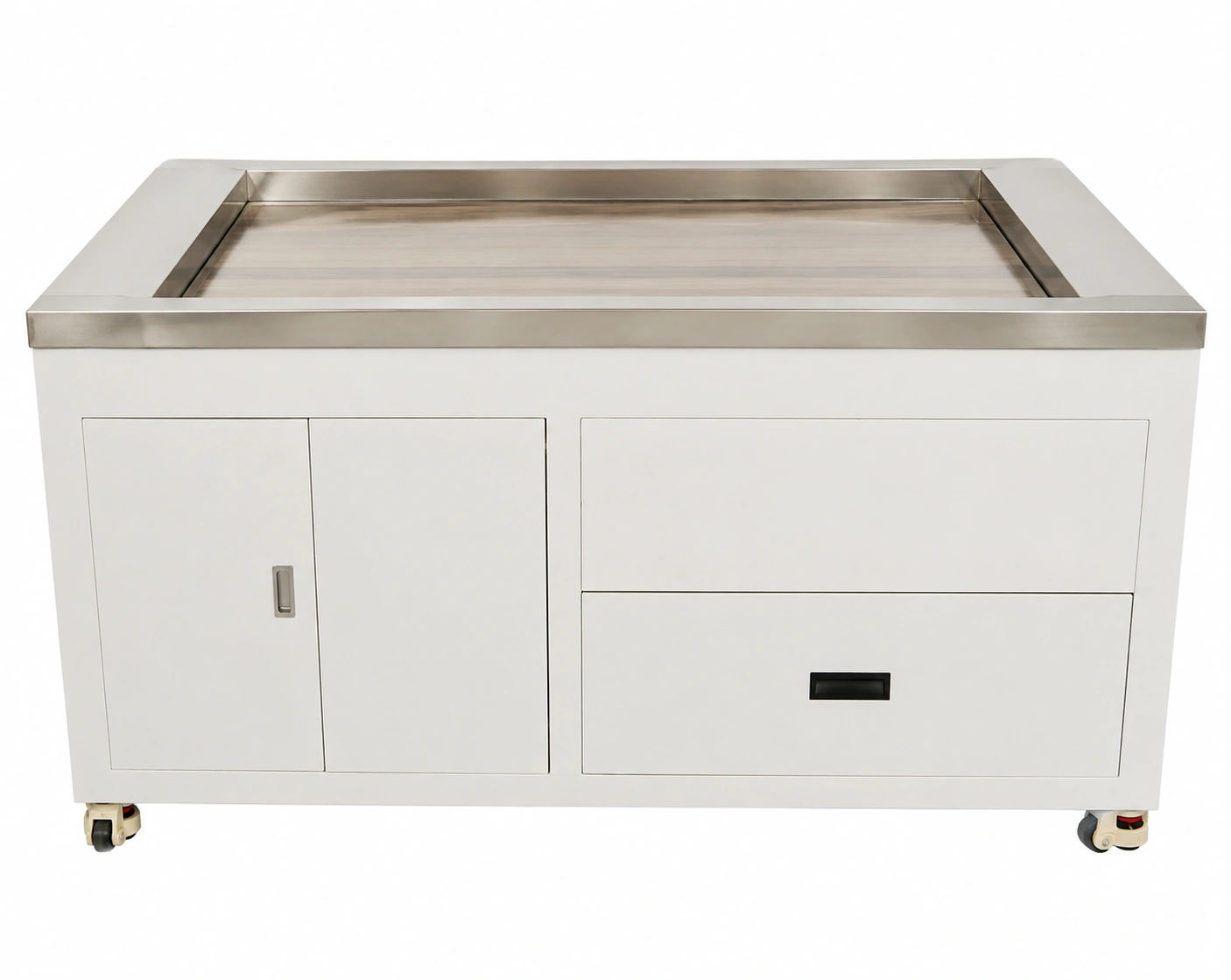
Product Positioning
For conservation teams using leafcasting to infill areas of paper loss in documents, archives and book paper. It is selected when a pulp-fibre repair workflow is more appropriate than localized manual infill. Project configuration should reflect sheet size, the pattern and extent of losses, pulp preparation, water-supply arrangements and the planned sequence from wetting through flattening and drying.
I. Product Name and Functional Overview
The machine introduces prepared pulp fibres into missing areas of damaged paper, supporting controlled infill with narrow overlap at the boundary of the loss. Before leafcasting, conservators should examine the sheet, media, sizing, previous repairs and response to water, then select pulp characteristics and process settings appropriate to the object.
Paper is positioned between the support mesh and pressure mesh for the water-filling and drainage stages, followed by the required flattening and drying workflow. The equipment standardizes these working stages; final integration still depends on object preparation, pulp selection, operator judgement and post-treatment evaluation.
II. Control and Water-Circulation System
- Control method: intelligent microcomputer control.
- Operation: touch LCD display.
- Water use: filtered recirculation or direct water supply.
- Repair-tank water inlet: bottom inlet to suppress water-flow fluctuation.
III. Main Technical Parameters and Structure
| Item | Parameter |
|---|---|
| Function | Pulp simulation repair |
| Cabinet material | Powder-coated carbon steel |
| Worktop material | 304 stainless steel |
| Repair-tank material | 304 brushed stainless steel |
| Water-tank protection | Low-water-level protection and high-water-level overflow protection |
Selection Questions
When is leafcasting preferable to a localized manual repair? Leafcasting is considered when losses can be addressed through a controlled pulp-fibre infill workflow. Local hand repair may remain more appropriate for isolated losses, objects that cannot tolerate the wet process, or sheets requiring highly selective intervention.
What should be assessed before treatment? Review the paper support, media stability, sizing, previous repairs, loss pattern and response to water. Pulp characteristics and working stages should be tested against the treatment objective before an object enters the machine. The evaluation should also define how the repaired sheet will be handled, flattened and dried after drainage.
Which project details affect selection? Confirm maximum sheet size, typical loss condition, pulp-preparation practice, water supply and recirculation approach, operator workflow, and the planned flattening and drying stages. These variables determine whether the standard arrangement suits the laboratory process. Projects should also confirm space for loading, wet handling, routine cleaning and access to the water-circulation components.