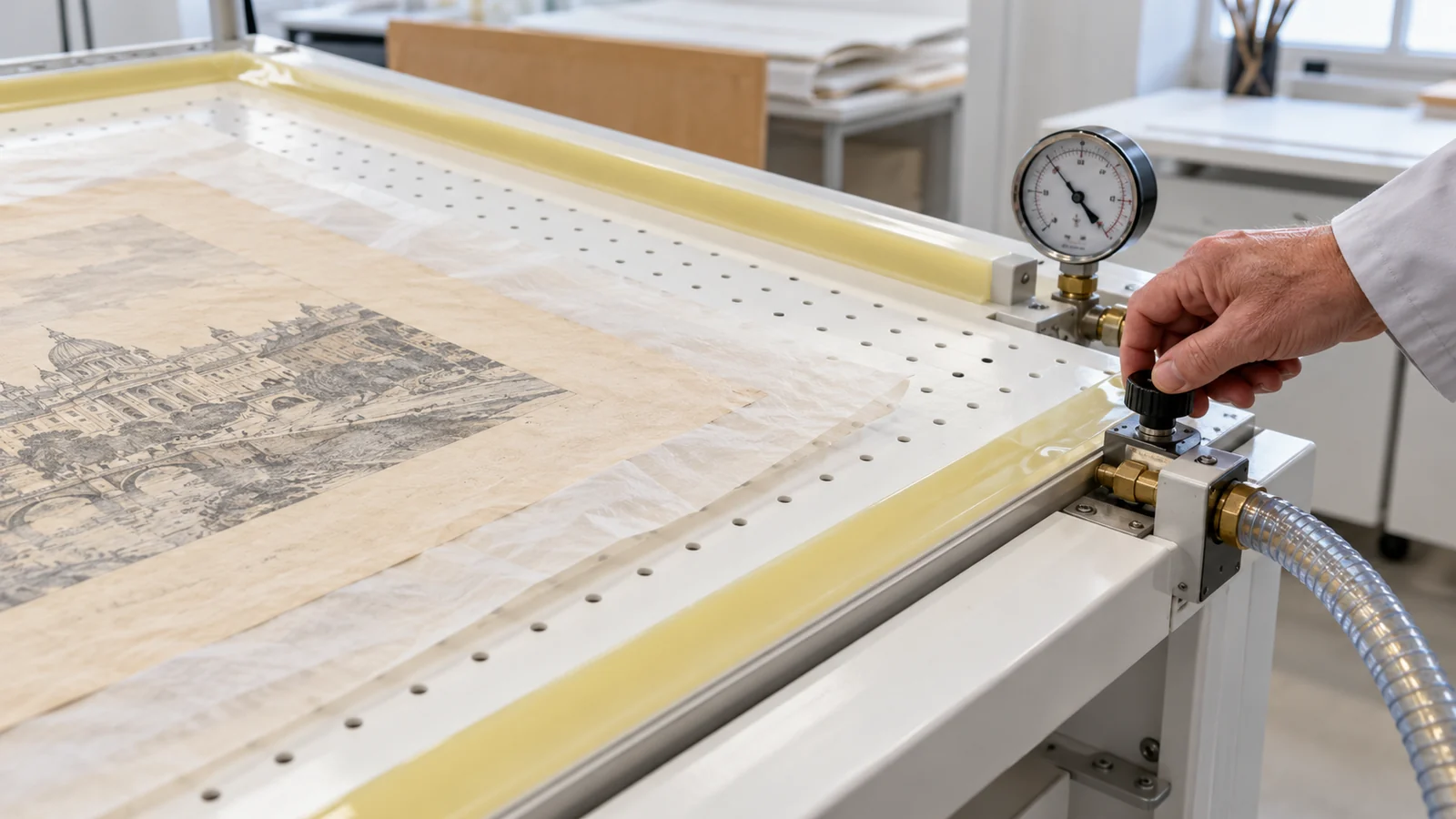
A conservation suction table can provide controlled airflow and support for certain paper treatments. Use depends on the object, treatment media and conservator's judgement; size is not the only selection criterion.
Consider the largest object, typical tasks and site facilities together so an adequate work surface is supported by suitable adjustment, liquid collection and service access.
Size the working area for collections and tasks
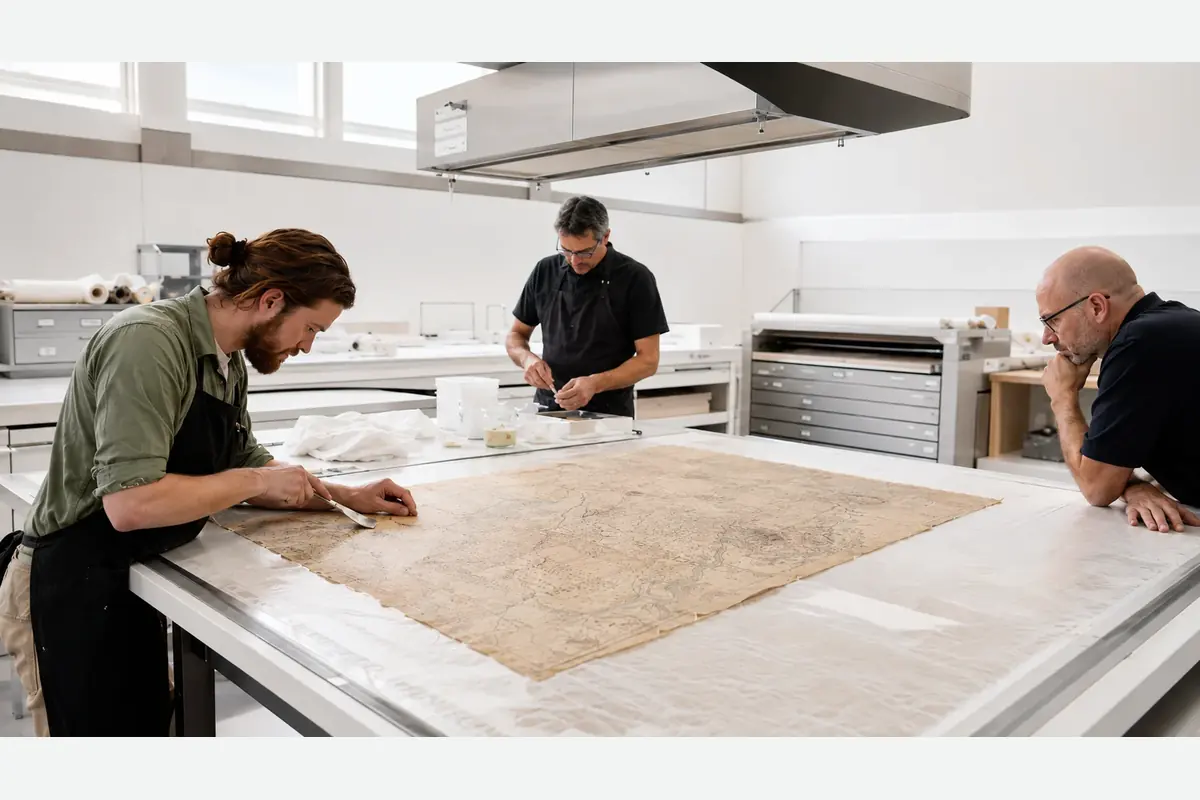
List maximum dimensions, fragility and support needs for maps, drawings, book leaves and other paper objects. Consider access from multiple sides and routes for placing and removing objects.
Confirm whether quoted dimensions describe the overall machine or usable working area, and check surface material, flatness, edges and support.
Discuss airflow control, not just one number
Explain whether work is localised or covers a larger area. Ask about adjustment, zoning and control under different loads. Evaluate fragile paper and loose media first with simulated materials.
Material, masking and treatment liquid change actual airflow. Values for other types of suction device cannot be applied directly to paper treatment equipment.
Check liquid management and maintenance
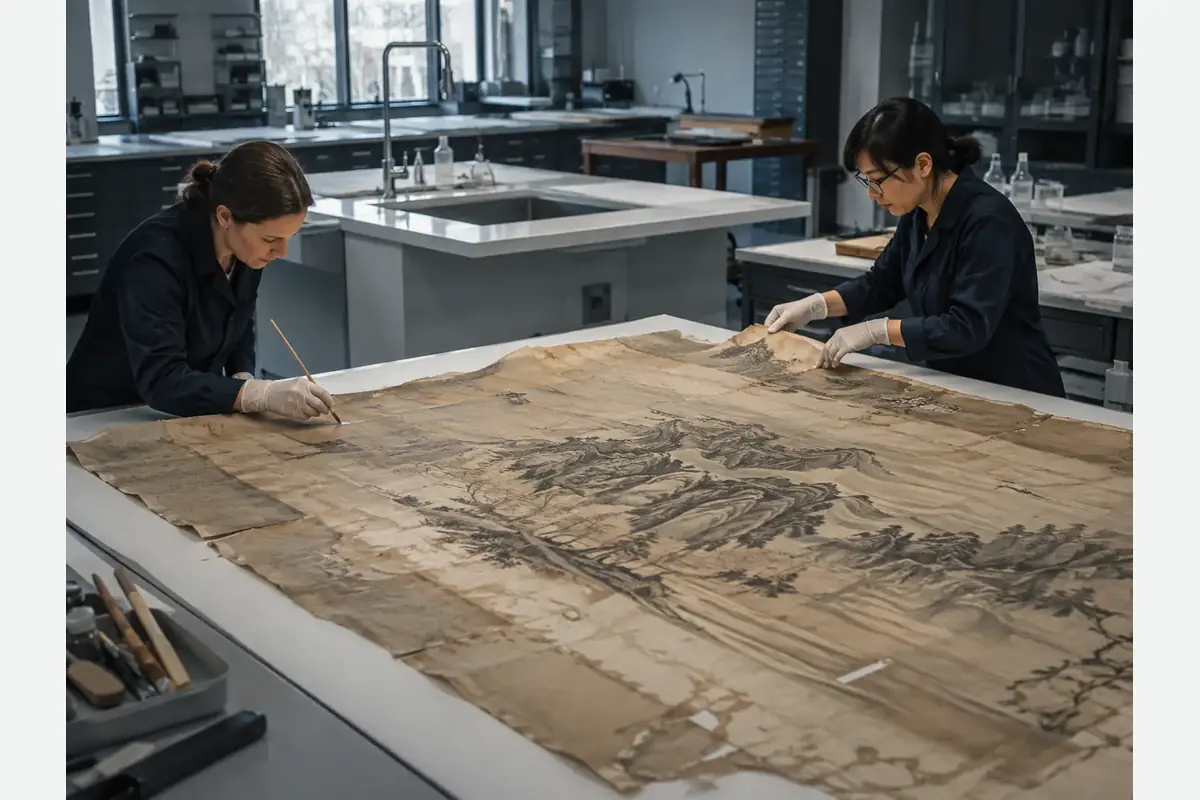
For wet treatment, check the liquid path, container capacity, level visibility, emptying, cleaning and measures preventing liquid from reaching inappropriate components. Discuss compatibility of treatment media and contact materials.
Ask how the surface and internal parts are removed and cleaned, how wear parts are replaced and how faults are handled. Include routine maintenance in selection.
Verify site and operating details
Confirm power, heat dissipation, noise, exhaust or filtration, drainage and service access. Relevant specialists should assess ventilation and safety where volatile media are involved.
Plan for seated or standing work, table height and control location. Request a layout or simulated demonstration when needed.
Request quotations and plan acceptance
Provide maximum object size, principal tasks, usable working area, site interfaces and training needs. Ask quotations to identify the supplied configuration, accessories and exclusions.
Acceptance should check the working surface, adjustment, liquid collection, alarms or controls and documentation. Treatment results and collection suitability require separate project-specific validation.
Describe the actual operation in project inputs
A large map may require two people to place it from the long edge, while small sheets may need close observation and fine adjustment. Describe working posture, tools, masking and object transfer to help establish control placement and layout.
Provide a room plan, doorways, outlet positions, drainage and other equipment locations. Check shipping package dimensions and on-site assembly, not only machine dimensions.
Acceptance examples and common questions
Use non-collection paper samples of different sizes and support materials to demonstrate placement, adjustment, liquid collection and cleaning. Check control visibility and safe emptying; record issues and agree correction and retesting.
Ask about shutdown, abnormal liquid level, filter or collection component replacement and checks before resuming after cleaning. Rated values may differ from airflow over actual objects, so test under agreed conditions.
Must the largest paper object fit on one table? That depends on safe movement, whether it can be treated in sections and the conservation objective. List both maximum and common sizes so infrequent tasks do not dictate a poor everyday configuration.
Compare whether surface supports, liquid containers, installation, commissioning and training are included. Assign design and construction responsibility for additional exhaust or building work.
During training, have users operate controls, empty the collection container and clean the surface, and check maintenance intervals and contacts in the manual. Conservators determine paper-treatment settings from the object and testing.
Sources
- Library of Congress: Collections care treatment manual
- Canadian Conservation Institute: A Small Backlit Suction Device for Treating Textiles
Share maximum paper dimensions, principal treatments and site conditions to discuss suction table configuration.
Explore related equipment → · Discuss your project →