After a flood or leak, the most important decision is not which drying machine is fastest.
It is how to stabilize the collection before mould growth, page blocking, ink movement and binding distortion become harder to control.
For small quantities of damp material, controlled air drying can work well. For large quantities of very wet books and records, freezing followed by vacuum freeze-drying is often the more suitable recovery route.
The comparison becomes confusing because terms such as low-temperature drying, cold drying, freezer drying and vacuum freeze-drying are sometimes used as if they mean the same thing.
They do not.
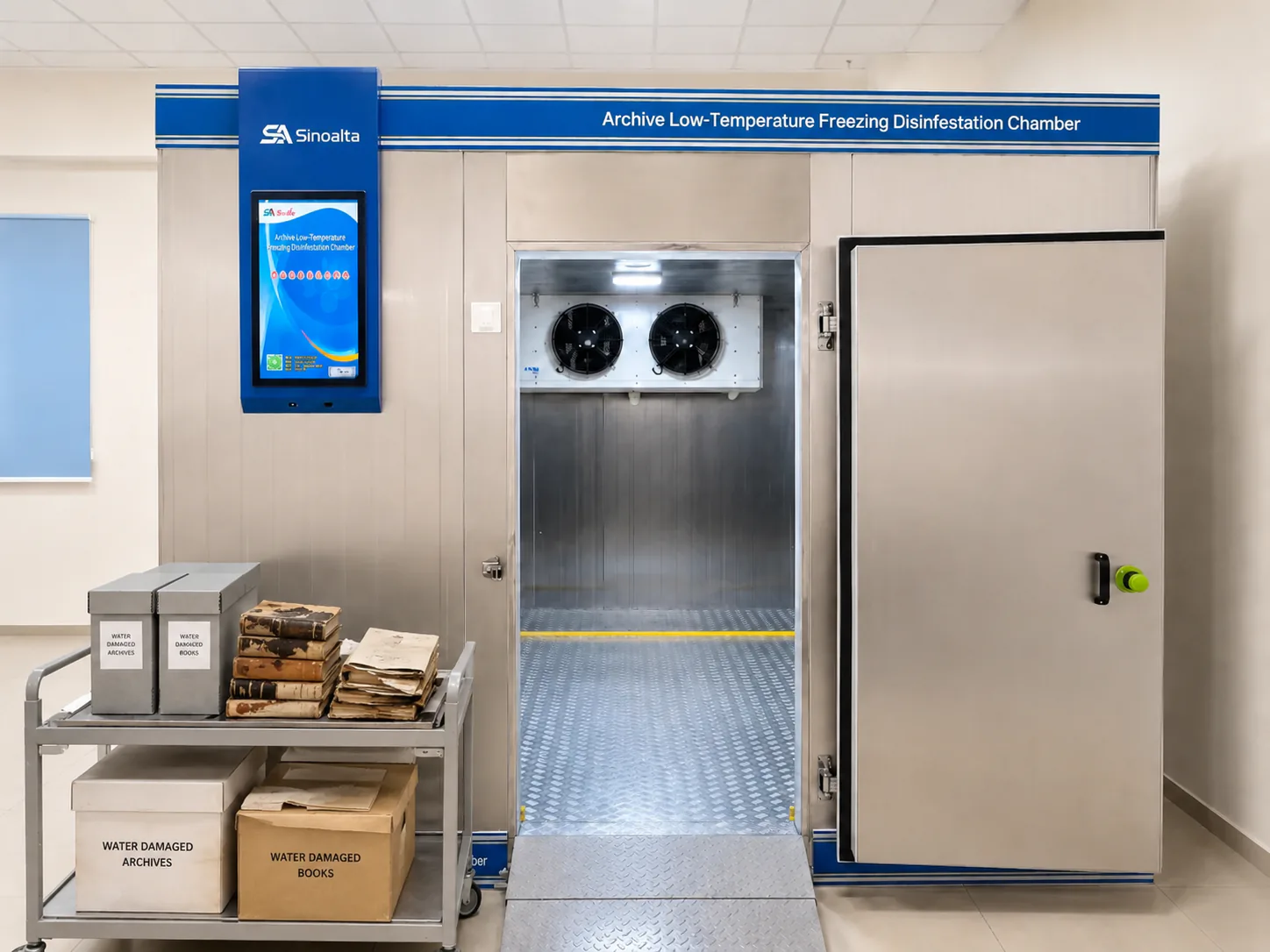
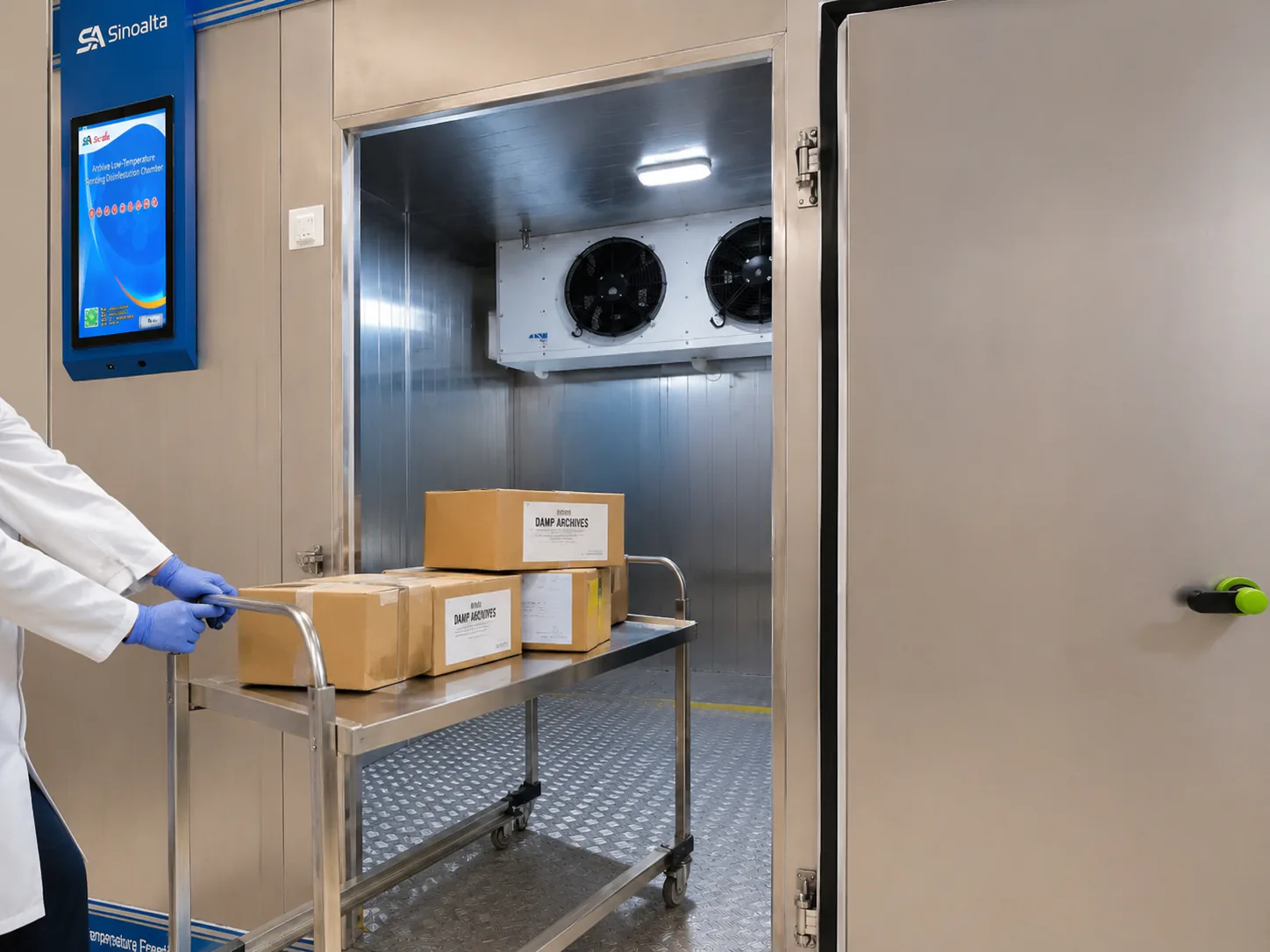
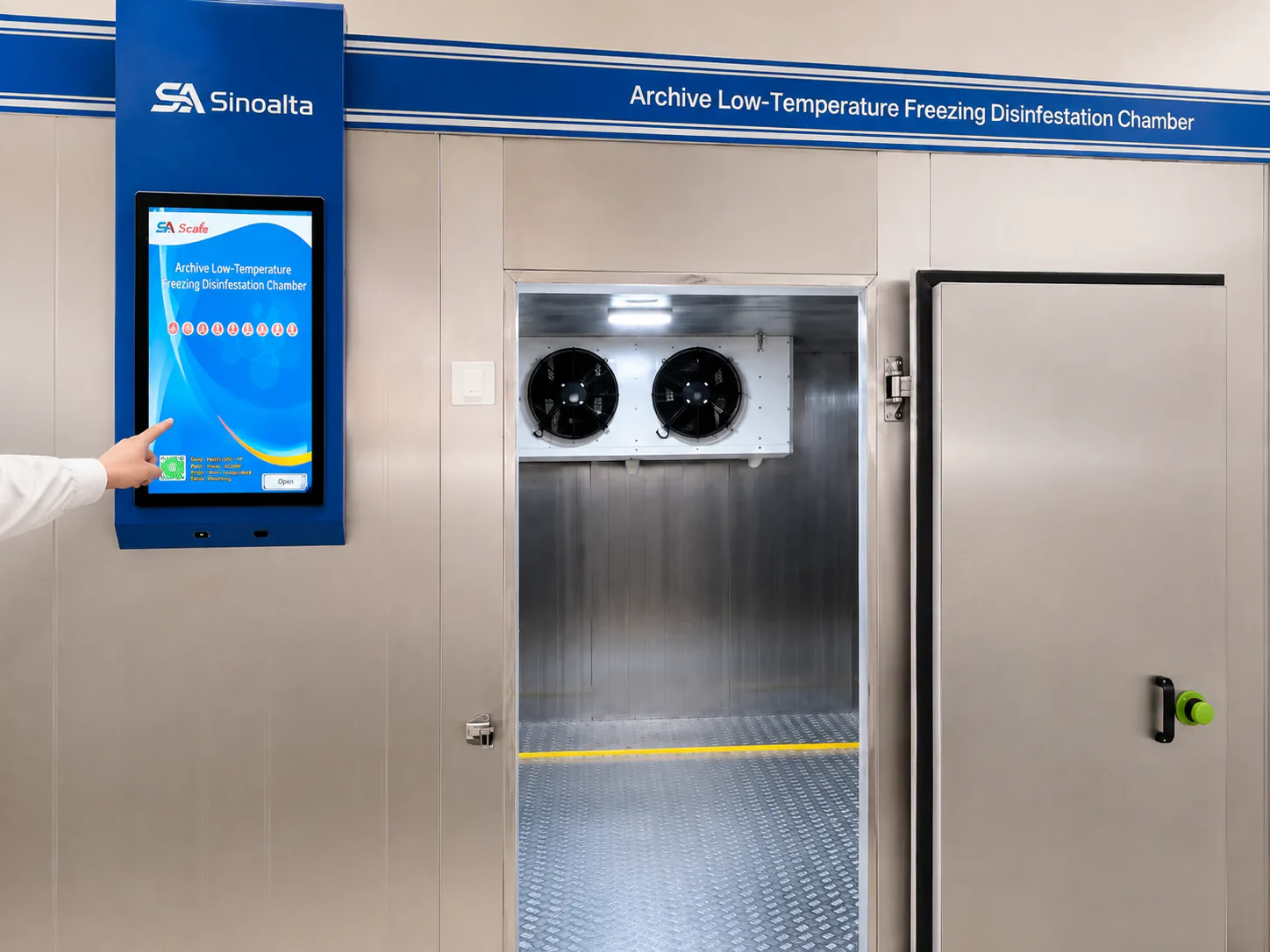
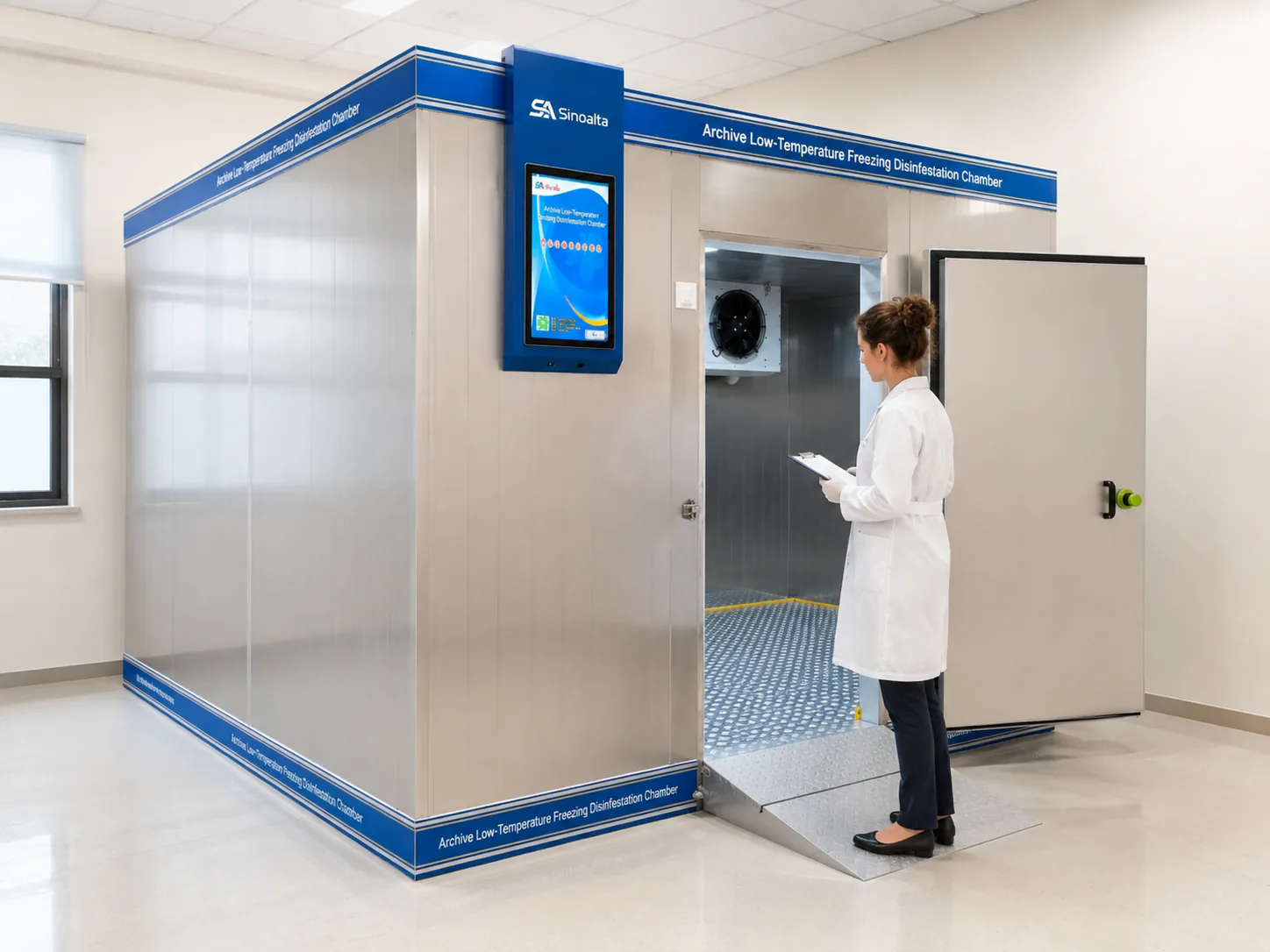
In this article, controlled low-temperature drying means a managed drying room or recovery space that uses cool conditions, low relative humidity and continuous air movement to dry damp or partially wet paper. It is a useful project term, but it is not a single universal conservation process with one fixed temperature or cycle.
Direct Answer: Which Method Should You Use?
Use controlled low-temperature air drying when the quantity is manageable, the material is damp or only slightly wet, and staff can actively monitor the drying process.
Use freezing and vacuum freeze-drying when:
- large quantities are affected;
- material is saturated;
- coated paper is present;
- water-sensitive media are at risk;
- there is not enough time or space to air dry safely;
- the collection cannot be handled within the first roughly 48 hours.
The U.S. National Archives advises freezing quantities that cannot be handled within the first 48 hours. NEDCC gives similar guidance and describes freezing as a way to buy time for decision-making and recovery planning.
The first principle is therefore:
Stabilize first. Dry second.
First Clarify the Terms
Freezing
Freezing is a stabilization step.
It changes liquid water to ice and slows further damage.
It does not remove the water from the object.
The collection still needs a drying method later.
Vacuum freeze-drying
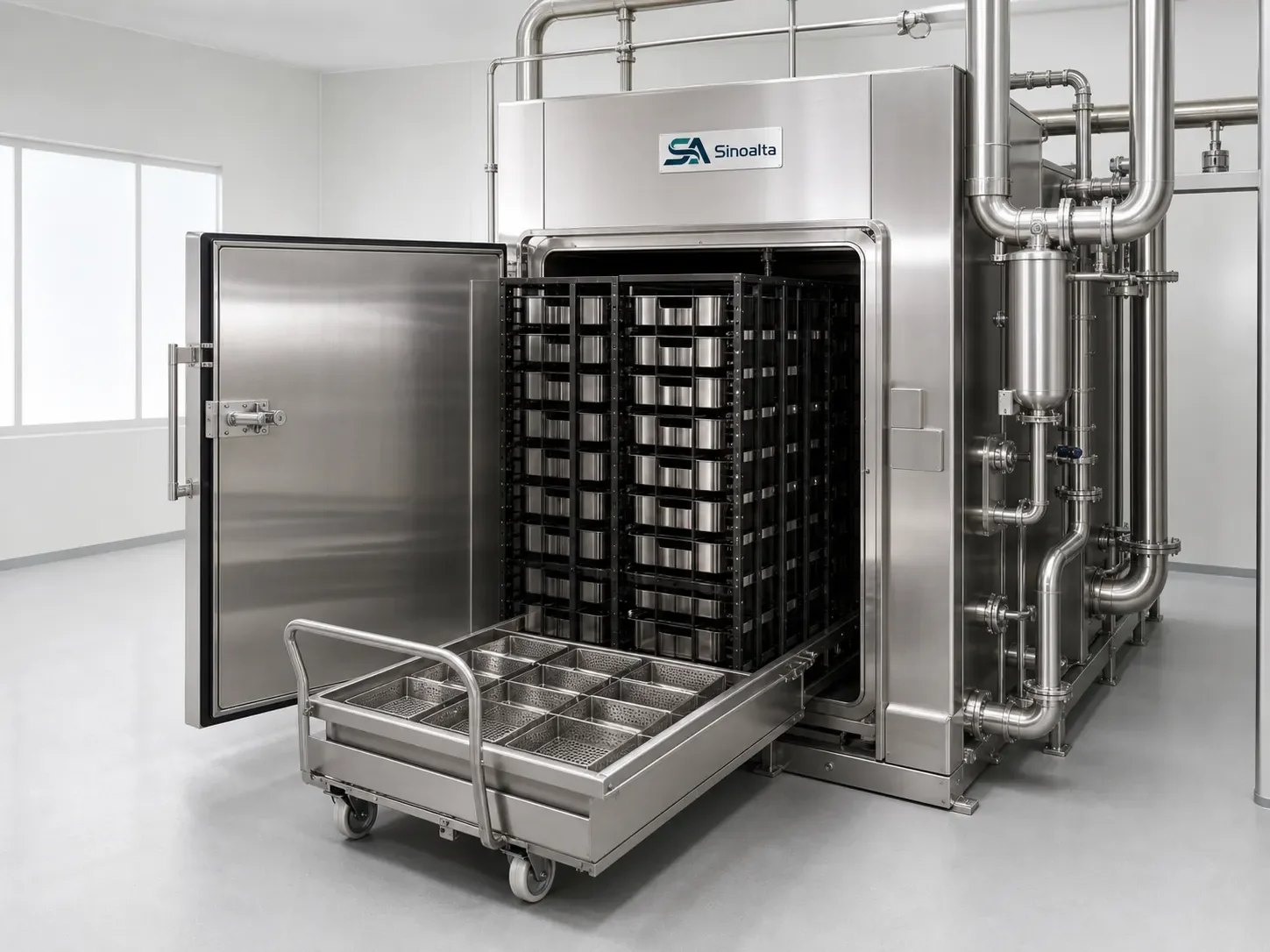
Vacuum freeze-drying is a drying process.
Frozen water is removed mainly by sublimation. Ice changes directly to vapour under controlled pressure and temperature conditions instead of first melting back into liquid water.
This is the main technical advantage for water-damaged paper.
Controlled low-temperature drying
This article uses this term for a managed air-drying environment with:
- cool temperature;
- low RH;
- continuous air movement;
- active monitoring;
- sufficient working space;
- controlled handling and interleaving.
It is closer to controlled air drying than to freeze-drying.
Freezer drying
Some materials can slowly lose moisture while they remain in a freezer, especially a self-defrosting freezer.
NEDCC notes that this can take weeks or months.
It is not the same as vacuum freeze-drying.
Why the First 48 Hours Matter
Wet paper changes quickly.
Once books and archives are wet:
- fibres swell;
- bindings distort;
- adhesives soften;
- inks can bleed;
- stains migrate;
- coated papers can stick together;
- mould risk increases.
NARA recommends freezing quantities that are too large to deal with within about 48 hours.
This does not mean mould always begins at exactly 48 hours.
Temperature, contamination, ventilation and RH all affect biological growth.
The 48-hour figure is better understood as a response threshold for planning, not a promise that the collection is safe until the clock reaches two days.
If large quantities are already wet and the institution cannot maintain active drying conditions, freezing can stop the emergency from becoming harder to manage.
How Controlled Low-Temperature Drying Works
Controlled air drying removes water by evaporation.
The room should support evaporation without exposing the collection to damaging heat or uncontrolled air flow.
NARA recommends a cool, dry location with good air circulation for small quantities of wet records. It also warns against high heat and harsh sunlight because rapid drying can cause permanent damage.
NEDCC similarly recommends a clean, secure drying space with controlled temperature and low RH. Air should move continuously, but fans should not blow directly onto fragile materials.
A purpose-planned low-temperature recovery room may therefore use:
- air conditioning or cooling;
- dehumidification;
- controlled ventilation;
- fans or air circulation;
- drying racks;
- large tables;
- absorbent materials;
- RH and temperature monitoring.
The process still requires people.
Staff may need to:
- separate sheets;
- change blotters;
- interleave books;
- turn volumes;
- fan pages;
- flatten material near the end of drying;
- inspect for mould.
This is why air drying can appear inexpensive in equipment terms but become labour-intensive at scale.
How Vacuum Freeze-Drying Works
Vacuum freeze-drying starts with the material frozen.
A simplified process is:
Freeze → Load → Reduce Pressure → Add Controlled Heat → Sublimate Ice → Capture Vapour → Verify Drying
Under the correct conditions, ice leaves the object as vapour without returning to the liquid state.
CCI describes freeze-drying as a process in which moisture is removed from frozen material by sublimation. NARA also identifies vacuum freeze-drying as an efficient way to dry large quantities of wet records while reducing some of the problems caused by liquid-water movement.
A professional system may monitor:
- chamber pressure;
- shelf or chamber temperature;
- condenser temperature;
- product temperature;
- elapsed time;
- water removal;
- residual moisture or other endpoint criteria.
The cycle should not be judged only by a timer.
Why Coated Paper Changes the Decision
Coated paper is one of the strongest reasons to separate ordinary air-drying advice from disaster recovery for books.
When coated paper becomes wet, the coating can soften.
If adjacent pages dry while touching, they can bond together permanently. This is called blocking.
NEDCC specifically advises that wet books containing coated paper should be frozen and vacuum freeze-dried rather than air dried.
NARA emergency guidance also treats coated paper as a high-priority format and warns against allowing it to begin uncontrolled drying.
This means a recovery team should identify coated-paper material early.
Examples may include:
- art books;
- glossy magazines;
- illustrated catalogues;
- some modern reference books;
- coated maps or printed material.
A low-temperature drying room is not automatically the safer option simply because the room is cool.
If coated pages are wet enough to adhere, the material may need to remain frozen until a suitable freeze-drying process is available.
Water-Sensitive Media Can Also Push the Decision Toward Freezing
Wet documents may contain inks, dyes or other media that move in water.
Freezing can slow that movement.
Vacuum freeze-drying can then remove water while the material remains frozen, reducing further wicking compared with processes that return the material to a wet state during drying.
NEDCC recommends immediate freezing for records with running or blurred inks when further water movement threatens information.
However, not every photograph, drawing or mixed-media object should follow the same workflow as ordinary paper.
Special formats need separate triage.
Scale Is Often the Deciding Factor
A single damp book and 20,000 wet files are different recovery problems.
Small incident
If ten folders are damp, staff may be able to spread them safely in a controlled room and dry them in one working day.
Medium incident
If several hundred books are damp, a drying room may still work if there is enough space, staff and environmental control.
Large incident
If thousands of books are saturated, attempting to air dry everything can create:
- space problems;
- labour bottlenecks;
- uneven drying;
- mould growth;
- loss of collection order.
Freezing buys time.
Vacuum freeze-drying then allows larger quantities to be processed in controlled batches.
This is why method selection should include throughput, not only object compatibility.
Comparison: Vacuum Freeze-Drying vs Controlled Low-Temperature Drying
| Decision factor | Vacuum freeze-drying | Controlled low-temperature drying |
|---|---|---|
| Best fit | Large or very wet paper collections | Small to moderate quantities of damp/slightly wet material |
| Water state during drying | Mainly frozen | Liquid water evaporates |
| Main mechanism | Sublimation under vacuum | Evaporation in controlled air |
| Coated paper | Often preferred | Usually poor choice when pages are wet enough to block |
| Water-sensitive media | Can reduce further liquid movement | Higher risk if media remain mobile during drying |
| Labour | Lower item-by-item handling during chamber drying, but packing/QA still required | High staff involvement for interleaving, turning and monitoring |
| Equipment | Freeze-dryer, vacuum, condenser, refrigeration | Controlled room, dehumidification, air circulation, racks/tables |
| Distortion | Often lower than air drying, but existing distortion remains | Often greater, especially in saturated books |
| Scale | Strong for large batches | Limited by room, staff and surface area |
| Access during drying | Material generally unavailable during chamber cycle | Staff can inspect individual items continuously |
Freeze-Drying Does Not Undo Existing Damage
A common expectation is that a freeze-dryer will return wet books to their original shape.
It cannot.
NARA notes that materials tend to come out of vacuum freeze-drying in the physical configuration in which they were frozen.
If a book enters the freezer:
- warped;
- swollen;
- crushed;
- mud-stained;
- mould-damaged;
- with ink already bled;
some of that damage will remain after drying.
This is why packing before freezing matters.
Freeze-drying is a controlled drying method, not a reset button.
Do Not Confuse Vacuum Freeze-Drying With Vacuum Thermal Drying
These processes are often grouped together by non-specialist drying vendors.
They are not the same.
Vacuum freeze-drying
The collection remains frozen while water is removed mainly by sublimation.
Vacuum thermal drying
The material may thaw and water can pass through the liquid phase before evaporating under vacuum.
NARA warns that vacuum drying can carry greater risk of distortion, sticking and movement of soluble media compared with freeze-drying.
For rare, unique or coated-paper collections, the distinction matters.
When obtaining vendor quotes, ask:
Will the material stay frozen during the water-removal phase?
Do not rely only on the word “vacuum.”
When Controlled Low-Temperature Drying Is Often the Better Choice
A controlled drying room can be a strong option when:
- the quantity is small enough to manage;
- material is damp or slightly wet rather than saturated;
- coated paper is not a major concern;
- media are stable;
- enough staff are available;
- the room can maintain low RH and good air movement;
- the institution needs direct access to material during drying.
It can also support post-freeze drying of small batches that are thawed in stages.
NEDCC describes this as a practical option when frozen records can be processed in manageable groups.
When Vacuum Freeze-Drying Is Often the Better Choice
Vacuum freeze-drying becomes stronger when:
- the incident is large;
- material is very wet or saturated;
- coated paper is present;
- water-sensitive media are at risk;
- mould risk is increasing;
- staff cannot air dry the collection within the available time;
- collection order needs to be maintained in boxes or batches;
- rapid stabilization is more important than immediate access.
Large-scale disaster recovery often uses a sequence of:
triage → freezing → frozen storage → vacuum freeze-drying → post-treatment recovery
A Low-Temperature Recovery Room and a Freeze-Dryer Can Be Complementary
This is an important planning point.
Institutions do not always need to choose one method forever.
A broader recovery system may use:
- a low-temperature drying room for damp material;
- freezer capacity for material that cannot be handled immediately;
- vacuum freeze-drying for saturated or high-risk batches;
- cleaning and repair areas after drying.
The decision can therefore happen at triage.
For example:
Damp → controlled drying room Wet → freeze and assess Saturated / coated → freeze + vacuum freeze-dry
This type of routing can be more effective than forcing every item through one machine.
Plan the Whole Recovery Workflow
A good disaster-recovery system needs more than drying equipment.
Before drying
Plan:
- emergency access;
- electrical safety;
- water-source control;
- contamination assessment;
- object triage;
- crates and labels;
- freezer transport;
- chain of custody.
During drying
Monitor:
- temperature;
- RH;
- airflow;
- chamber variables where applicable;
- mould;
- collection identity;
- batch progress.
After drying
Plan for:
- acclimatization;
- surface cleaning;
- mould-residue removal;
- flattening;
- rebinding;
- new boxes or folders;
- extra shelf space;
- return only to a dry building.
Drying is one stage of recovery, not the end of it.
Common Drying-Method Selection Mistakes
| Mistake | Why it matters |
|---|---|
| Treating freezing as a drying method | Freezing stabilizes water; it does not remove it |
| Assuming all “vacuum drying” is freeze-drying | Some systems allow thawing and liquid-water movement |
| Air drying wet coated books | Pages may block permanently |
| Using high heat to speed drying | Heat can damage paper, bindings and media |
| Choosing a drying room for a collection too large to manage | Labour and space limits can increase mould risk |
| Expecting freeze-drying to remove prior distortion | The process largely preserves the frozen physical shape |
| Returning dried material to a damp building | Mould and deterioration can restart |
Frequently Asked Questions
Is low-temperature drying the same as freeze-drying?
No. In this article, controlled low-temperature drying means air drying in a cool, low-RH, well-ventilated environment. Vacuum freeze-drying removes ice from frozen material mainly by sublimation under vacuum.
Does freezing dry wet books?
No. Freezing stabilizes the collection and buys time. A separate drying process is still required.
When should wet books be frozen?
NARA advises freezing quantities that cannot be actively dried within roughly 48 hours. Wet coated-paper books and records with water-sensitive media may need even faster stabilization.
Can damp books be air dried?
Yes, small quantities of damp or slightly wet books can often be air dried successfully in a cool, low-RH area with continuous air circulation and active staff monitoring.
Why is vacuum freeze-drying preferred for coated paper?
It keeps water frozen during much of the drying process, reducing the time coated pages remain wet and adhesive. This helps lower the risk of permanent page blocking.
Does freeze-drying kill mould?
Freezing and drying stop the wet conditions needed for active mould growth, but they do not remove mould residue, staining or all spores. Post-drying cleaning may still be required.
How long does vacuum freeze-drying take?
There is no universal cycle. Time depends on water content, book thickness, chamber load, vacuum performance, heat transfer and equipment capacity. Large batches can require days to weeks.
Planning an Archive Water-Recovery System?
Plan for triage, freezing, drying and post-treatment recovery as one system.
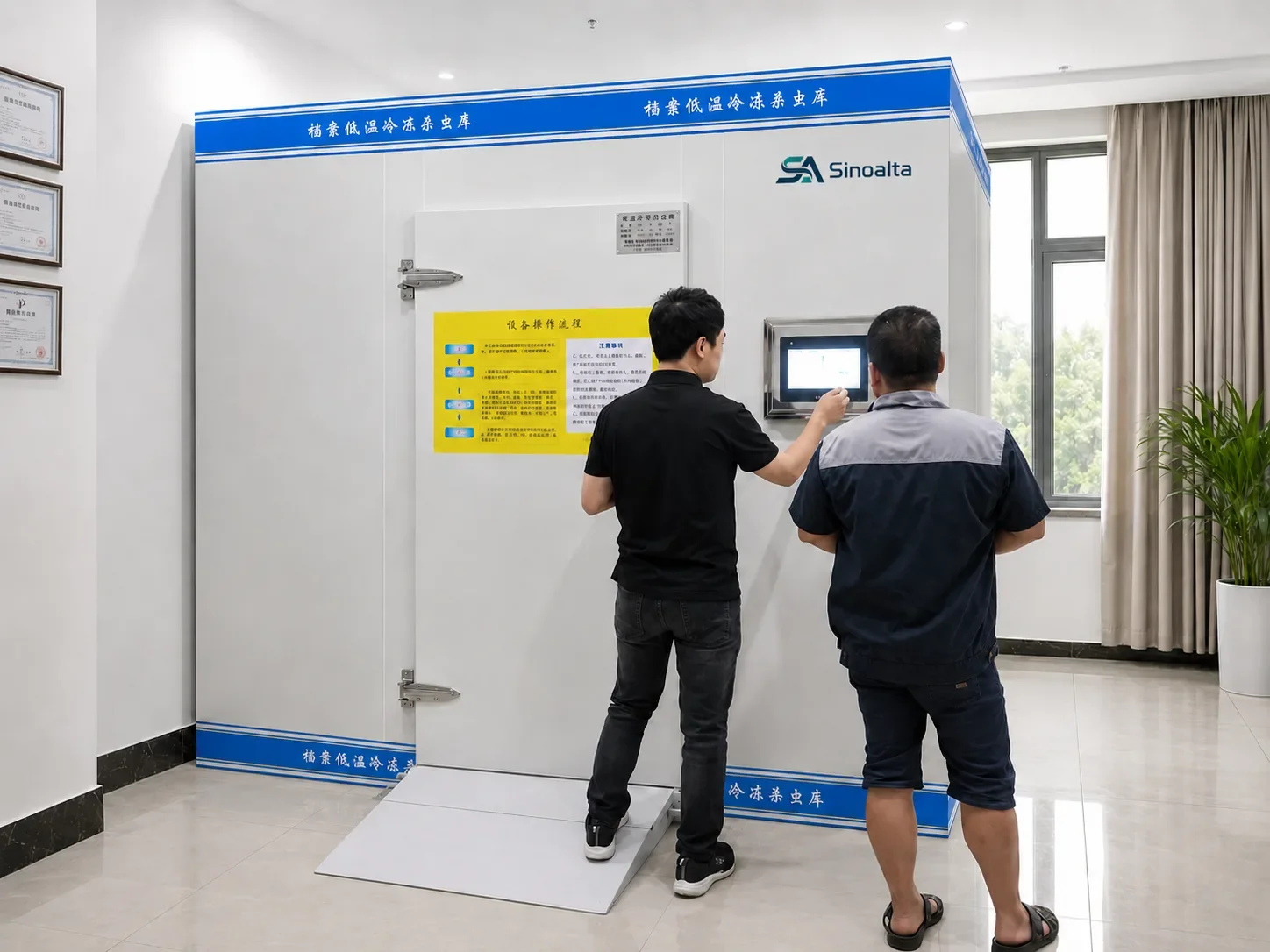
Sinoalta develops vacuum freeze-drying systems and controlled low-temperature archive recovery-room configurations for institutional workflows. The correct combination depends on collection size, wetness, formats, response time and recovery staffing.
Read Freeze-Drying Water-Damaged Books & Archives → Explore Archive Disaster-Recovery Solutions → View Vacuum Freeze-Drying Systems → View Low-Temperature Archive Recovery Rooms →
Selected Technical References
- U.S. National Archives, Wet Records: https://www.archives.gov/preservation/holdings-maintenance/wet-records
- U.S. National Archives, Comparison of Drying Techniques: https://www.archives.gov/preservation/disaster-response/drying-techniques.html
- U.S. National Archives, Salvage of Water Damaged Library Materials: https://www.archives.gov/preservation/conservation/library-materials-01.html
- U.S. National Archives, Principles of Stabilization by Freezing: https://www.archives.gov/preservation/conservation/library-materials-06.html
- NEDCC, Freezing and Drying Wet Books and Records: https://www.nedcc.org/free-resources/preservation-leaflets/3.-emergency-management/3.12-freezing-and-drying-wet-books-and-records
- NEDCC, Emergency Salvage of Wet Books and Records: https://www.nedcc.org/free-resources/preservation-leaflets/3.-emergency-management/3.6-emergency-salvage-of-wet-books-and-records
- Canadian Conservation Institute, Vacuum Freeze-drying Archaeological Artifacts: https://www.canada.ca/content/dam/cci-icc/documents/services/conservation-preservation-publications/canadian-conservation-institute-notes/4-2-eng.pdf