
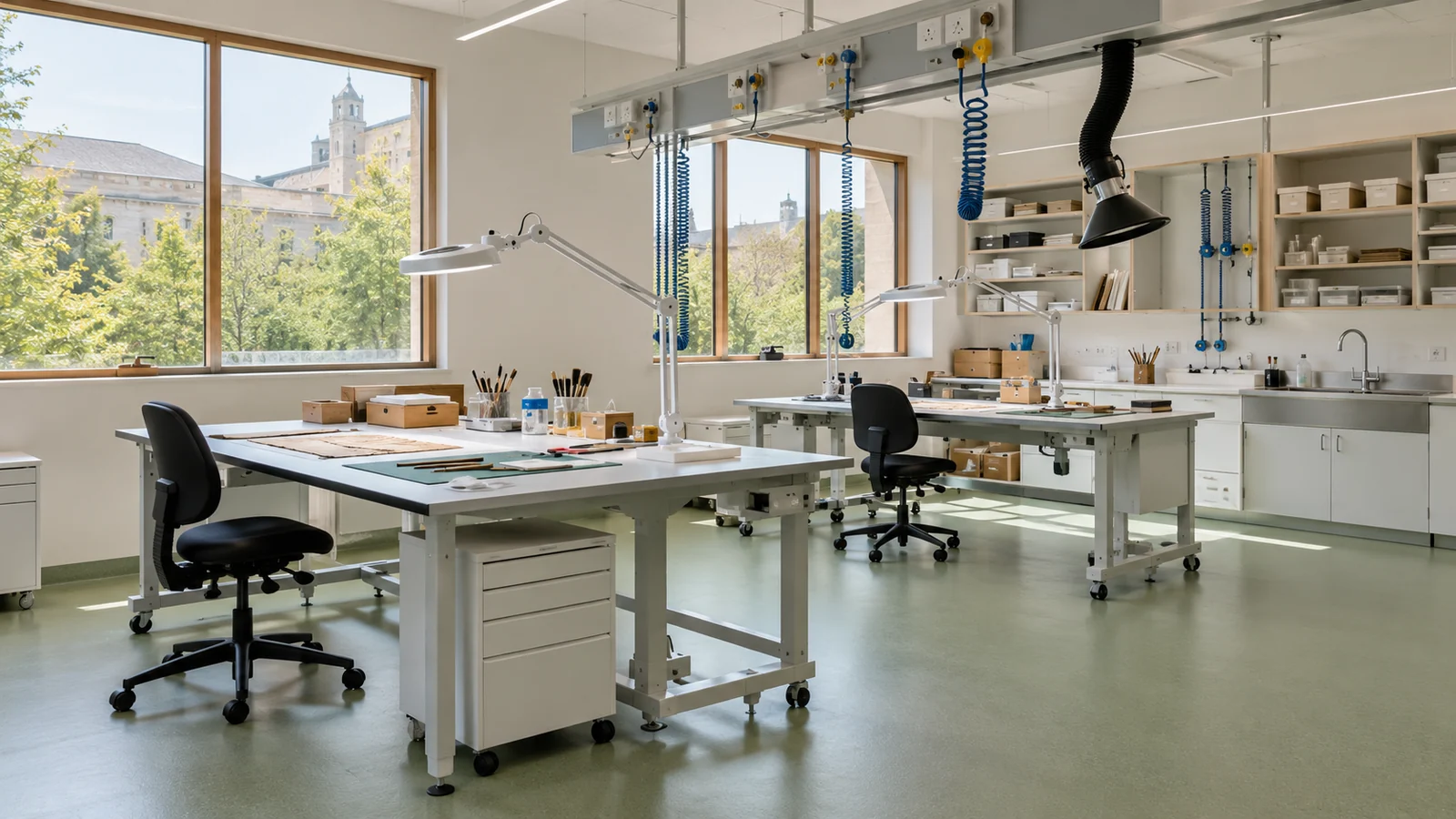
A conservation bench is used by staff and collections every day. Length, width and height alone do not tell a supplier what the surface must support, how staff work or whether water, power, lighting or local extraction is needed.
Describe the task, object dimensions and site conditions together so suppliers quote against the same requirements.
Describe the work and the objects
State whether the bench is for examination, documentation, dry treatment, wet treatment or several tasks. Give the largest object dimensions and weight, and the number of people working together.
Allow for temporary support, transfer onto the work surface and surrounding handling space for large or fragile objects. Do not simply select the largest bench that fits in the room.
For a shared bench, describe how the surface is changed between tasks, whether tools need fixing, how it is cleaned and whether staff need access from different sides. A workflow review can reveal problems that extra surface area alone will not solve.
Set usable dimensions and working posture
Distinguish overall size from usable work surface and identify seated, standing or mixed work. Fixed versus adjustable height depends on staff, seating, tools and object thickness.
Check openings, lifts, turns and whether site assembly is needed. If the bench moves, specify castors, brakes and stability during use.
For work involving several people, mark a proposed footprint on the floor and test reach, tool access and circulation. A wall or an open storage door can otherwise obstruct the work.
- Overall and usable dimensions
- Posture, number of users and reach
- Expected loading, concentrated loads and support
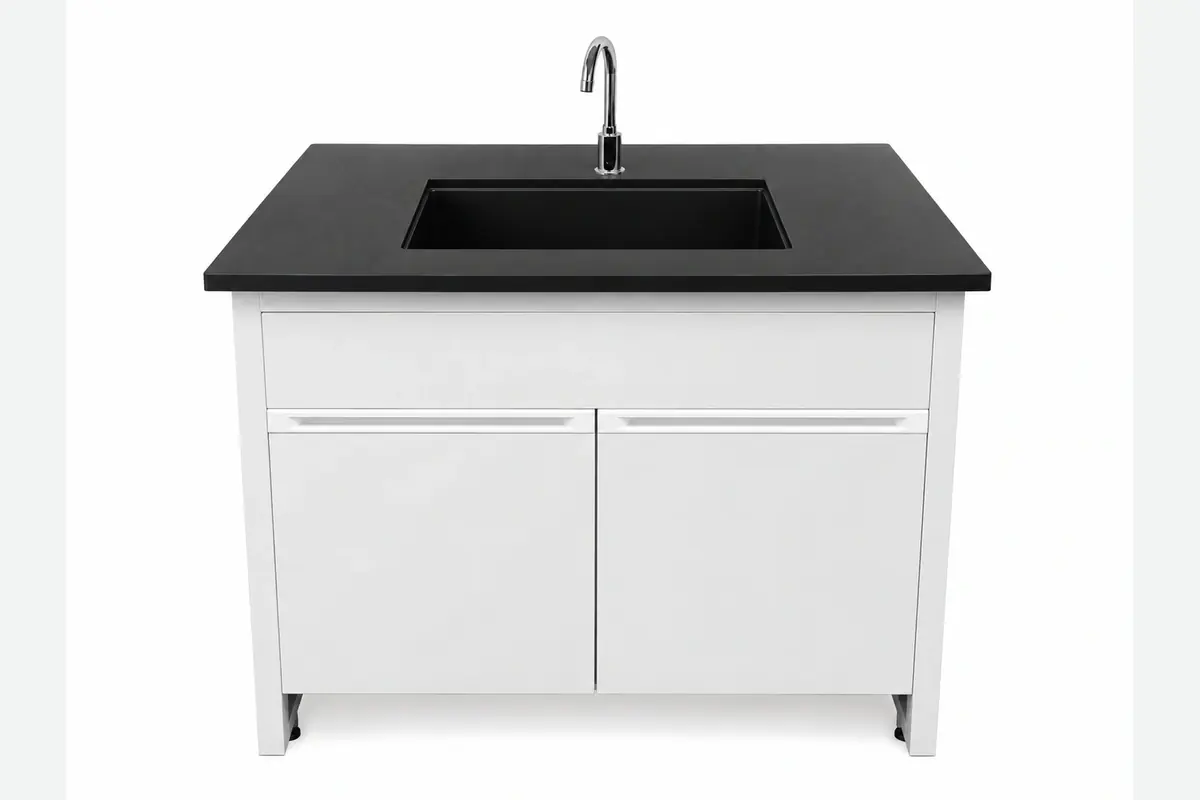
Select materials for the task
The surface should suit intended materials and cleaning methods. State requirements for wear, cleaning, edge treatment and resistance to water or commonly used media, then request specific material and care information.
Padding and supports that contact objects also require assessment. A material name alone does not guarantee compatibility with every collection.
List water, power, lighting and extraction interfaces
For sockets, task lighting, sinks or exhaust connections, specify quantity, position, use and the boundary with building systems. Qualified professionals should coordinate wet areas and electrical equipment.
Dust-producing work needs further assessment of capture, duct connection and maintenance. A bench alone is not a validated exposure-control system.
Agree delivery and inspection items
Request drawings showing overall and usable dimensions, connections, drawers and adjustable parts, and confirm assembly, transport and positioning scope.
Acceptance can cover dimensions, finish, stability, moving parts, interface identification, instructions and training. Agree test methods and criteria for load or other quantified requirements.
Different tasks require different questions
Examination and documentation need stable support, appropriate lighting and access. If photography is required, plan lights, cameras and stands so they do not obstruct object movement. Confirm support for the full extent of a large flat object.
For wet work, specify water, drainage, edges and cleaning. The institution should decide which solutions are used, how waste liquid is collected and whether building connections are suitable under applicable requirements.
Dry cleaning or mechanical work may produce dust. Discuss local capture, filtration, replacement and cleaning with qualified personnel. Distinguish the bench from a complete extraction system: an opening in the surface is not proof of capture performance.
Common RFQ omissions
Benches with identical external dimensions can have different usable surfaces when columns, backs, sinks or fixed devices occupy space. Ask for the clear working area and reach on the drawing.
For adjustable benches, check the range, movement space, cable and hose allowance and the position after power loss. Drawers and cabinets should not obstruct legroom or safe exit.
Separate the budget for the bench, accessories, utilities, installation, training and maintenance. Where loading or material selection remains uncertain, describe the objects and process and ask the supplier to explain its assumptions.
Sources
Send the tasks, maximum object dimensions and site interface drawings to discuss a bench configuration.
Explore related equipment → · Discuss your project →