Product Positioning
For vacuum nitrogen-flush packaging of archives, books and sensitive collection materials that have been assessed as suitable for enclosure in polyethylene film. The system combines vacuum extraction, nitrogen flushing and heat sealing as a packaging operation that can follow treatment, deacidification or scanning. It is distinct from a nitrogen-anoxia pest-treatment chamber and does not replace appropriate storage temperature, relative humidity, cleanliness, handling, monitoring or housing. Selection should begin with the material form, condition, dimensions, desired package format and the institution’s reason for packaging, because fragile structures, unstable media, residual moisture or objects requiring regular access may need a different approach.
Product Name and Functional Overview
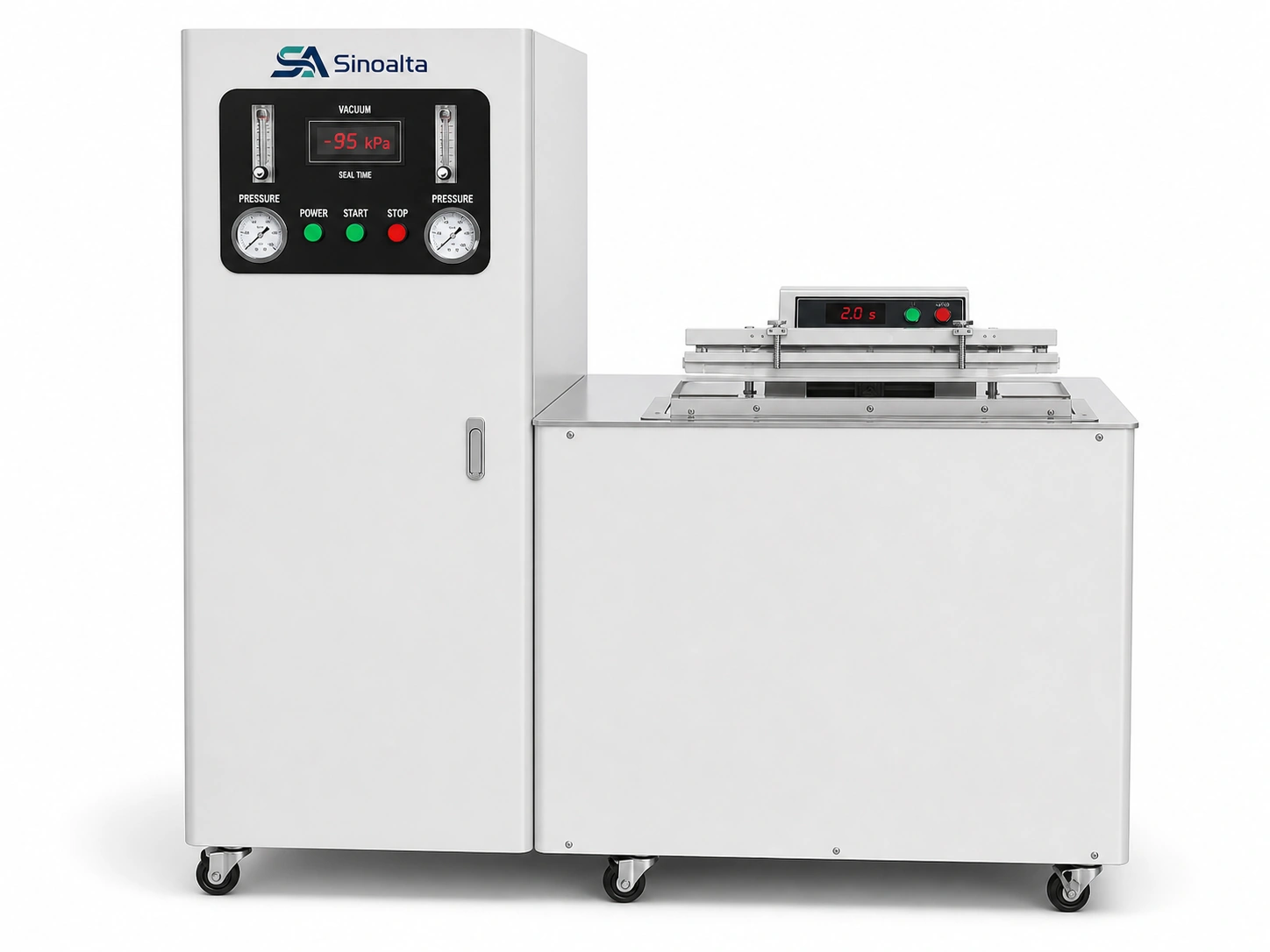
The archive vacuum nitrogen-flush packaging machine is intended to create a sealed, nitrogen-flushed protective enclosure that limits direct exposure to dust and the surrounding atmosphere. The suitability and expected benefit of that enclosure depend on the collection material, its condition, the film, the quality of the seal and the storage environment. Packaging should therefore be treated as one part of a preventive-conservation plan rather than a guarantee against oxidation, corrosion, mould, pests or moisture. Before work begins, staff should document condition, confirm that prior treatment steps are complete and dry, and determine whether vacuum or mechanical pressure could distort bindings, layered structures, friable surfaces or other vulnerable components.
Paintings and calligraphy, rare books and archives that have undergone treatment, deacidification or scanning may be considered for nitrogen-flush packaging when their condition and future access requirements allow it. Where the packaging workflow is also intended to apply controlled mechanical pressure to cockled material, the conservator must first assess media stability, construction and deformation risk; packaging is not itself a substitute for conservation flattening treatment. Project planning should define maximum package width, sealing length, film preparation, object supports and labeling, as well as how packages will be inspected, stored, opened and replaced over time.
Working Principle and System Composition
Collections are enclosed in polyethylene film through a sequence of vacuum extraction, nitrogen flushing and heat sealing. Before sealing, the operator should confirm object identity, orientation, support and package dimensions, keep the sealing zone clear and check that the chosen level of vacuum is appropriate for the material. After the cycle, the package should be examined for seal continuity, visible damage, unintended compression and correct labeling. A sealed appearance alone does not verify ongoing package performance, so institutions should establish an inspection and repackaging procedure appropriate to their collection use and storage plan.
The product integrates the specified molecular-sieve nitrogen-generation system and uses a vacuum ejector rather than a vacuum pump. Configuration should be checked against the stated nitrogen output and purity, working pressure and air-supply requirement, electrical supply, package throughput and the required 50 cm or maximum 100 cm sealing length. Installation planning should account for equipment dimensions and weight, compressed-air provision, ventilation, operator clearances and a clean area for preparing and inspecting packages. Operating records should identify the material packaged and the selected cycle, while routine checks should cover the nitrogen source, vacuum function, heat seal and package condition.
Operation and Control
- Operation control: One-button operation of the vacuum extraction, nitrogen flushing and heat-sealing systems, with intelligent program control.
- Sealing method: Heat sealing.
Configuration and Project Selection
The nitrogen-generation method, vacuum function, heat-sealing arrangement, package format, compressed-air provision, electrical supply and installation layout are selected for the material, workflow and site. Final configuration should be confirmed against the institution’s handling, inspection and repackaging plan.