Multiple conservation stations
The laboratory needed to support several work positions rather than place one independent extractor at every station.
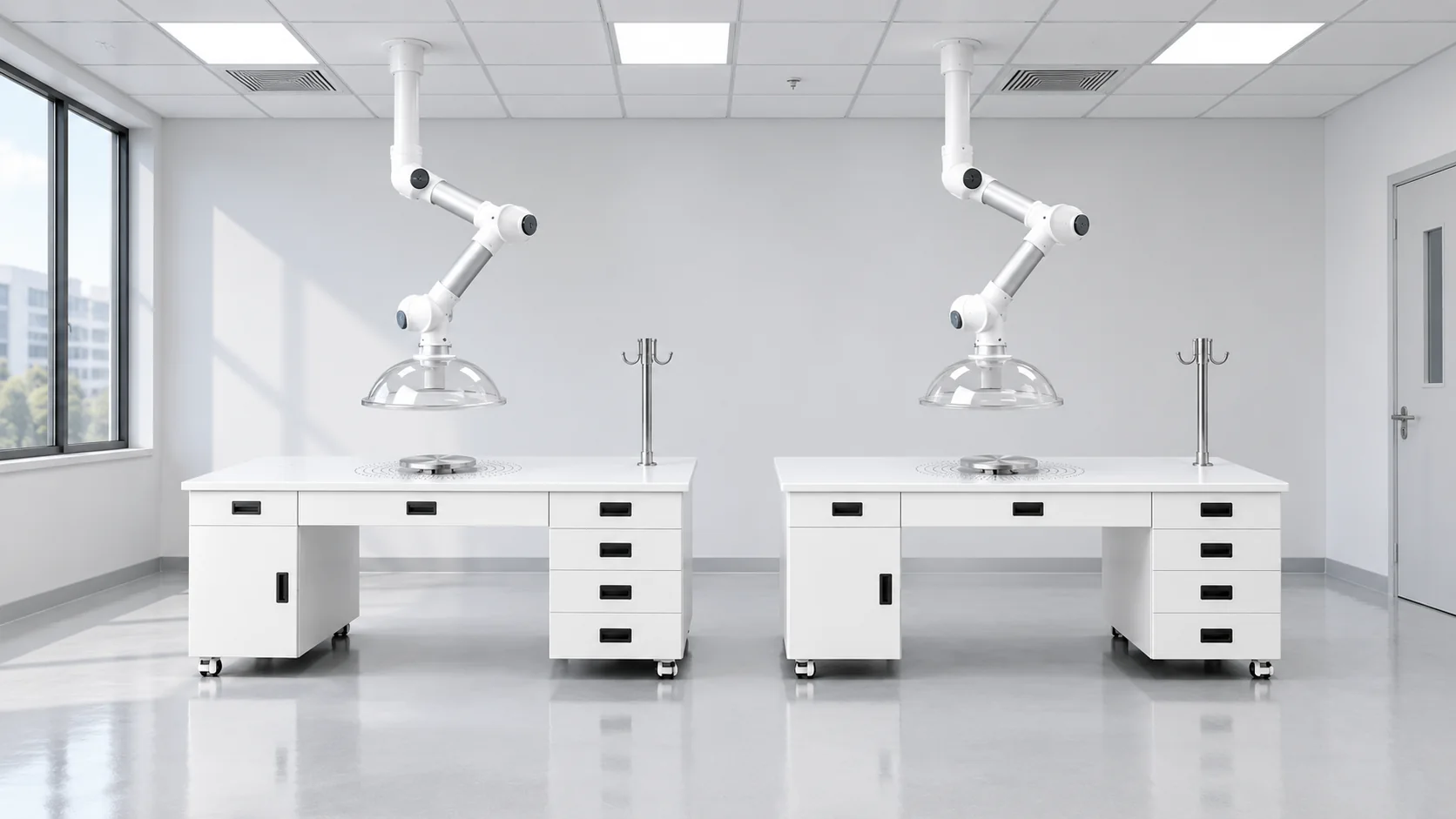
A centralized source-capture concept combining multiple conservation workstations, fixed articulated extraction arms, laboratory ducting and configurable downstream treatment.
A national museum conservation facility in Central Asia was evaluating two ways to control dust, fumes and other airborne contaminants generated during conservation work: mobile extraction units and a fixed articulated or flexible extraction-arm system.
At the initial stage, the actual materials, conservation processes and contaminant types were not fully defined. Sinoalta therefore did not force the project into one fixed product, but outlined different application routes according to the expected workload and source intensity.
For the higher-workload conservation area, the second route used a central extraction system serving multiple workstations through ceiling- or wall-mounted articulated arms, with optional downdraft capture at the work surface.
The concept shifted the focus from separate mobile units to a coordinated laboratory layout: capture contaminants near where they are generated, connect multiple capture points to a central exhaust path, and determine the final filtration or exhaust treatment only after the real processes and discharge requirements are confirmed.
This is a system-configuration and planning case. The available evidence does not support describing it as installed, commissioned, accepted or performance-tested.
The laboratory needed to support several work positions rather than place one independent extractor at every station.
Capture hoods had to adjust to different object sizes, treatment zones and operator positions.
Multiple capture points needed to feed a coordinated central path instead of operating in isolation.
Because materials and processes were not yet fully defined, filtration efficiency and downstream treatment could not be fixed at concept stage.
For higher-load applications, the second route combined conservation workstations with fixed ceiling- or wall-mounted articulated extraction arms. Transparent hoods could move close to the treatment area while preserving usable space on the main work surface.
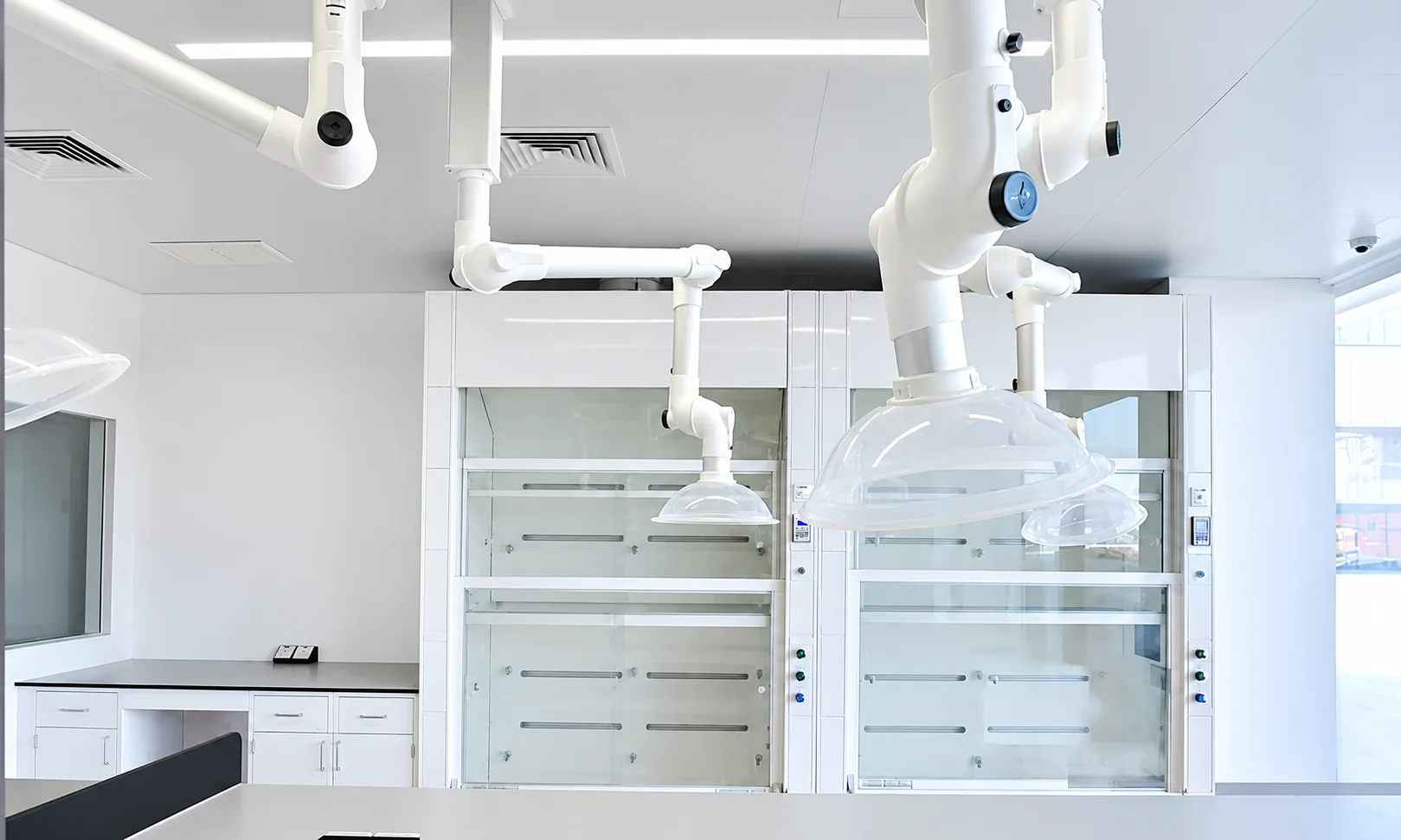
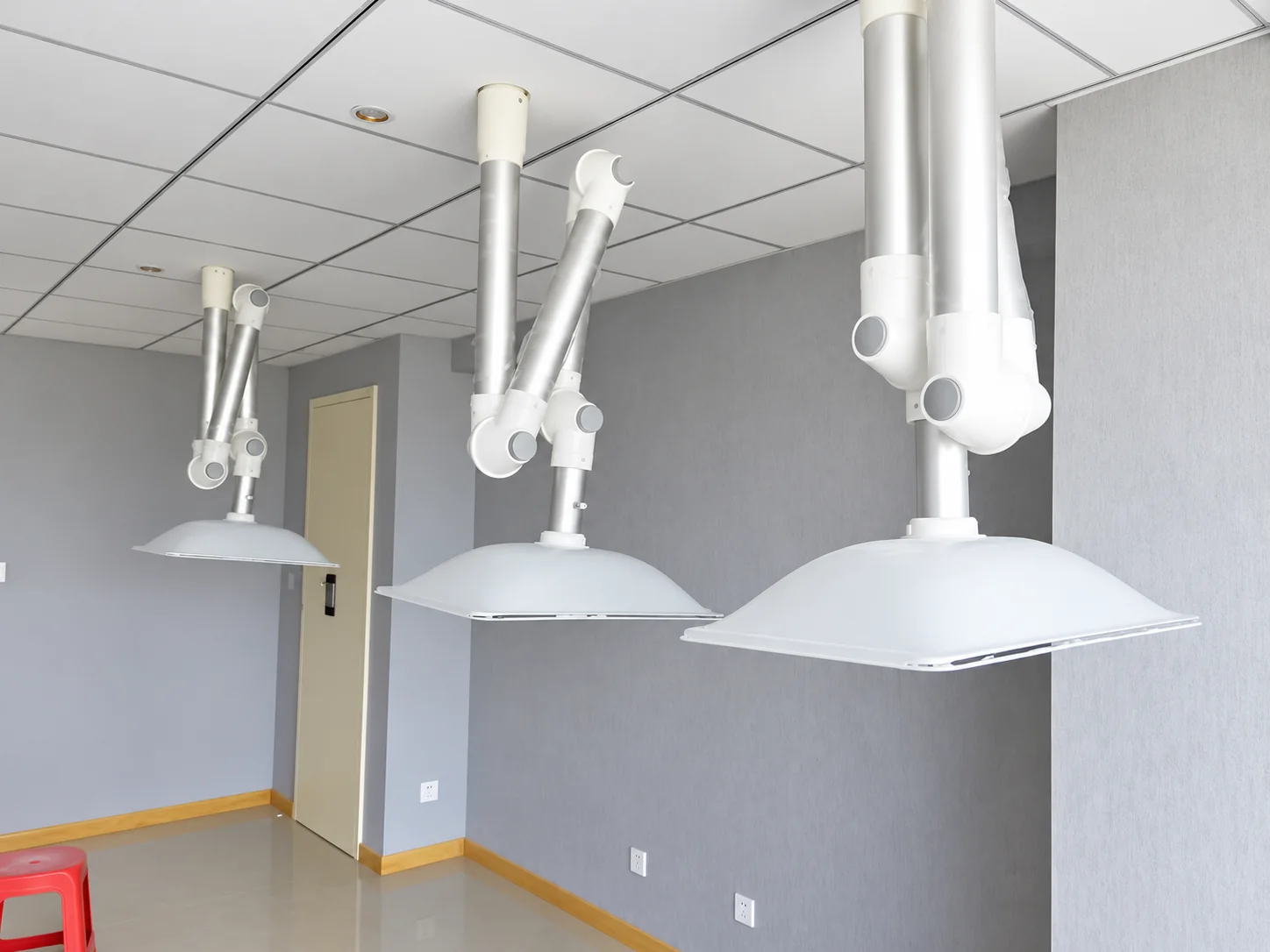
The articulated arms use an aluminium-alloy structure and can be configured with 50–110 mm internal-diameter connections and heat-resistant transparent PC hoods. Hood dimensions can be adjusted to the treatment zone, and multiple points then connect to a centralized exhaust path.
The central treatment method must be confirmed from the contaminants generated, laboratory workload and local discharge requirements rather than assuming one fixed filter combination for every project.
Where particles are generated directly at the work surface, an optional perforated downdraft zone can add a second capture direction from below the object and complement the adjustable hood above.
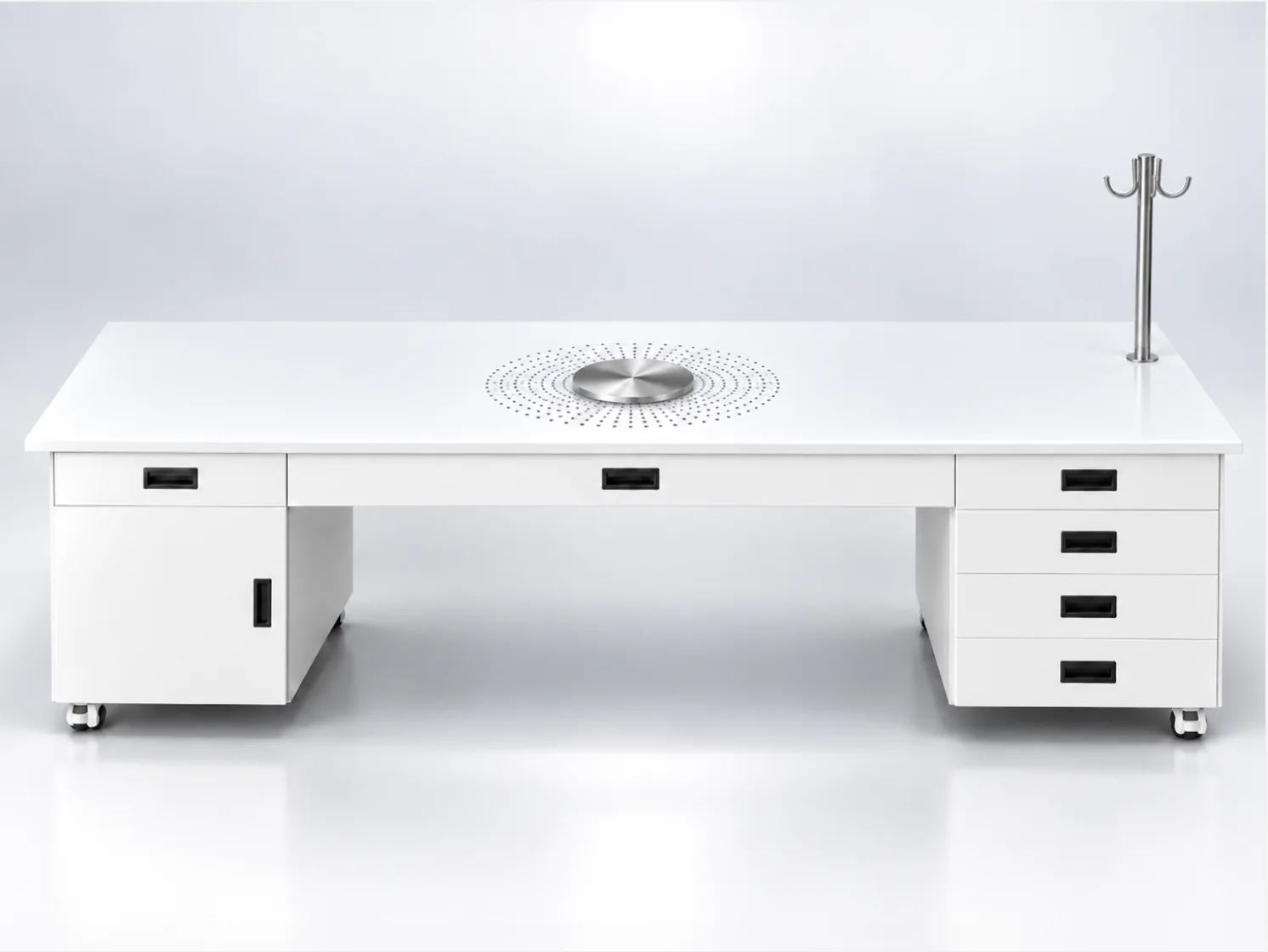
The concept established a route that can expand from individual source-capture points to a laboratory-scale central extraction system. Ceiling- or wall-mounted points can follow the actual workflow, with optional downdraft capture where particles are generated at the worktop.
Final airflow balancing, central treatment and discharge arrangements still require technical confirmation after the conservation process and facility conditions are defined.
The original project material included reference extraction capacities and equipment values, while also stating that filtration technology and efficiency should be determined from laboratory throughput and discharge requirements.
This case therefore does not present one airflow value, motor power, noise level or filter life as guaranteed performance for the complete central system. Those values belong to preliminary selection and must be confirmed against room layout, number of capture points, contaminant type and operating conditions.
Museum conservation laboratories generate different contaminants according to the materials and treatments involved. Effective extraction begins by defining where contaminants arise, how operators work around objects, how many stations require simultaneous capture, and how the extracted air will ultimately be treated or discharged.
Define the conservation process first, then configure source capture, airflow and downstream treatment for the real working environment.
Collection Dust, Mold & DecontaminationArchive Cleaning & Extraction Planning Guide
Source captureCentral local exhaustConservation dust controlOptional downdraft
MuseumsConservation laboratoriesArchivesCultural heritage institutions