Once a museum has decided that nitrogen anoxia is an appropriate pest-treatment route, the next question is not simply “What chamber size should we buy?”
A useful system specification starts with the treatment workflow:
What objects will be treated, how large are the batches, how often will treatment be required, how will low oxygen be created and verified, and what records must prove that each batch was completed correctly?
Anoxic treatment can be carried out in different forms, from barrier-film bags and flexible enclosures to reusable rigid chambers. Getty Conservation Institute research has documented both oxygen-barrier bag treatments and purpose-built systems, demonstrating that there is more than one workable architecture.
The right choice depends on throughput, object compatibility, staffing, nitrogen supply, monitoring, installation conditions and the level of process documentation required.
1. Confirm that anoxia is the right treatment route first
Anoxia should sit inside an integrated pest management programme, not replace it.
Before procuring equipment, confirm:
- the target pest or pest group;
- evidence that infestation is active;
- object material and condition;
- compatibility with a controlled low-oxygen treatment;
- object dimensions and batch quantity;
- required treatment frequency;
- whether an alternative such as controlled low-temperature treatment is more practical.
If those questions are unresolved, buying a chamber first can lock the institution into a process before the preservation requirement is clear.
Getty’s pest-management work treats nitrogen as one of several eradication options used within a wider IPM framework that also includes prevention, identification, inspection and monitoring.
2. Start with annual throughput, not only chamber volume
A 3 m³ chamber is not automatically more useful than a 1 m³ chamber, and a 10 m³ flexible enclosure is not automatically more efficient than a rigid system.
Estimate:
- number of treatment batches per year;
- average object dimensions;
- maximum object dimensions;
- number of objects per batch;
- percentage of chamber volume that can actually be used safely;
- treatment scheduling constraints;
- quarantine capacity before and after treatment.
A useful capacity calculation is:
Annual treatment demand ÷ realistic batches per year = required batch capacity
The word “realistic” matters. Loading, packaging, gas preparation, treatment time, verification, unloading and documentation all consume staff time.
For occasional treatment, flexible or bag-based methods may be sufficient. For institutions with recurring treatment demand, a reusable chamber can reduce repeated enclosure preparation and standardise workflow.
3. Compare bags, flexible enclosures and rigid chambers
Barrier-film bags
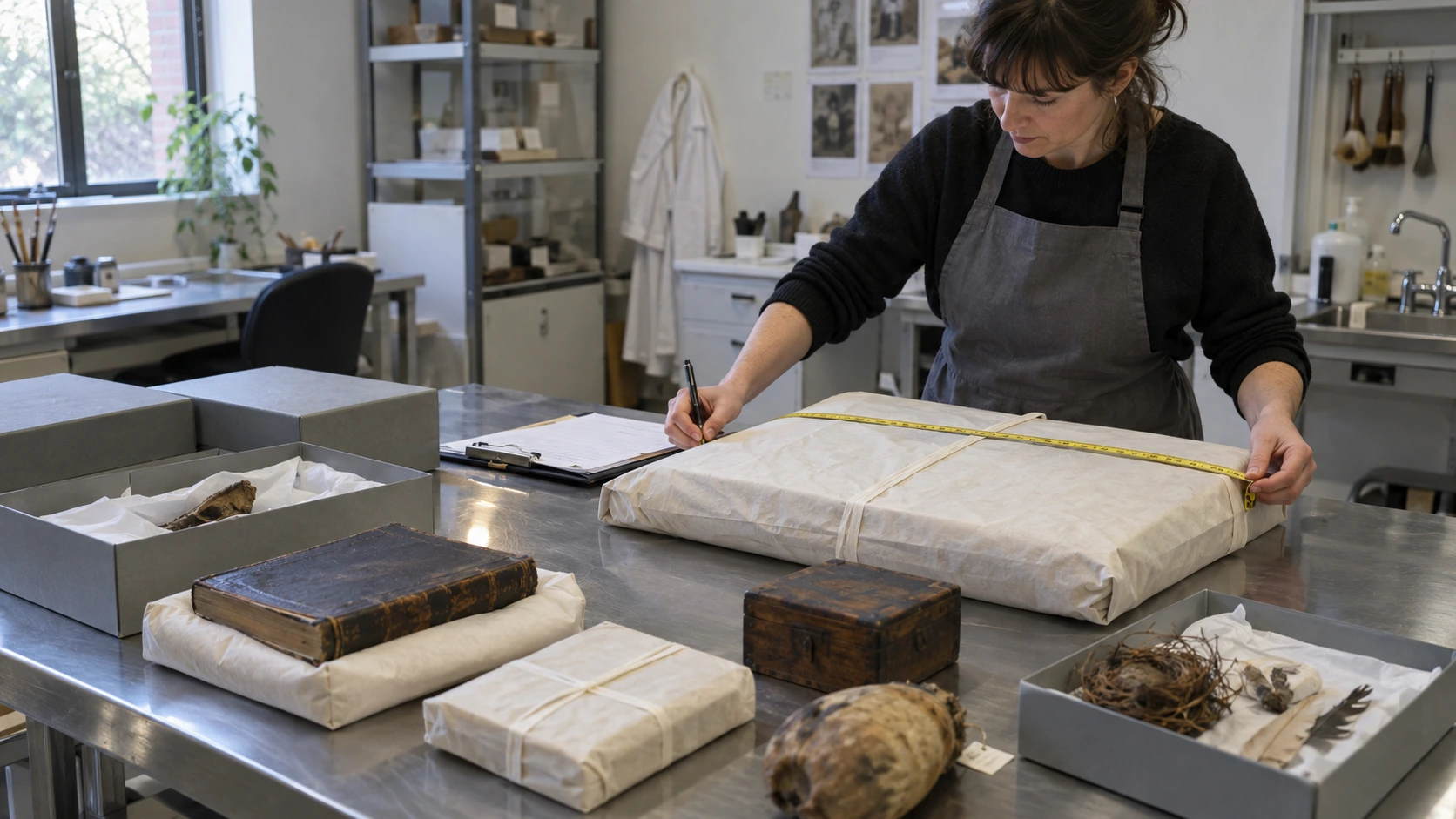
Barrier bags can be appropriate for individual objects or small batches where treatment demand is occasional and object size is manageable.
Advantages can include:
- low initial equipment requirement;
- flexible sizing;
- ability to isolate individual objects;
- useful treatment option for institutions without permanent chamber space.
Limitations include:
- labour required to prepare and seal each enclosure;
- risk of seal damage;
- repeated consumption of barrier film and fittings;
- more operator variability;
- less convenient treatment of large recurring batches.
Getty’s anoxia research describes museum objects enclosed in oxygen-barrier bags and later work on larger reusable flexible containments.
Flexible reusable enclosures
A reusable tent or flexible chamber can increase batch size without requiring a rigid pressure vessel.
It can be useful when:
- objects are large or irregular;
- the institution needs temporary high-volume capacity;
- treatment takes place at ambient pressure;
- the enclosure can be checked and maintained for gas tightness.
The wall material, seals and oxygen permeation rate become important because they influence nitrogen consumption and the ability to maintain the required atmosphere.
Rigid chambers
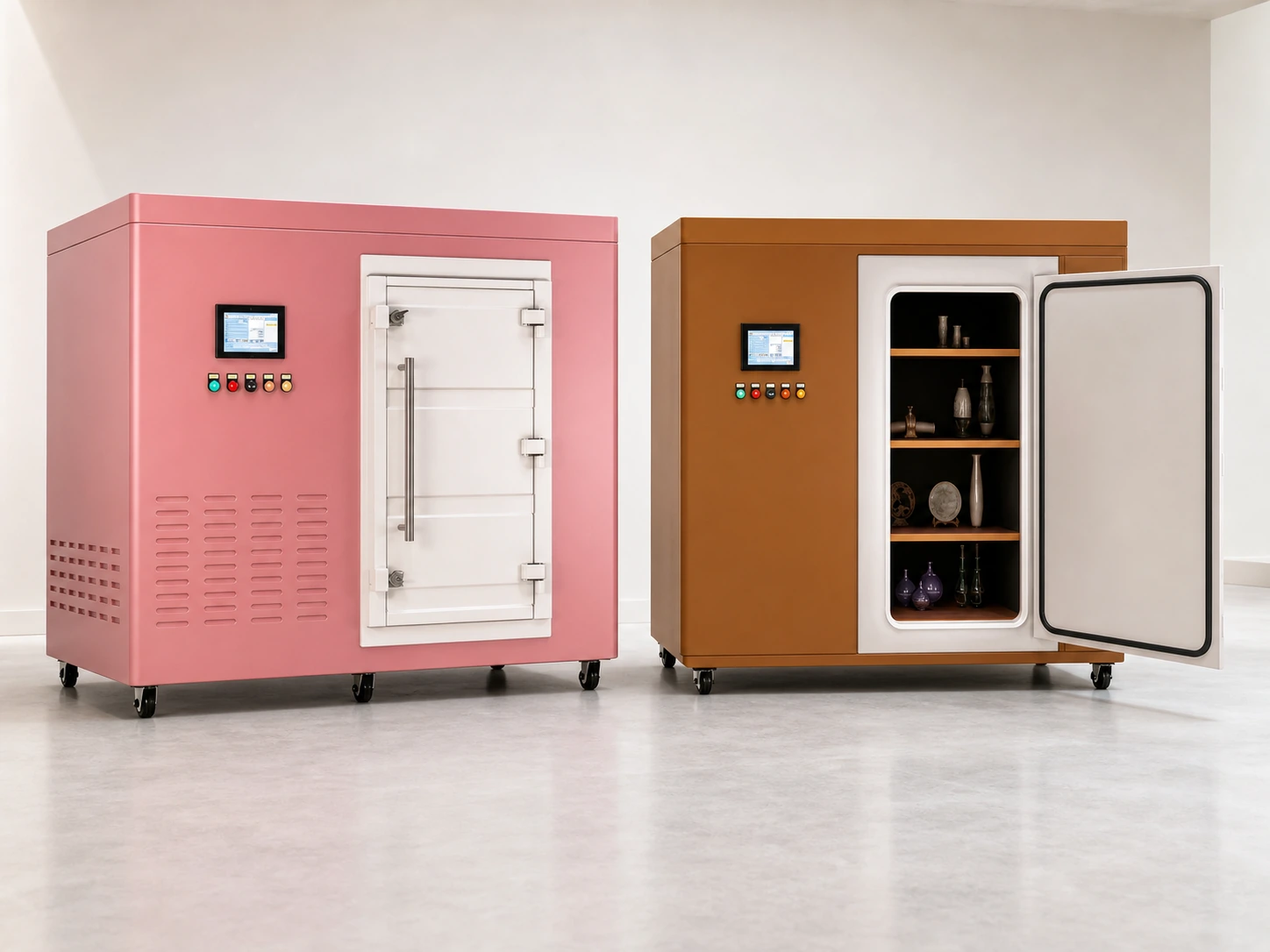
Rigid chambers are often selected where treatment is frequent, process repeatability matters or the institution wants a fixed loading, sensing and control arrangement.
Advantages may include:
- repeatable loading geometry;
- durable seals;
- integrated oxygen and environmental sensors;
- easier automation;
- easier data logging;
- more standardised operator procedures.
They also require permanent space, delivery access, maintenance and a higher initial investment.
4. Ambient-pressure and vacuum-assisted systems are different workflows
A museum may encounter both ambient-pressure nitrogen systems and configurations that use vacuum as part of the process.
Do not treat these as interchangeable labels.
Ambient-pressure anoxia
An ambient-pressure system typically reduces oxygen by purging or displacement with nitrogen while keeping the enclosure near atmospheric pressure.
This avoids exposing objects to large pressure changes and can be implemented in bags, flexible enclosures, cabinets or rigid chambers.
Vacuum-assisted configurations
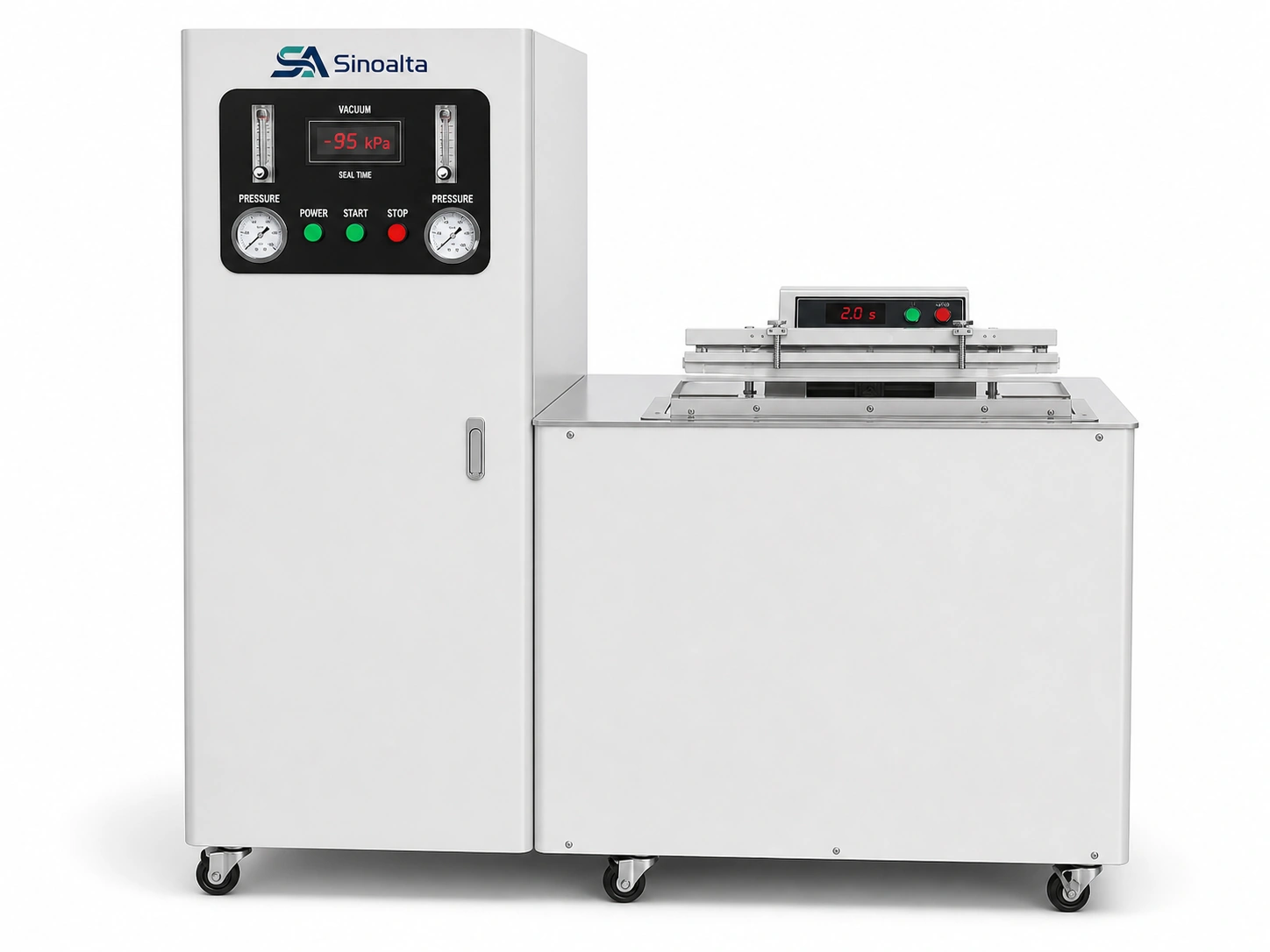
A vacuum-assisted system uses reduced pressure during part of the operating cycle before or during controlled gas replacement.
The procurement question is not whether vacuum is “stronger.” It is whether the object, chamber, workflow and treatment protocol are designed for pressure change.
Before specifying vacuum assistance, review:
- fragile or hollow objects;
- sealed containers or cavities;
- laminated or delaminating structures;
- loose components;
- objects with trapped air spaces;
- maximum and minimum process pressure;
- pressure-change rate;
- chamber certification and safety requirements.
The treatment method must follow object compatibility and a documented process rather than the assumption that more aggressive pressure control is automatically better.
5. Oxygen measurement is a core treatment function
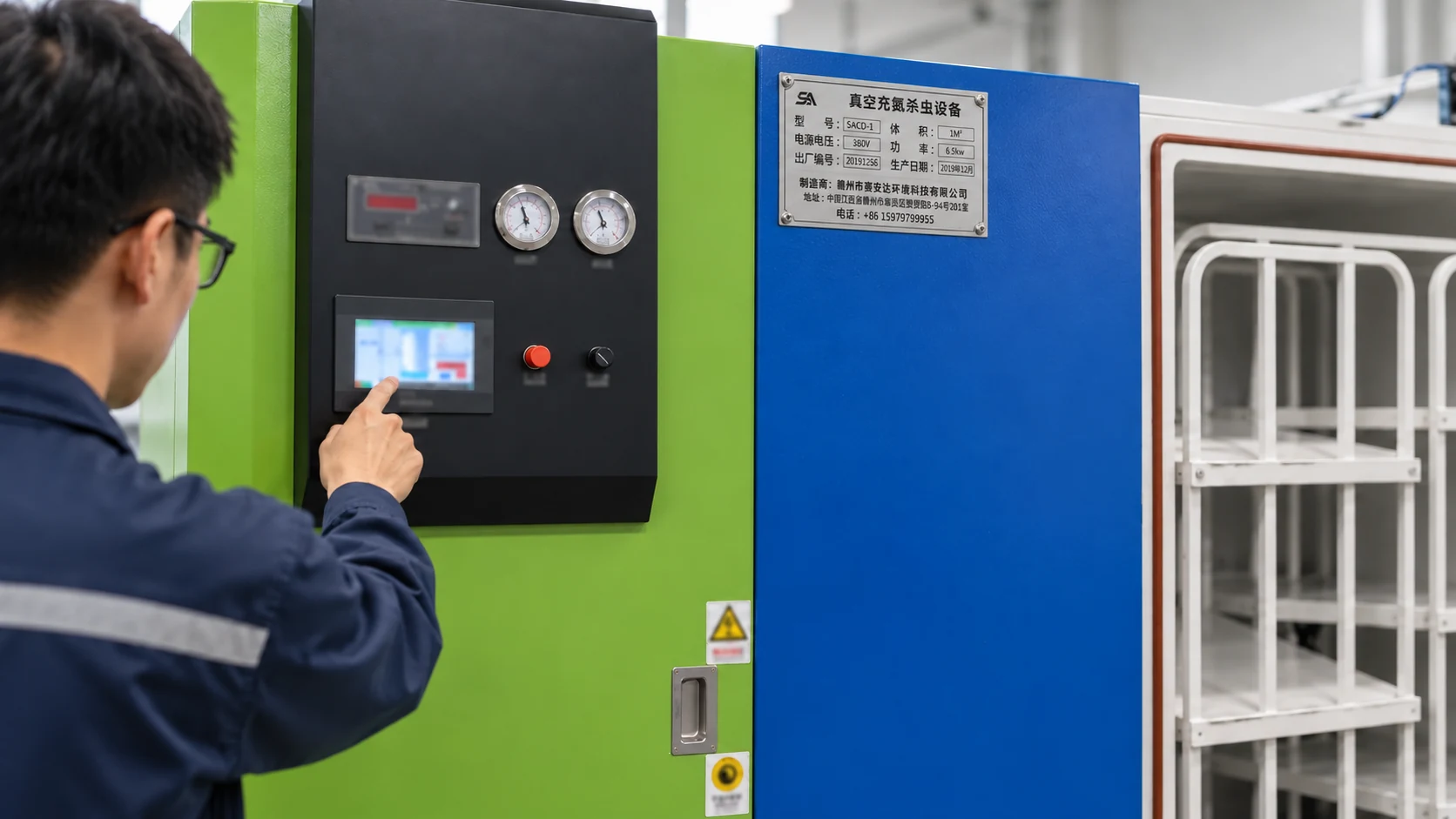
An anoxia system should measure oxygen at the range relevant to the treatment protocol.
Key questions for the RFQ include:
- oxygen sensor measurement range;
- sensor accuracy and resolution;
- calibration method;
- number and location of sampling points;
- whether readings are continuous or periodic;
- alarm thresholds;
- data storage;
- sensor replacement and maintenance.
Getty’s published research on nitrogen anoxia is built around controlled low-oxygen conditions and exposure time. This is why a nitrogen generator by itself does not constitute a treatment system. The atmosphere has to be measured and maintained.
Avoid specifying a universal oxygen value without reference to the validated protocol being used. Historical publications describe different oxygen concentrations and treatment conditions; the final protocol should be tied to the target pest, temperature, humidity, system and institutional acceptance criteria.
6. Humidity must be monitored during nitrogen treatment
Nitrogen supply can alter moisture conditions if gas conditioning is not considered.
For museum objects, anoxia should therefore include a humidity strategy rather than focusing on oxygen alone.
Ask:
- Is RH measured inside the treatment enclosure?
- Is the incoming nitrogen dry?
- Can humidity be conditioned or buffered?
- What RH range is acceptable for the object?
- Does the system record RH throughout treatment?
- How does loading wet or hygroscopic material affect the chamber environment?
The appropriate humidity condition depends on object material and the treatment protocol. It should not be replaced with one generic setpoint for every collection.
7. Choose the nitrogen supply architecture
A treatment system may use:
- bottled nitrogen;
- bulk nitrogen;
- on-site nitrogen generation;
- a combination of sources.
The right choice depends on local supply, treatment frequency and volume.
Bottled or bulk nitrogen
Potential advantages:
- simple equipment architecture;
- high gas purity available from industrial suppliers;
- suitable for intermittent or low-volume treatment.
Questions:
- cylinder logistics;
- local gas cost;
- storage rules;
- regulator and manifold requirements;
- delivery continuity.
On-site nitrogen generation
Potential advantages:
- useful for recurring treatment;
- reduced dependence on repeated cylinder deliveries;
- integration with automated treatment systems.
Questions:
- required gas flow;
- oxygen content of generated nitrogen;
- compressor and air-treatment requirements;
- maintenance schedule;
- noise and heat;
- backup supply if the generator is unavailable.
The lowest gas cost is not the only consideration. Reliability during a multi-day treatment can be more important than nominal generation efficiency.
8. Chamber tightness affects nitrogen consumption and stability
Whether the enclosure is flexible or rigid, leakage affects treatment performance.
A leak can:
- increase nitrogen consumption;
- delay reaching treatment conditions;
- cause oxygen concentration to rise;
- increase operator intervention;
- undermine repeatability.
For reusable systems, ask how tightness is checked and how seal wear is identified.
For bag systems, define seam and valve inspection procedures.
For rigid chambers, include door seals, penetrations, sensor ports and service connections in maintenance checks.
9. Decide how much automation the institution actually needs
Automation is valuable when it reduces operator error or supports documentation. It is not valuable simply because it adds screens and controls.
A treatment system may automate:
- gas purge;
- oxygen monitoring;
- humidity monitoring;
- pressure sequence where applicable;
- alarm handling;
- treatment timing;
- data logging;
- batch report generation.
For an institution that treats one object every few months, a highly automated chamber may be unnecessary. For a national archive or central treatment facility processing frequent batches, automation can improve consistency and reduce staff workload.
10. Treatment records should be designed before procurement
If the institution needs auditable treatment history, specify the required report fields during the RFQ.
Useful fields include:
- batch ID;
- object or accession list;
- operator;
- date/time;
- oxygen trend;
- RH trend;
- temperature trend;
- pressure trend where applicable;
- alarms and deviations;
- treatment endpoint;
- post-treatment release record.
Ask whether records can be exported in a common file format and whether raw sensor data remain accessible.
This is especially important for institutions that may need to demonstrate treatment history to lenders, internal auditors or collection managers.
11. Installation requirements can change the system choice
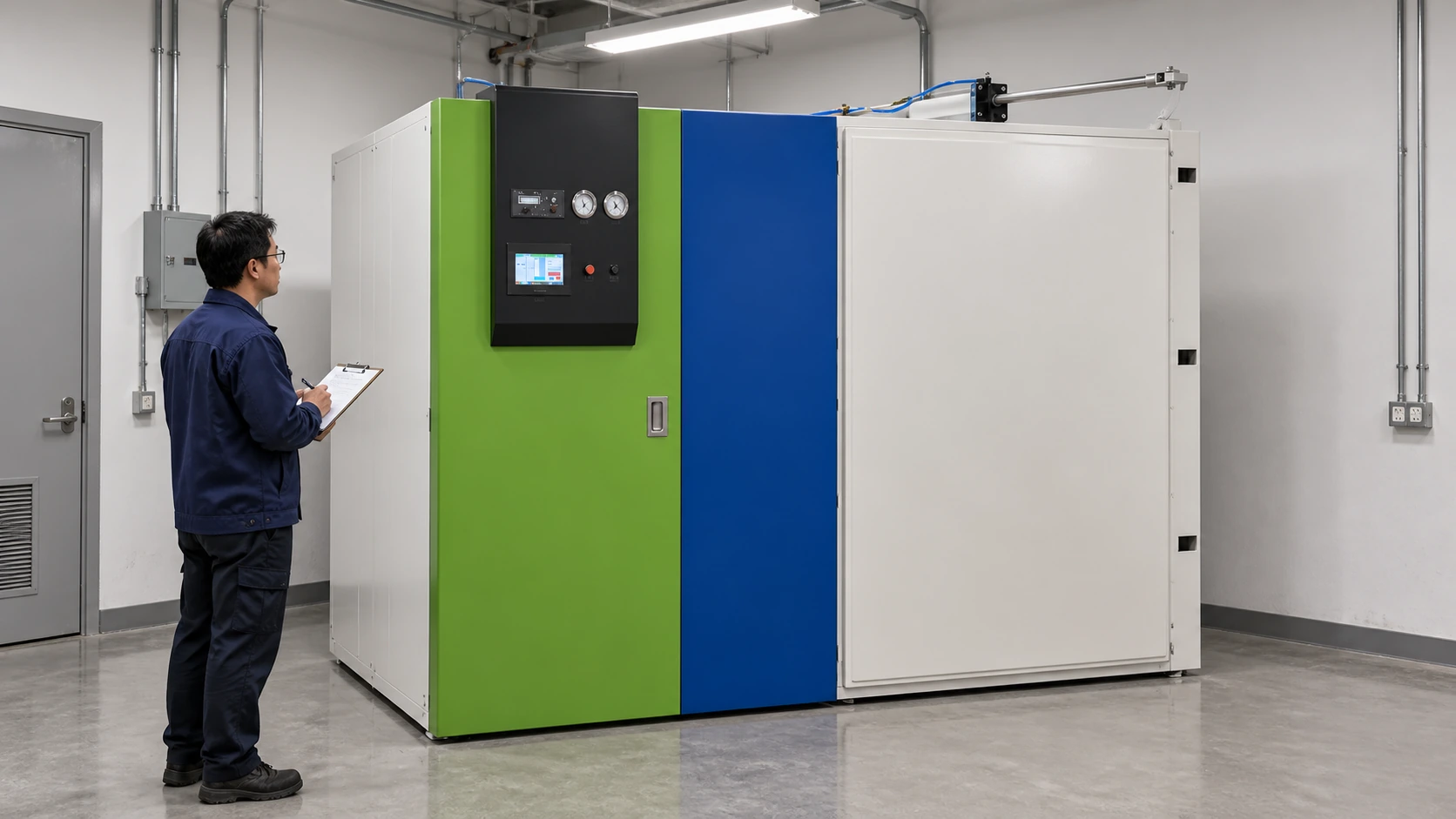
Before selecting a chamber, review the site.
Delivery
- packed dimensions;
- installed dimensions;
- doorway and lift access;
- floor loading;
- chamber assembly method;
- crane or forklift requirements.
Utilities
- electrical standard;
- compressed air;
- nitrogen supply;
- ventilation;
- drainage if any auxiliary systems require it;
- network connection;
- room temperature and humidity.
Safety
Nitrogen can create an oxygen-deficiency hazard in enclosed spaces if released in sufficient quantity. The installation therefore requires a site-specific safety review, ventilation planning and local regulatory compliance.
For vacuum-rated equipment, pressure-vessel requirements may also apply depending on design and jurisdiction.
These issues should be resolved before shipping, not during commissioning.
12. Compare suppliers using process questions
Instead of asking only “What is the price of a 3 m³ chamber?”, ask each supplier the same questions:
- What object sizes and loading pattern does the usable volume support?
- How is oxygen measured and calibrated?
- How is RH monitored or controlled?
- How is enclosure leakage checked?
- What nitrogen supply is assumed?
- What happens if oxygen rises during treatment?
- What treatment data are recorded?
- Can reports be exported?
- What maintenance items require replacement?
- What installation utilities are required?
- What commissioning tests are performed?
- What operator training is included?
This produces a meaningful comparison between treatment systems rather than a comparison of chamber shell dimensions.
Anoxic treatment system RFQ checklist
Collection and workload
- [ ] target pest or pest group
- [ ] object materials
- [ ] maximum object dimensions
- [ ] average batch size
- [ ] annual treatment volume
- [ ] quarantine and release workflow
Treatment process
- [ ] ambient-pressure or vacuum-assisted route, if already defined
- [ ] required oxygen measurement range
- [ ] humidity monitoring/control requirement
- [ ] temperature monitoring
- [ ] treatment protocol/acceptance criteria
- [ ] enclosure tightness requirement
Gas supply
- [ ] bottle/bulk/on-site generation
- [ ] required flow and continuity
- [ ] backup gas strategy
- [ ] local gas logistics
Data and controls
- [ ] continuous data logging
- [ ] alarm functions
- [ ] batch report
- [ ] export format
- [ ] calibration records
Site
- [ ] available floor space
- [ ] delivery path
- [ ] power standard
- [ ] compressed air, if required
- [ ] ventilation and oxygen-deficiency risk review
- [ ] maintenance access
- [ ] commissioning and training
Final procurement principle
Do not buy an anoxia system as a chamber with a nitrogen inlet.
Buy it as a controlled treatment process:
Pest and object assessment → enclosure → nitrogen supply → oxygen control → humidity management → treatment verification → documented release
When those functions are defined clearly, chamber size becomes one engineering input rather than the whole specification.
Frequently asked questions
Is a rigid anoxia chamber always better than barrier bags?
No. Barrier bags and flexible enclosures can be practical for occasional treatment or unusually shaped objects. A rigid chamber becomes more attractive when treatment is frequent, automation and repeatability matter, or the institution needs an integrated monitoring and reporting system.
What oxygen level should a museum anoxia system maintain?
There is no single number that should be copied into every project without context. Published museum-anoxia research uses defined low-oxygen conditions, but the final acceptance criterion should follow the target pest, treatment temperature, RH, duration, enclosure and validated institutional protocol.
Does a nitrogen generator replace an anoxia chamber?
No. A generator supplies nitrogen. A treatment system also needs a suitable enclosure, gas distribution, oxygen measurement, environmental monitoring, treatment timing, safety controls and verification.
Should an anoxia system control humidity?
At minimum, RH should be monitored. Whether active humidity conditioning is required depends on the nitrogen supply, treatment duration, object sensitivity and the institution’s process requirements.
Is vacuum required for nitrogen anoxia?
No. Anoxia can be carried out at ambient pressure. Vacuum-assisted configurations are a different process architecture and should be selected only after object compatibility, chamber design and safety requirements have been reviewed.
Related Sinoalta resources
- Nitrogen Anoxia Technical Guide: https://sinoalta.com/resources/technical-guides/anoxic-disinfestation-nitrogen-anoxia/
- Anoxia vs Freezing for Museum Pest Control: https://sinoalta.com/resources/blog/anoxia-vs-freezing-museum-pest-control/
- Nitrogen Anoxic Treatment System for Museum Collections: https://sinoalta.com/products/nitrogen-anoxic-treatment-system-for-museum-collections/
- Pest Control & Controlled Atmosphere Systems: https://sinoalta.com/products/pest-control-controlled-atmosphere-systems/
Sources and further reading
- Getty Conservation Institute, Nitrogen Anoxia Research: https://www.getty.edu/projects/nitrogen-anoxia-research/
- Getty Conservation Institute, Pest Management: https://www.getty.edu/projects/pest-management/
- Charles Selwitz and Shin Maekawa, Getty Conservation Institute, Inert Gases in the Control of Museum Insect Pests: https://www.getty.edu/conservation/publications_resources/pdf_publications/pdf/inertgases.pdf
- Canadian Conservation Institute, Preventing Infestations: Control Strategies and Detection Methods: https://www.canada.ca/en/conservation-institute/services/conservation-preservation-publications/canadian-conservation-institute-notes/preventing-infestations.html