“Cleaning,” “decontamination,” “disinfection” and “disinfestation” are often used as if they describe the same treatment. In museum and archive work, they do not.
A dusty book, a mould-affected archive box, an insect-infested textile and a surface contaminated after a building incident may all require intervention, but they do not require the same process or the same equipment.
The useful question is:
What is the unwanted agent, what damage is it causing, and what intervention is actually required to reduce that risk without creating a new one?
This article separates the terms and shows how to match a collection problem to a practical treatment workflow.
1. Start by identifying the problem, not the machine
Before selecting equipment, define what is present:
- loose dust or particulate soil;
- surface dirt;
- mould growth or spores;
- active insect infestation;
- chemical or biological contamination;
- pest residues after treatment;
- pollutants generated by storage or display materials.
These categories overlap, but the treatment objective is different in each case.
A useful screening table is:
| Collection problem | Main treatment concept |
|---|---|
| Loose dust and debris | Cleaning / dust removal |
| Adhered surface soil | Material-specific surface cleaning |
| Dry mould growth and spores | Containment + mould remediation/cleaning |
| Active insect infestation | Disinfestation / pest treatment |
| Microbial or hazardous contamination | Decontamination under a defined protocol |
| Contaminated tools/work surfaces | Cleaning and, where justified, disinfection |
| Pest debris after eradication | Cleaning + rehousing |
The terms should follow the treatment goal rather than be used as marketing labels.
2. What “cleaning” means in collection care
Cleaning is the controlled removal of unwanted soil, dust, debris or residues from an object, housing or work area.
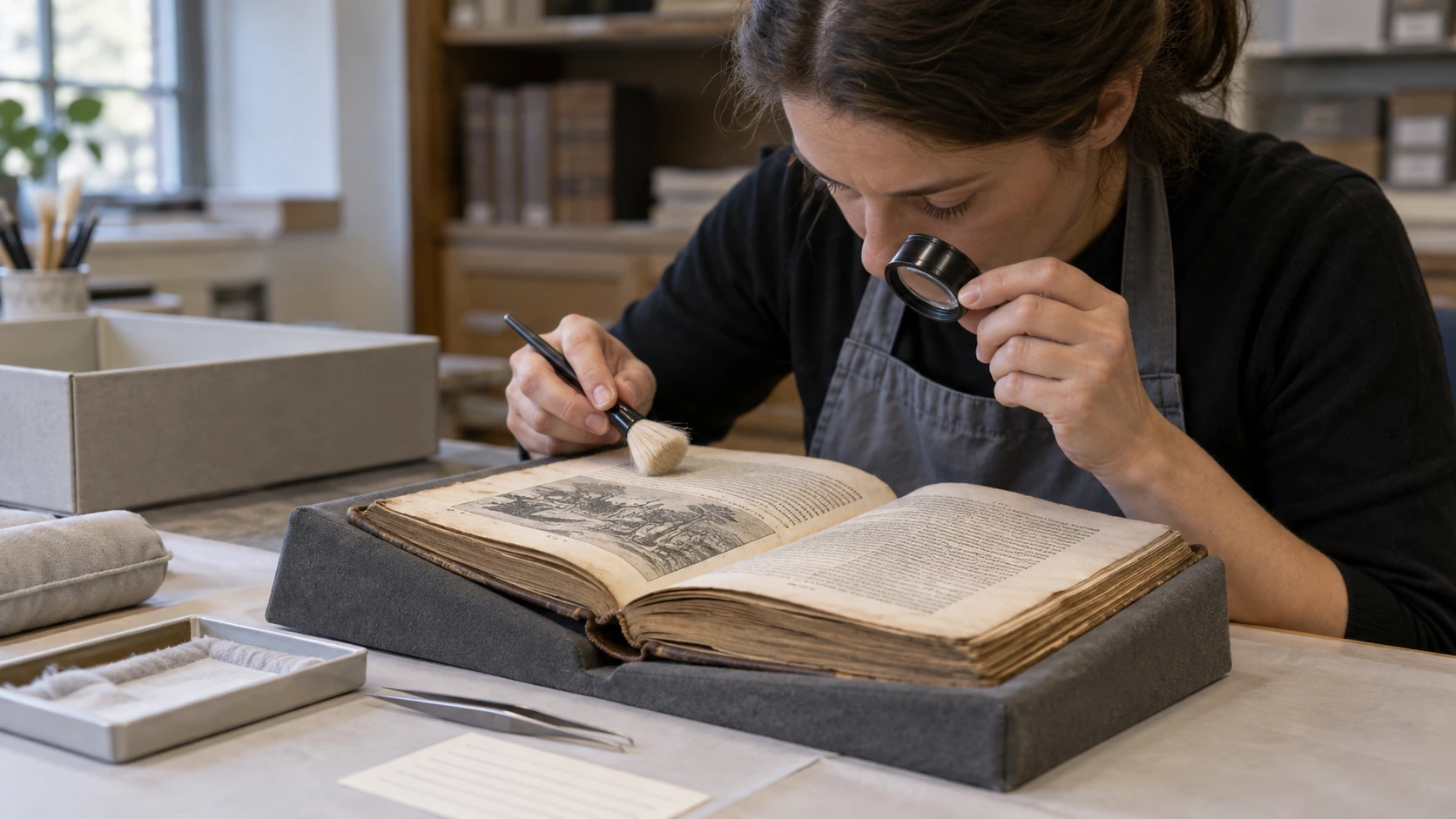
In archives and libraries, routine or project-based cleaning may involve:
- soft brushes;
- conservation-grade vacuuming;
- adjustable suction;
- HEPA-filtered extraction;
- cleaning screens for fragile sheets;
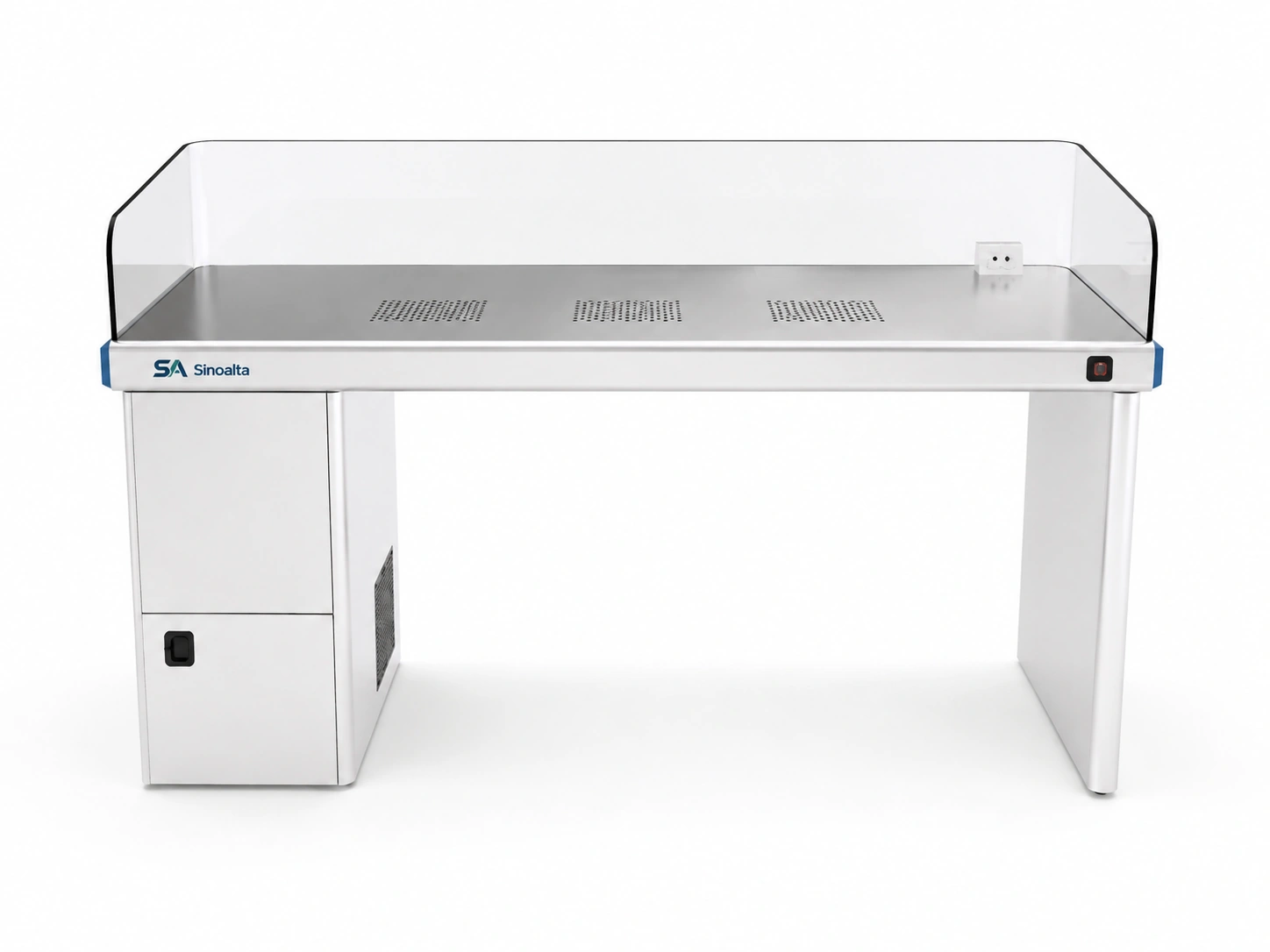
- local extraction or negative-pressure workstations;
- rehousing after cleaning.
The important point is that cleaning is physical removal. It does not automatically mean killing insects, sterilising an object or neutralising every biological agent.
CCI guidance on mould-contaminated collections, for example, recommends HEPA-filtered vacuuming and careful brushing for dry mould residues under appropriate containment. The purpose is to remove mould growth and reduce spores while limiting their dispersion.
Cleaning should be condition-led
Before cleaning, assess whether the surface can tolerate contact or suction.
Potentially vulnerable materials include:
- friable pigments;
- flaking paint;
- brittle paper;
- powdery corrosion products;
- fragile textiles;
- degraded leather;
- objects with loose historic residues that may have evidential value.
For these, routine “deep cleaning” can remove original material as easily as unwanted dirt.
3. Dust removal is a preservation workflow, not just housekeeping
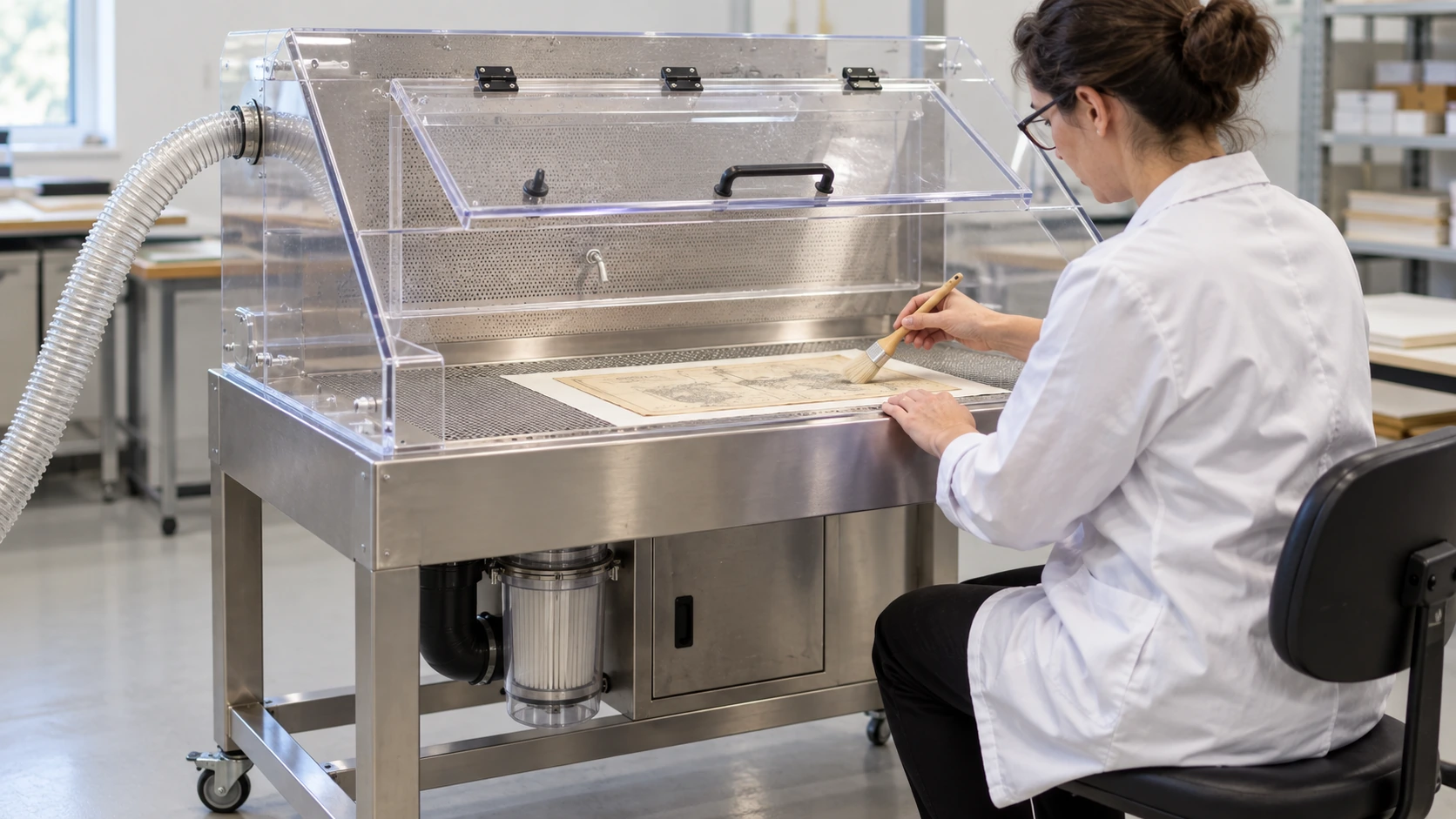
Dust can retain moisture, carry pollutants, provide nutrients for mould and obscure evidence of pest activity. It can also increase handling risk when objects must be repeatedly moved for cleaning.
A collection dust-removal programme usually includes:
- condition assessment;
- controlled handling;
- local capture of released particles;
- suitable suction and filtration;
- staff protection;
- documentation;
- rehousing or preventive measures after cleaning.
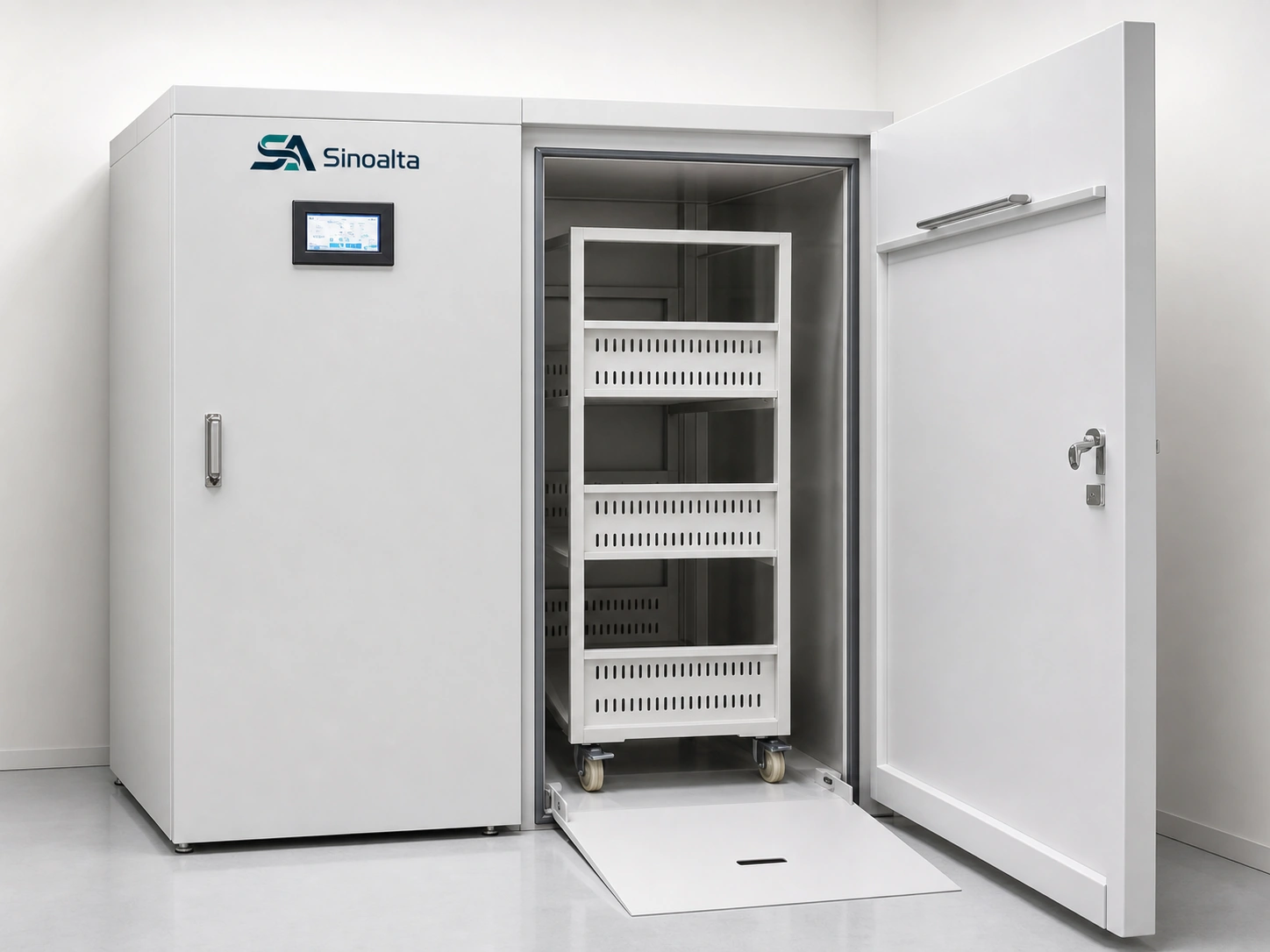
For large archive projects, the equipment decision may be between a workstation for item-by-item cleaning and a larger dust-control chamber or batch workflow. The choice should follow throughput, object fragility and dust load—not simply equipment size.
4. “Decontamination” needs a defined contaminant
Decontamination is a broader term. It means reducing or removing a contaminant to a level appropriate for the intended use, but the word alone does not tell you the method.
Before specifying “decontamination equipment,” answer:
- What contaminant is present?
- Is it particulate, biological, chemical or mixed?
- Is contamination on the surface, inside porous material or in packaging?
- Is the objective worker safety, collection preservation, odour reduction or another outcome?
- How will treatment success be verified?
A project involving soot after a fire is different from one involving mould, sewage contamination or pesticide residues.
This is why “decontamination” should not automatically be equated with ozone, plasma, UV, fumigation or any single technology.
5. Disinfection is not a synonym for collection cleaning
Disinfection usually refers to reducing or inactivating microorganisms on an appropriate surface or material. In heritage collections, that objective must be balanced against object compatibility.
Chemicals or processes that are routine for floors, medical equipment or industrial surfaces may alter:
- dyes;
- inks;
- coatings;
- adhesives;
- metals;
- paper sizing;
- leather;
- plastics;
- photographic emulsions.
CCI’s mould-recovery guidance separates the cleaning of collection objects from the cleaning and disinfection of tools, work surfaces and storage areas. That distinction is important.
For many mould-affected objects, the first preservation objective is to stop active growth, contain spores and physically remove dry residues safely. Applying a disinfectant directly to a heritage object is not automatically necessary or safe.
6. Mould is a separate decision pathway
Mould problems should not be treated as ordinary dust and should not be confused with insect infestation.
If mould is active or material remains wet, first address the moisture problem. CCI emphasises moisture control as the key condition for preventing continued mould growth.
A mould workflow can include:
- isolate affected material;
- reduce or eliminate the moisture source;
- dry or stabilise material;
- provide appropriate PPE;
- prevent spore dispersion;
- clean in a fume hood, Class 1 biological safety enclosure or other suitable containment where required;
- use HEPA-filtered vacuuming for dry mould residues;
- clean the storage area and equipment;
- monitor for recurrence.
Why a negative-pressure or extracted workstation can matter
Cleaning dry mould can release spores. CCI specifically advises against brushing or vacuuming mouldy objects indoors without appropriate containment and describes fume hoods, biological safety enclosures and HEPA-filtered systems as suitable options.
The equipment is therefore part of a containment strategy, not simply a stronger vacuum cleaner.
7. Disinfestation is about pests
Disinfestation is the treatment of insects or other pests affecting a collection.
It belongs inside an IPM framework and may involve methods such as:
- controlled low-temperature treatment;
- nitrogen anoxia;
- controlled atmosphere;
- other professionally selected pest treatments.
The target is pest mortality, including the relevant life stages, while keeping the object within acceptable treatment conditions.
A pest-treatment system should therefore be specified around:
- pest species;
- object materials;
- object dimensions;
- treatment volume;
- oxygen, temperature or other process variables;
- monitoring and verification;
- operator workflow.
Cleaning alone does not eradicate an internal insect infestation, although cleaning may be needed before or after treatment.
8. Cleaning often follows disinfestation
After a successful pest treatment, the object may still contain:
- frass;
- cast skins;
- dead insects;
- webbing;
- damaged packaging;
- surface dust.
These residues can obscure future monitoring and may contribute to soiling.
A logical sequence is:
Confirm infestation → treat → verify → clean → rehouse → monitor
If an institution cleans first without containment, it may disperse insects or lose evidence needed to assess the infestation. If it treats without cleaning afterwards, it may return an untidy object and contaminated housing to storage.
9. Cleaning and decontamination can involve rooms as well as objects
Collection treatment and environmental treatment should be separated in the plan.
For example, after a mould incident:
- objects may require careful HEPA vacuuming;
- shelves and floors may require cleaning;
- tools may require cleaning and disinfection;
- HVAC components may need inspection;
- packaging may need replacement;
- the moisture source must be corrected.
Treating only the object while ignoring the room can lead to recurrence.
10. Avoid “one chamber solves everything” specifications
Some procurement documents ask for a chamber that can “sterilise, disinfect, decontaminate, remove insects, remove mould and clean archives” as if all outcomes were one process.
That is usually too vague for a defensible technical specification.
Instead, separate functions:
Function A — particle removal
How is dust captured? What filtration is used? What suction control protects fragile objects?
Function B — biological containment
How are spores or contaminated particles prevented from spreading to staff and the room?
Function C — pest eradication
What process variable produces the required insect mortality, and how is it measured?
Function D — microbial reduction
What specific contaminant is targeted, what method is used and how is material compatibility verified?
Function E — environmental recovery
How are storage conditions corrected to prevent recurrence?
A multi-function system may combine some of these processes, but the RFQ should still define each required outcome separately.
11. Use the collection condition to choose the workflow
Scenario 1: Dusty but otherwise stable archive boxes
Likely pathway:
Condition check → controlled dust removal → HEPA extraction → rehousing → storage cleaning
Pest or disinfection treatment is not automatically required.
Scenario 2: Dry mould on books after a past humidity event
Likely pathway:
Confirm mould is inactive/dry → isolate → contained HEPA cleaning → clean housing/storage → monitor RH
Additional conservation treatment may be required for stains or fragile material.
Scenario 3: Live insect larvae in a textile
Likely pathway:
Quarantine → identify pest → inspect nearby collection → select compatible disinfestation method → verify → clean residues → monitor
Routine surface cleaning alone is insufficient.
Scenario 4: Books exposed to contaminated flood water
Likely pathway:
Hazard assessment → stabilisation/drying route → specialist decontamination decision → cleaning/rehousing → environmental recovery
This should not be treated as a normal dust-cleaning project.
12. Equipment selection by workflow
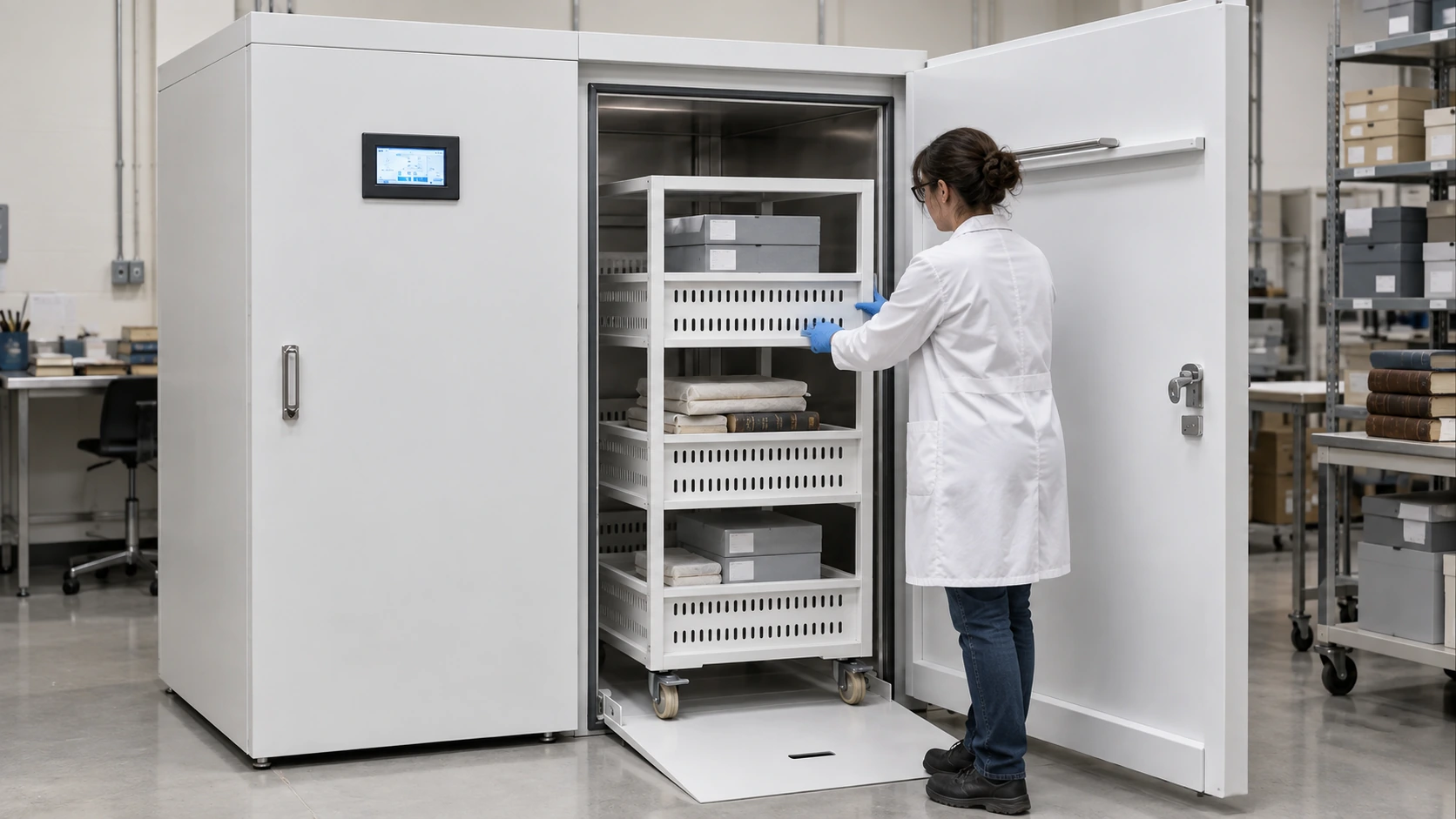
| Need | Equipment type to evaluate |
|---|---|
| Item-by-item dust cleaning | conservation cleaning workstation with controlled suction |
| Dusty batch processing | dust-removal chamber or enclosed extraction system |
| Mould-affected dry material | extracted/negative-pressure workstation or suitable containment |
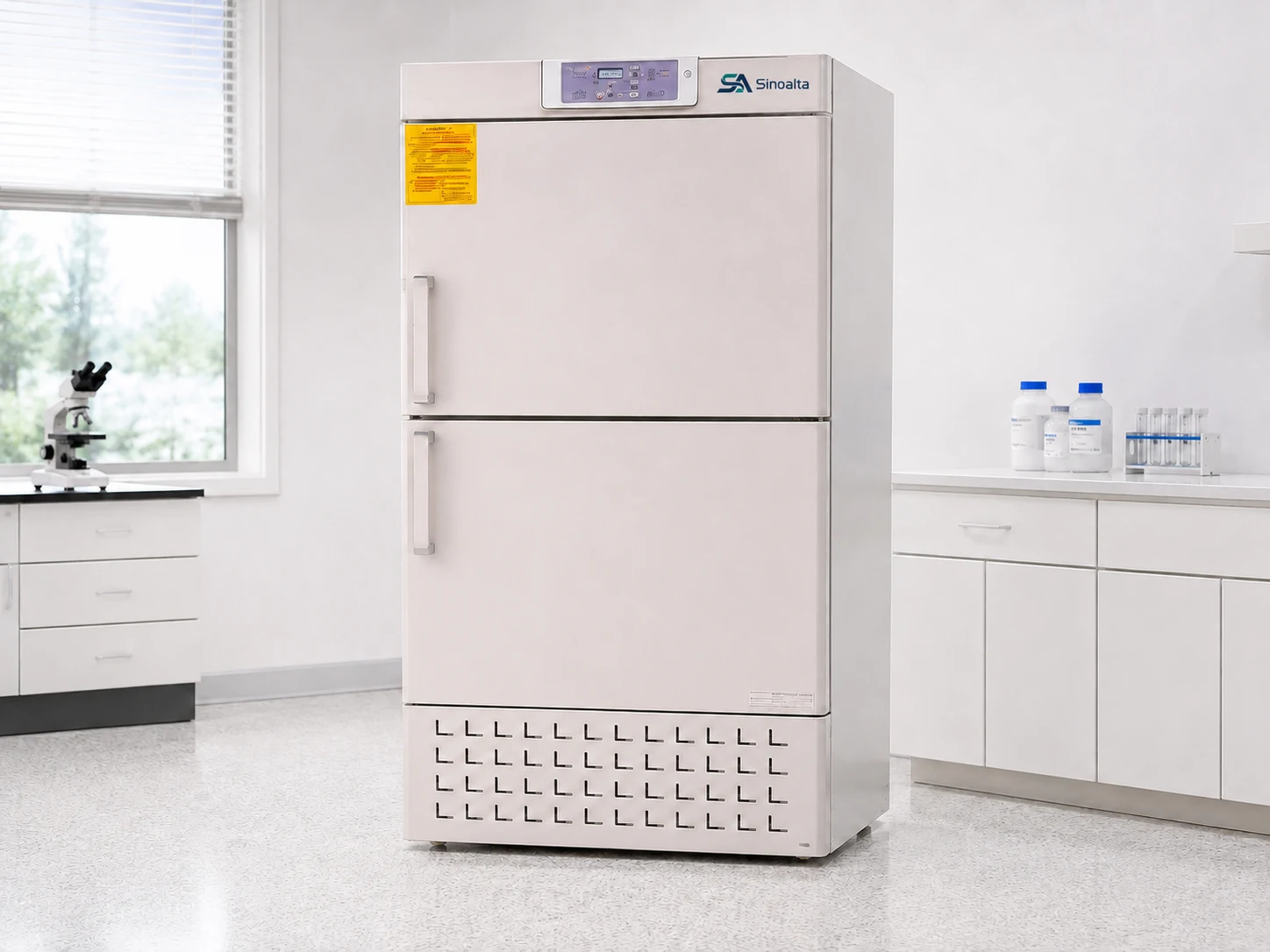
| Active insect infestation | freezing or controlled-atmosphere/anoxia treatment system |
| Controlled environmental decontamination | process-specific chamber after compatibility review |
| Storage-area air quality | room filtration/purification only where the risk assessment supports it |
The goal is to choose equipment that performs a clearly defined preservation function.
13. Questions to include in an RFQ
Before requesting a cleaning or decontamination system, specify:
- collection material;
- type of contamination;
- approximate quantity;
- object dimensions;
- expected daily throughput;
- whether material is fragile;
- whether mould is present;
- whether pests are active;
- containment requirement;
- filtration requirement;
- operator PPE/workflow;
- data logging or treatment reporting requirement;
- site exhaust, power and space constraints.
If the supplier cannot explain which function addresses which contaminant, the specification is not yet clear enough.
Final decision principle
Use the narrowest treatment concept that accurately describes the problem.
- Dust → clean it.
- Dry mould residues → contain and remediate them safely.
- Active insects → disinfest using a validated pest-treatment process.
- A defined hazardous or microbial contaminant → design a decontamination protocol around that contaminant and the object.
This prevents over-treatment and makes procurement easier to compare, validate and document.
Frequently asked questions
Is museum decontamination the same as cleaning?
No. Cleaning generally removes soil, dust and residues physically. Decontamination addresses a defined contaminant and may require additional containment, treatment or verification.
Does mouldy material need to be disinfected?
Not automatically. The first priorities are to stop the moisture problem, stabilise the material, contain spores and remove dry mould residues safely. Direct disinfection of heritage materials should be justified by the specific contamination problem and material compatibility.
Can HEPA vacuuming remove mould?
HEPA-filtered vacuuming is widely used to remove dry mould growth and reduce spores from suitable heritage materials. Fragile objects may require screens, reduced suction or specialist conservation treatment.
Is anoxia a decontamination method?
Anoxia is primarily used in museums as a controlled-atmosphere pest-disinfestation method. It should not be described as a universal decontamination or sterilisation method for every biological or chemical contaminant.
Should archives be cleaned before pest treatment?
It depends on the case. If cleaning could spread pests or remove evidence needed for diagnosis, quarantine and treatment planning should come first. Post-treatment cleaning is often useful for removing pest debris and improving monitoring.
Related Sinoalta resources
- Archive Cleaning & Dust Removal Guide: https://sinoalta.com/resources/technical-guides/archive-cleaning-dust-extraction/
- Collection Dust, Mold & Decontamination Solution: https://sinoalta.com/solutions/collection-dust-mold-decontamination/
- Collection Cleaning & Decontamination Systems: https://sinoalta.com/products/collection-cleaning-decontamination-systems/
- Museum & Archive Pest Control: https://sinoalta.com/solutions/museum-archive-pest-control/
Sources and further reading
- Canadian Conservation Institute, Mould Prevention and Collection Recovery – Technical Bulletin 26: https://www.canada.ca/en/conservation-institute/services/conservation-preservation-publications/technical-bulletins/mould-prevention-collection-recovery.html
- Canadian Conservation Institute, Preventing Infestations: Control Strategies and Detection Methods: https://www.canada.ca/en/conservation-institute/services/conservation-preservation-publications/canadian-conservation-institute-notes/preventing-infestations.html
- Getty Conservation Institute, Pest Management: https://www.getty.edu/projects/pest-management/
- National Park Service, Mold: Prevention of Growth in Museum Collections: https://www.nps.gov/subjects/museums/upload/03-04_508.pdf