
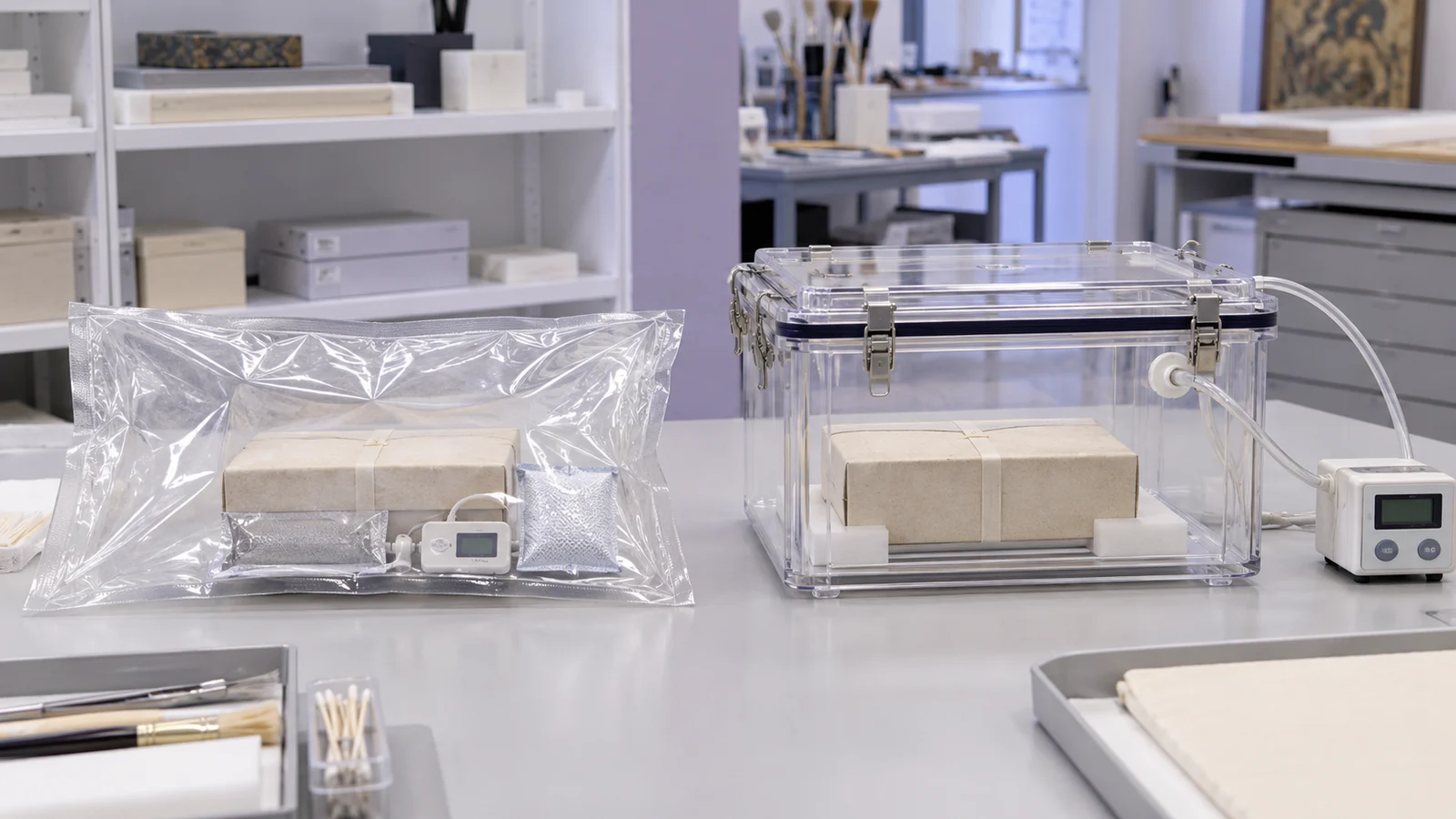
Flexible enclosures and rigid chambers can both establish controlled atmospheres, but their structures, loading, site requirements and repeated-use procedures differ. Start with the objects and workflow.
This comparison addresses procurement and operation. Conservation professionals must decide object suitability, treatment conditions and effectiveness for the specific situation.
Compare size and loading
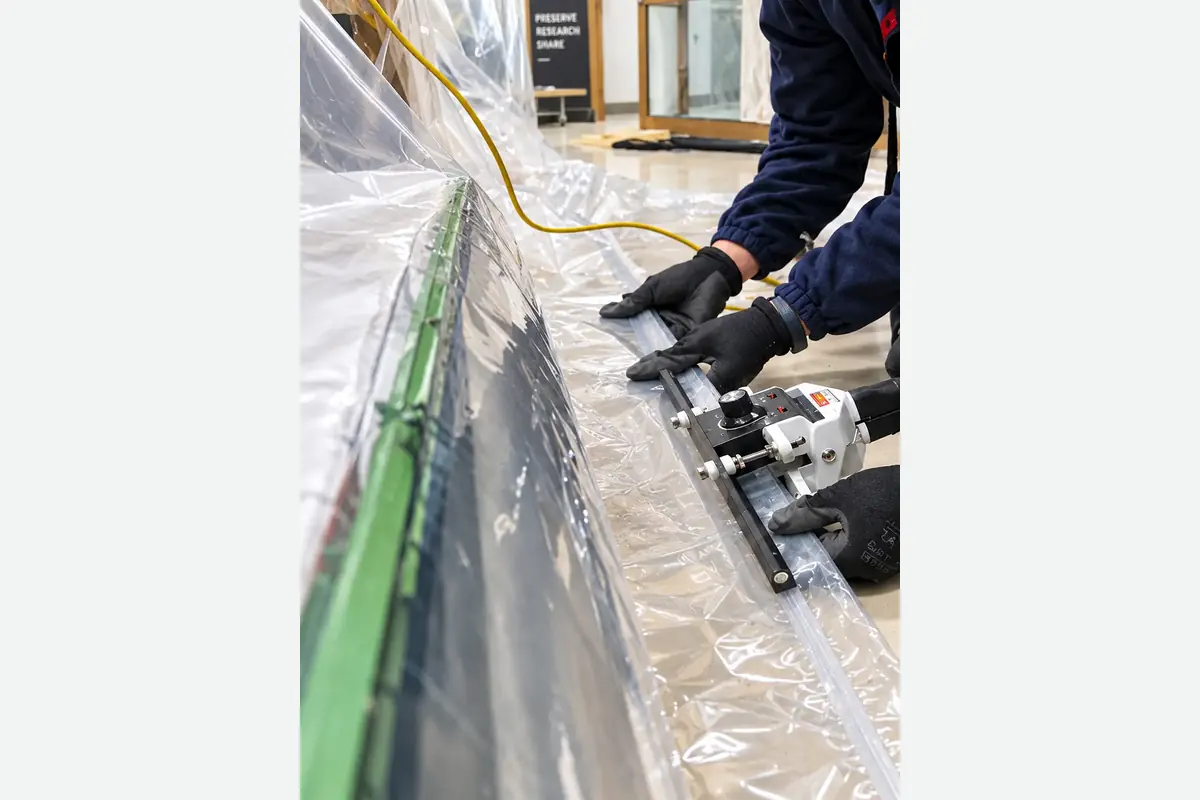
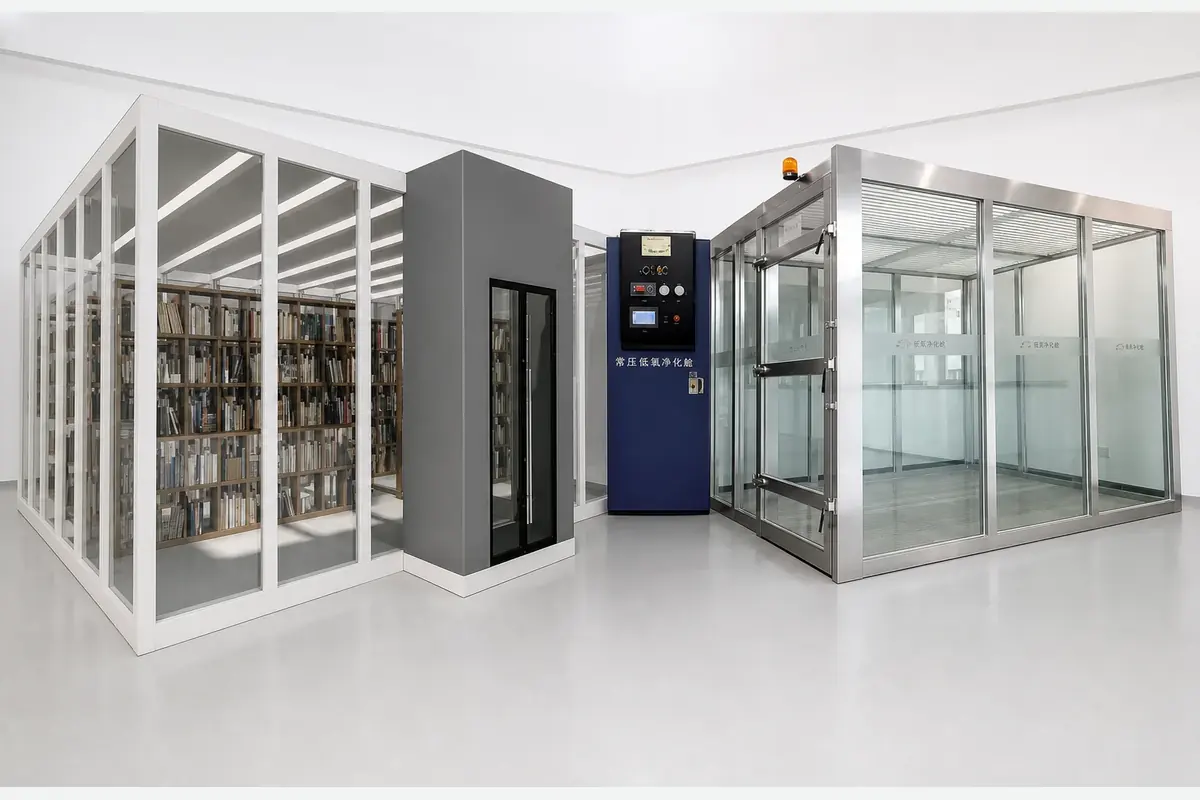
Flexible enclosures can be configured for objects and site conditions, with attention to film, seals, supports and working space. A rigid chamber has defined usable space and access; verify door and internal clearances.
Either approach must avoid damage from enclosure materials, supports or handling. Large, irregular or composite objects require specific assessment.
Passing through the opening is only the first step: check turning, lifting and support changes inside. With flexible enclosures, check access to seals, sensors and gas connections during setup.
Compare frequency and workflow
Flexible arrangements may suit varied object sizes and dispersed work, while a fixed chamber may make repeat loading easier to standardise where batches and dimensions are consistent.
These are hypotheses to test, not guarantees of speed or economy. Include staff time for preparation, sealing, treatment, dismantling and documentation.
Reserve isolation, examination and temporary holding space before and after treatment. Nominal equipment capacity may not translate into planned throughput without staff and supporting areas.
Monitoring, sealing and records
Both approaches require sealing, gas supply, measurement and records appropriate to the treatment objective. Ask about sensor positions, sampling, inspection of seals or doors and data retention.
Readings, targets and duration must match the approved protocol. Record equipment tests separately from actual collection treatments.
Compare total cost and site needs
Include film, sealing and repeat-use consumables for flexible systems; include the equipment, installation, maintenance clearance and upkeep for fixed chambers. Both may need gas, monitoring and training.
Check handling, ventilation, power and personnel safety. Site responsibilities for fixed and temporary installations may differ and should be defined in the RFQ.
Prepare the RFQ
List typical and maximum objects, annual batches, treatment area, gas supply and monitoring targets. Ask suppliers to state configurations, limitations and site questions.
Where workloads are uncertain, request both solutions against the same assumptions and compare staffing, space and maintenance resources.
Compare using the same collection batch
Choose a representative batch and describe its maximum size, shape, weight, support and staffing. Ask how it enters the enclosure, where sensors are placed and how it is removed after treatment.
For flexible systems, ask about film and seal inspection, punctures, cleaning and consumables; for rigid chambers, check access, supports, seals, maintenance and installation. Put each inspection method in the operating documents.
An institution handling occasional oversized objects and frequent small batches need not force one size to do everything. Compare phased or combined configurations and their space, management and maintenance responsibilities.
Avoid missing costs
Record gas, film or seals, monitoring, calibration, training, installation and maintenance beyond the equipment price. Include labour for packing, loading, recording and inspection on repeated projects.
Supplier capacity claims should state objects, loading and operating conditions. The time to establish an atmosphere is not the whole treatment cycle: approved conditions must then be maintained and recorded.
For either enclosure, evaluate personnel safety and emergency response, assign sensing, ventilation, gas isolation and training, and check the arrangements under site conditions.
Sources
Provide object dimensions, expected frequency and site conditions to discuss a flexible enclosure or rigid chamber.
Explore related equipment → · Discuss your project →