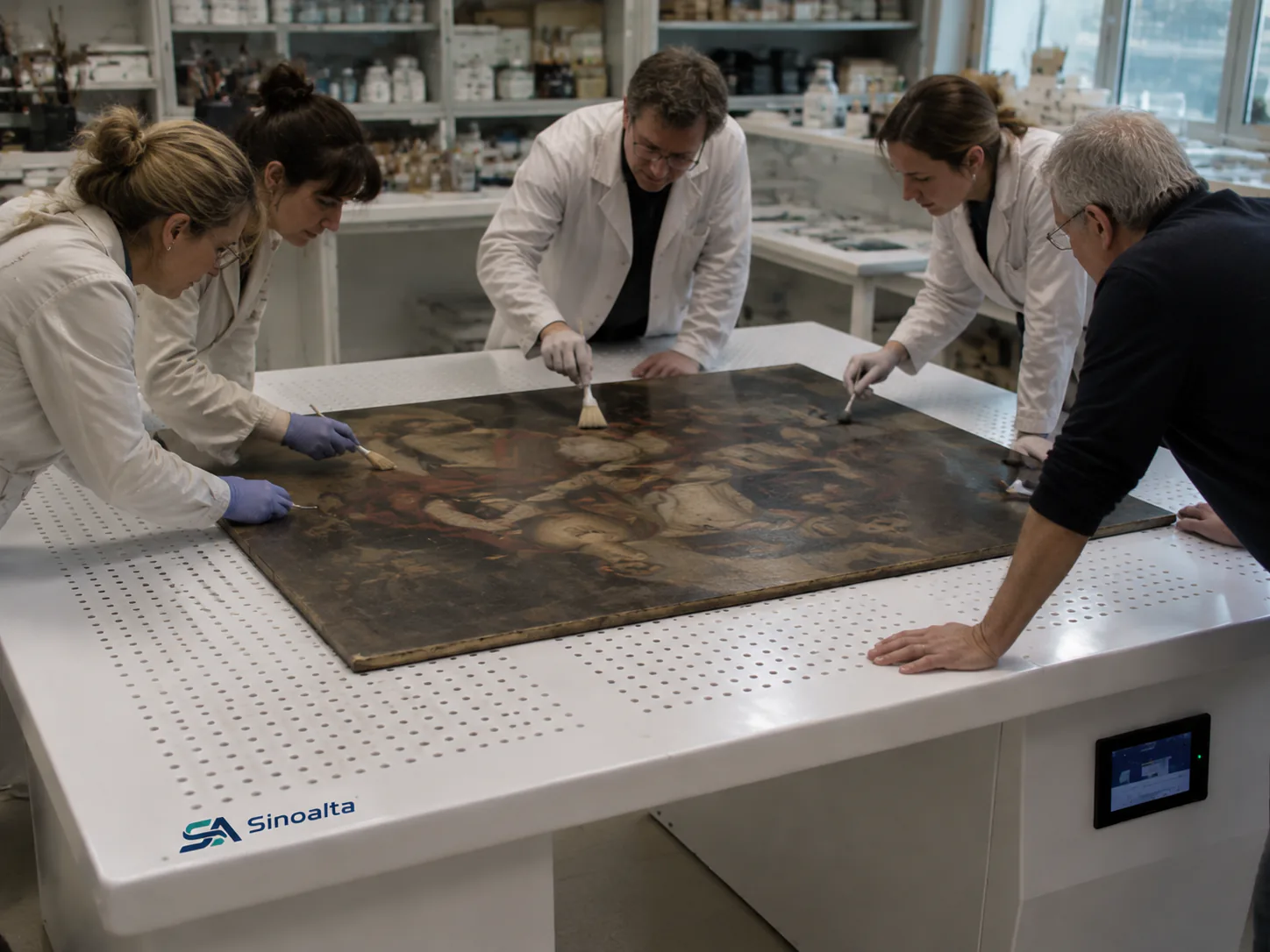
A dusty archive does not automatically need a large dust-removal chamber.
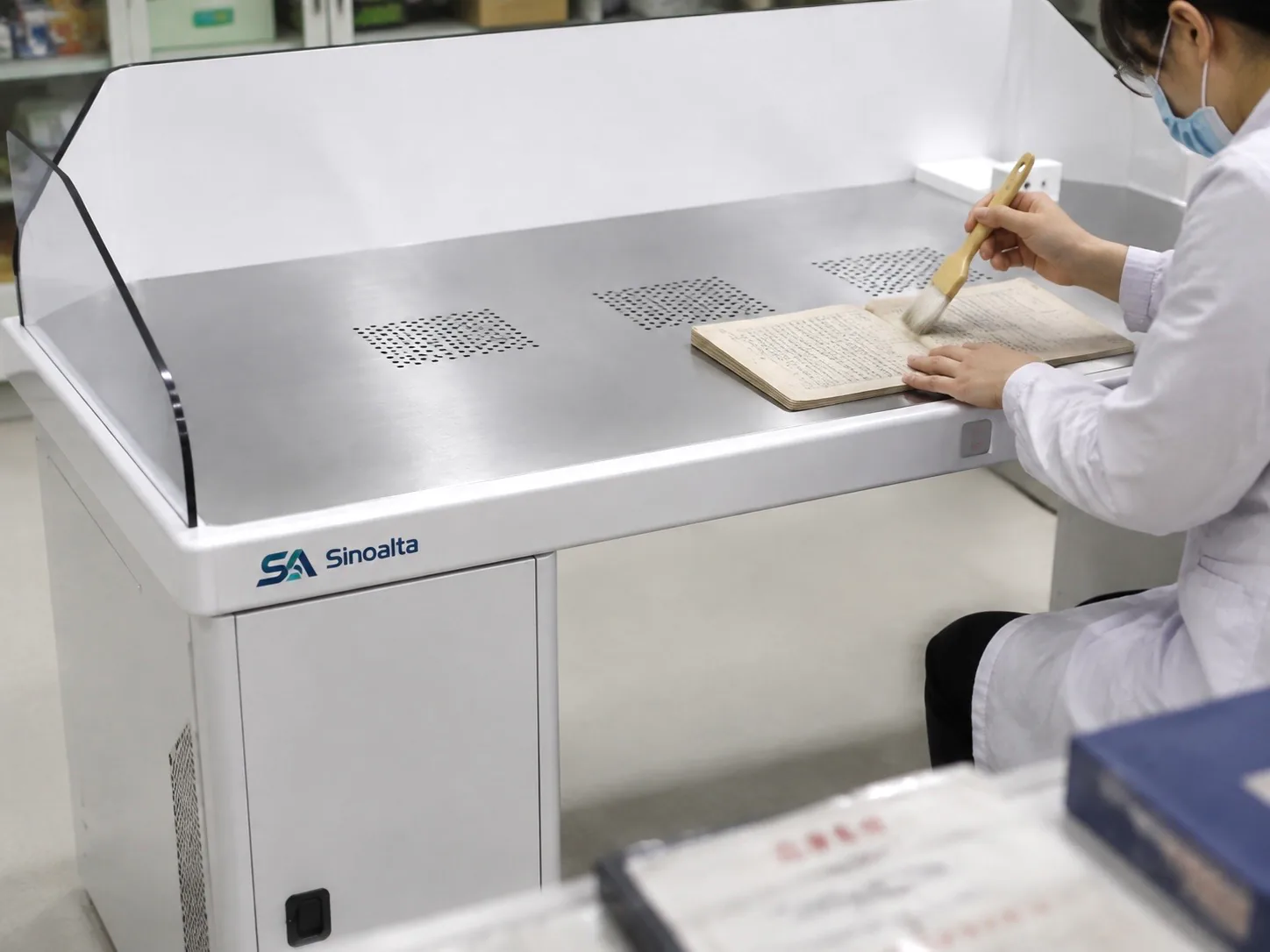
And a small cleaning workstation is not automatically enough for every collection.
The correct setup depends on how much material must be cleaned, how dirty it is, what contaminants are present, how fragile the objects are and how well dust can be contained at the point of work.
A workstation is usually best for controlled item-level cleaning. A chamber or enclosed cleaning room becomes more useful when contamination is heavy, throughput is high, large objects are involved or the institution needs stronger separation between dirty and clean work.
The key decision is therefore not simply:
Which machine removes more dust?
It is:
What level of containment, control and throughput does the cleaning workflow require?
First Clarify What “Dust-Removal Chamber” Means
“Dust-removal chamber” is not one universal conservation-standard term.
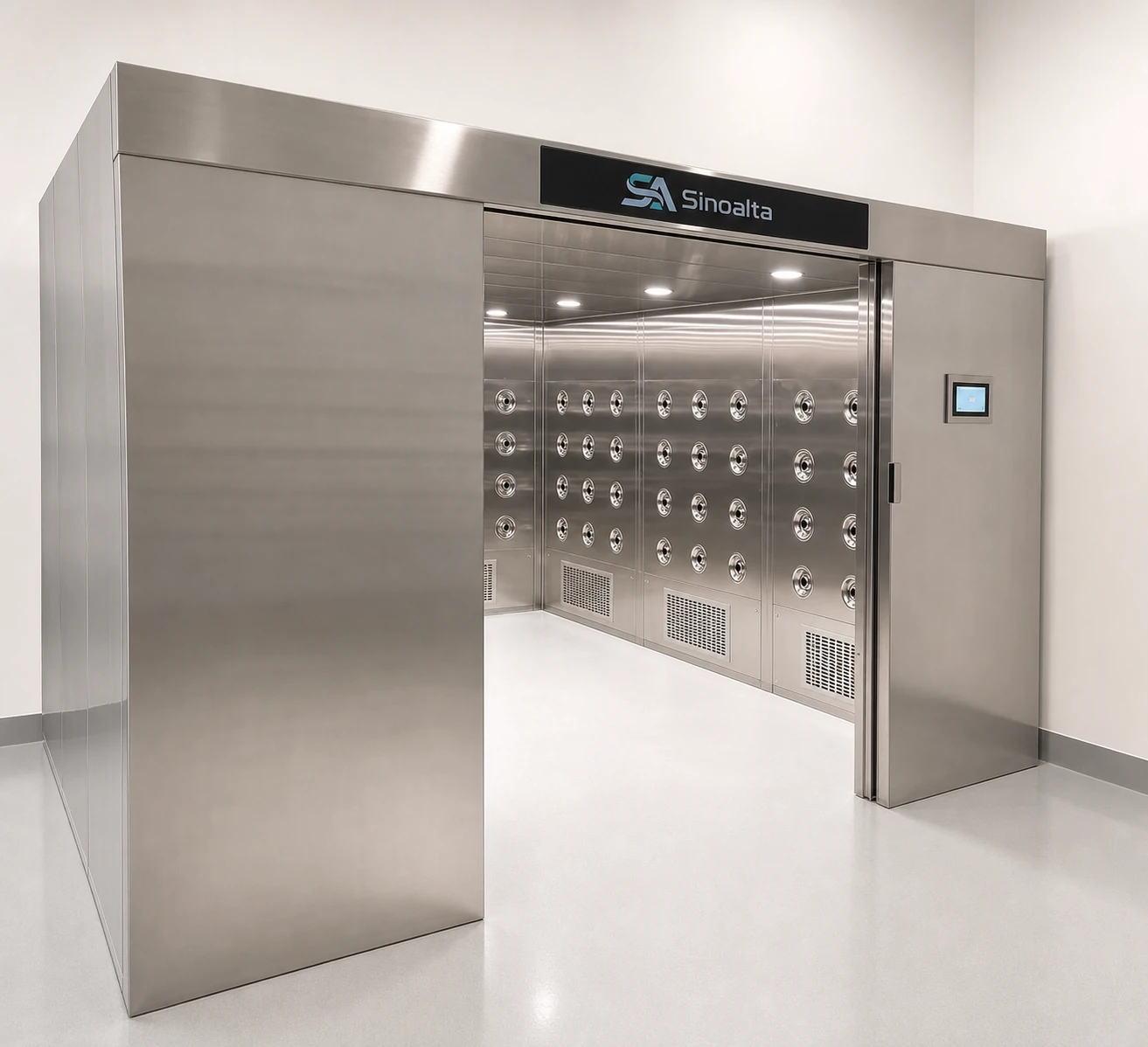
In this article, it means an enclosed or room-scale cleaning environment designed to contain particles while multiple objects, larger objects or higher-volume batches are cleaned.
Depending on the project, that may be:
- an enclosed cabinet;
- a walk-in room;
- a negative-pressure cleaning room;
- a controlled chamber with extraction and filtration;
- a project-specific de-dusting enclosure.
The conservation principle behind these systems is well established even when equipment names vary:
capture contamination at source and prevent it from spreading into clean collection areas.
NARA uses a negative-pressure decontamination laboratory for mould- and soot-affected records. The National Archives in the UK recommends treating inactive mould within a local exhaust ventilation cabinet or another well-ventilated controlled space. CCI also identifies HEPA vacuuming, negative-pressure hoods and biological safety enclosures as useful controls for mould remediation.
Direct Answer: When Should You Use a Workstation?
Choose a dedicated cleaning workstation when:
- objects are handled one at a time;
- the work requires close visual control;
- material is fragile or valuable;
- suction needs to be adjustable;
- brushing and vacuuming must happen close to the surface;
- the daily treatment volume is moderate;
- the workstation can capture released dust before it spreads.
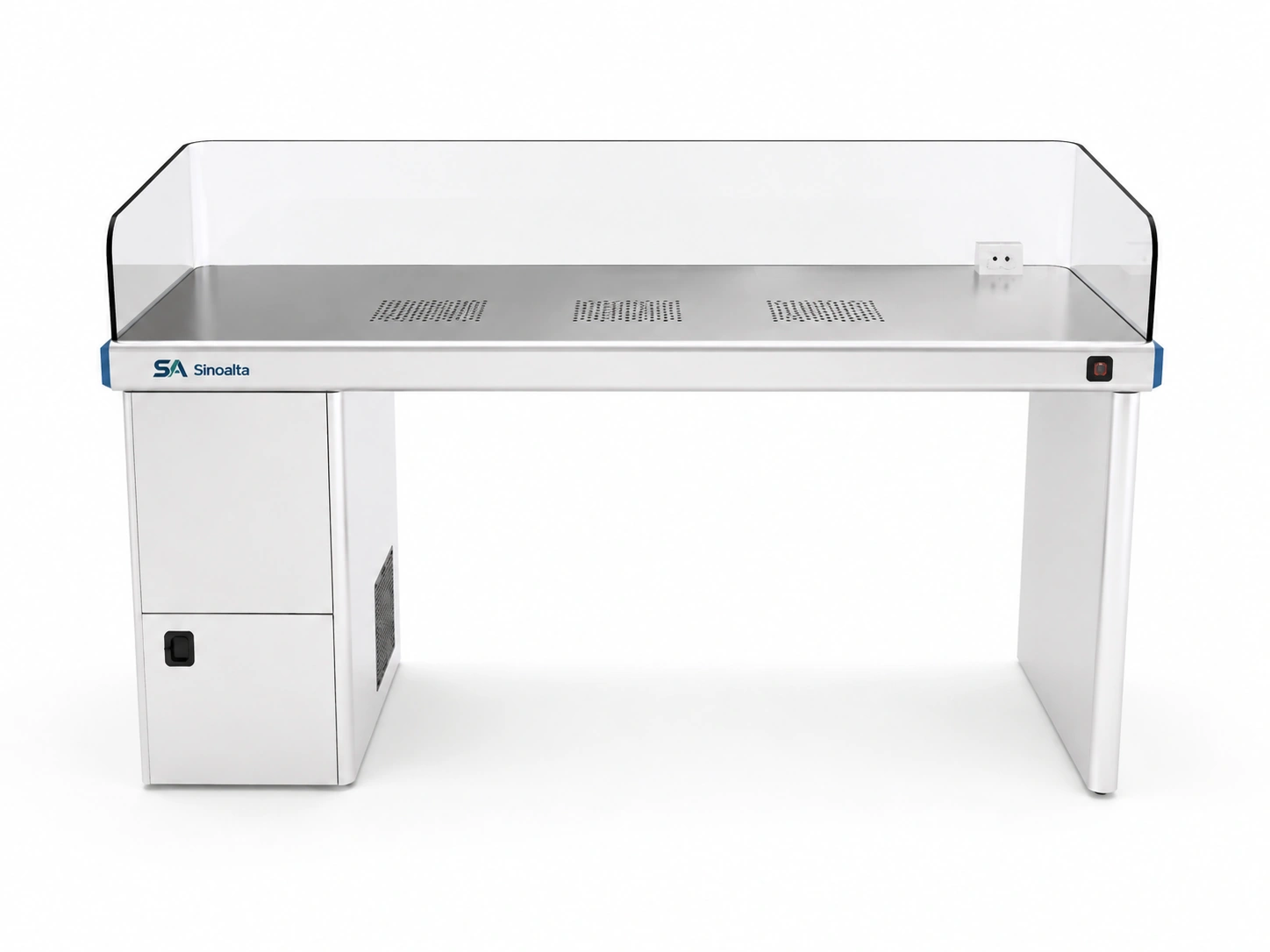
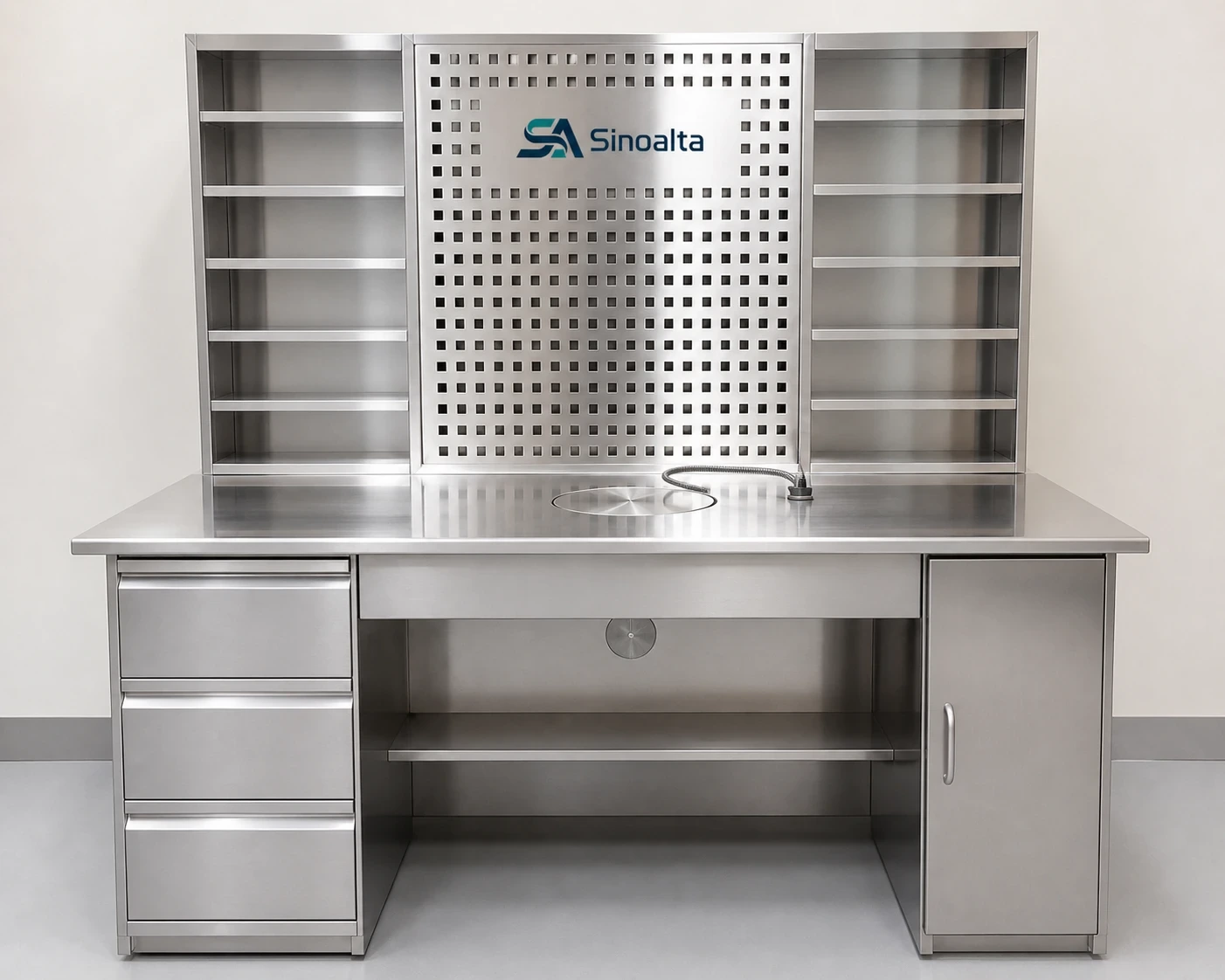
A well-designed workstation may combine:
- local negative pressure;
- downdraft or rear extraction;
- HEPA filtration;
- adjustable suction tools;
- task lighting;
- object supports;
- a cleanable work surface;
- safe dust collection.
The goal is not maximum airflow.
The goal is controlled airflow that supports careful conservation cleaning.
Direct Answer: When Should You Use a Dust-Removal Chamber?
A larger enclosed chamber or room is more useful when:
- collection volume is high;
- many boxes or books must pass through a dirty intake workflow;
- dust release is too great for one small workstation;
- large or awkward objects need cleaning;
- several staff need to work at the same time;
- a stronger dirty/clean separation is required;
- contaminated enclosures and objects need to be handled together;
- the institution wants a dedicated high-containment cleaning zone.
A chamber changes the work environment.
It does not remove the need for careful item-level technique.
Even inside a chamber, fragile paper may still need soft brushes, controlled HEPA vacuuming, screens, supports and low suction.
Dust Is a Preservation and Workflow Problem
Dust is more than a cosmetic issue.
CCI notes that dust can abrade bindings and paper, attract insects and support mould risk. Heavy dust also makes inspection more difficult and can transfer contamination to shelves, boxes, work surfaces and staff clothing.
Cleaning therefore has two goals:
- remove loose contamination from the object;
- stop that contamination moving into the rest of the collection.
This is why a normal open table is often a poor place for high-volume archive cleaning.
If brushing simply lifts dust into the room, the collection may be cleaner but the work area is more contaminated.
Not Every Dusty Object Should Be Vacuumed the Same Way
Condition assessment comes before equipment selection.
Before cleaning, check:
- paper strength;
- tears and losses;
- friable or powdery media;
- binding condition;
- mould activity;
- soot or fire residues;
- insect debris;
- photographic inserts;
- water damage;
- previous treatments.
CCI warns that objects with powdery, flaking media or mouldy deposits should not simply be brushed like stable paper.
The National Archives UK also recommends adjustable suction and protective mesh for vulnerable documents during vacuum cleaning.
The point is simple:
A stronger extraction system does not make a fragile object stronger.
What a Cleaning Workstation Does Well
A workstation creates a controlled point-of-use cleaning zone.
This is valuable because the conservator stays close to the object and can adjust technique continuously.
1. Item-level control
The operator can change:
- suction;
- nozzle distance;
- brush type;
- object support;
- cleaning direction;
- treatment pace.
This matters for brittle documents and damaged bindings.
2. Local particle capture
A rear-extraction or downdraft zone can pull airborne particles away from the operator and adjacent clean material.
The airflow should support the work rather than disturb loose fragments.
3. Good visual access
Task lighting and a large working surface help with condition checking during cleaning.
4. Easier documentation
Item-level stations work well where staff need to maintain folder order, object IDs or treatment records.
5. Lower space requirement
A workstation can fit into an existing conservation lab or processing room more easily than a walk-in chamber.
Where a Workstation Reaches Its Limits
A workstation can become a bottleneck when:
- hundreds of boxes arrive at once;
- several technicians need to work in parallel;
- debris falls from entire batches;
- large rolled material or textiles do not fit the work surface;
- dirty packaging must also be cleaned;
- contaminated objects need isolation from the main laboratory.
In these cases, the problem is no longer just “how do we clean one book?”
It becomes:
how do we control a dirty workflow at collection scale?
That is where a chamber or dedicated cleaning room may become more useful.
What a Dust-Removal Chamber Does Well
1. Stronger containment
An enclosed system can create a clear boundary around dirty work.
When negative pressure is used, air should move from cleaner surrounding areas toward the contaminated zone rather than the reverse.
NARA applies this principle in its decontamination lab to help contain mould and soot.
2. Higher throughput
A larger room can support:
- multiple staff;
- carts;
- batches of boxes;
- separate incoming and outgoing areas;
- larger extraction capacity.
This can reduce the number of times dirty material moves through clean laboratory space.
3. Large-object handling
Oversized books, maps, textiles, boxes or mixed collections may be easier to process in a walk-in environment.
4. Dirty enclosure management
Archive cleaning often involves more than the object.
Old boxes, folders, wrapping and shelving dust may also be contaminated.
A larger controlled area provides more room to separate:
dirty packaging → object cleaning → clean rehousing
5. Better separation from clean work
A dedicated chamber can protect paper-repair, documentation and storage areas from dust generated during high-volume cleaning.
A Chamber Is Not a Fully Automatic Conservation Treatment
This distinction is important.
High airflow can remove loose dust from robust surfaces, but conservation cleaning is not simply an industrial blow-off process.
Objects may contain:
- loose fragments;
- red-rotted leather;
- friable pigments;
- brittle pages;
- detached labels;
- small inserts;
- torn bindings.
These can be damaged by uncontrolled suction or strong air jets.
A chamber should therefore be designed as a controlled cleaning environment, not as a promise that every object can be placed inside and automatically cleaned.
For fragile or high-value material, manual technique remains central.
Workstation vs Chamber: Decision Matrix
| Decision factor | Cleaning workstation | Dust-removal chamber / room |
|---|---|---|
| Normal treatment mode | One object or small batch | Batch, high-volume or large-object workflow |
| Operator control | Very high | High, but distributed across larger work zone |
| Space requirement | Low to moderate | Moderate to high |
| Containment | Local source control | Whole-zone containment |
| Throughput | Moderate | Higher potential throughput |
| Fragile object work | Strong fit | Still requires item-level supports and tools |
| Multiple operators | Limited by station size | Easier to support |
| Dirty packaging | Limited space | Easier to separate and process |
| Large objects | Depends on worktop size | Often stronger fit |
| Installation | Extraction, power, filters | Room/chamber, extraction, pressure control, access, filters |
| Best use case | Detailed archive/book cleaning | Collection-scale de-dusting and dirty intake control |
A Third Option: Sometimes You Need Neither
Not every cleaning project requires a dedicated workstation or chamber.
For a small number of stable books with light shelf dust, CCI recommends simple dry cleaning using soft brushes and, where appropriate, controlled vacuuming.
A suction-controlled museum vacuum with suitable filtration may be enough for occasional work.
This creates a useful three-level model:
Level 1 — Occasional cleaning
Portable museum vacuum + soft brush + clean work surface
Level 2 — Routine institutional cleaning
Dedicated negative-pressure cleaning workstation
Level 3 — High-volume or high-containment cleaning
Enclosed dust-removal chamber / dedicated cleaning room
Do not over-engineer a small problem.
Do not under-engineer a large one.
HEPA Filtration Matters, but Suction Control Matters Too
HEPA filtration is important because removed particles should be captured rather than exhausted back into the room.
CCI recommends HEPA-filtered vacuuming for books and for mould-remediation workflows. The National Archives UK also specifies suction-controlled HEPA-filtered vacuum cleaners for inactive mould removal.
But a HEPA filter does not make any suction level safe.
For fragile paper, the system should allow:
- reduced suction;
- protective screens;
- controlled nozzle distance;
- soft-brush guidance;
- stable object support.
A system should therefore be evaluated by both:
filtration quality + controllability at the object
not filtration alone.
Mould Changes the Risk Level
Visible mould should not be treated as ordinary shelf dust.
Active mould means there is still a moisture problem.
The first priorities are to:
- isolate affected material;
- stop the moisture source;
- reduce RH;
- assess staff health risk;
- dry or stabilize the collection;
- obtain conservation advice where needed.
Once mould is inactive, controlled HEPA vacuuming can remove loose residues from selected materials.
The National Archives UK recommends carrying out this work in an LEV cabinet or a well-ventilated controlled space. CCI lists HEPA vacuuming, negative-pressure fume hoods and biological safety enclosures among the tools used for mould-cleaning workflows.
For a large mould incident, a normal archive cleaning workstation may not provide enough containment.
A dedicated chamber or decontamination room can be more appropriate.
Negative Pressure: Local vs Room Scale
Negative pressure is often used loosely in equipment marketing.
It is more useful to separate two ideas.
Local negative pressure
A workstation captures contaminated air close to the object.
This is suitable for controlled source capture.
Room or chamber negative pressure
The whole dirty area is kept at a lower pressure than adjacent clean areas.
This helps limit outward migration of contaminated air when doors are closed and the ventilation system is designed correctly.
These approaches can be used together.
A high-containment cleaning room may contain several local extraction workstations inside it.
This is often a more realistic institutional design than expecting one room exhaust grille to capture every particle at the object surface.
Plan Dirty-to-Clean Object Flow
The equipment should fit a clear object route.
A useful collection-scale sequence is:
Dirty receiving → Condition check → Exterior box cleaning → Object cleaning → Inspection → Rehousing → Clean temporary storage
This reduces cross-contamination.
It also helps maintain intellectual order.
For archives, this is critical. A physically clean document is still a preservation failure if it returns to the wrong folder or box.
Use:
- batch IDs;
- shelf references;
- temporary markers;
- labelled carts;
- separated dirty and clean staging areas.
A chamber project should plan these zones before finalizing equipment position.
Throughput Should Be Measured in Real Work, Not Just Airflow
Equipment suppliers often describe airflow or chamber volume.
Those numbers matter, but they do not tell you how many archive boxes can be safely processed per day.
Real throughput depends on:
- object condition;
- box opening and closing time;
- document order control;
- vacuuming time;
- filter loading;
- staff numbers;
- cleaning standard;
- rehousing;
- documentation.
A large chamber with one operator may process fewer items than two well-designed workstations with an efficient workflow.
Therefore calculate throughput from:
objects per batch × staff per shift × average handling time × required cleaning level
not chamber volume alone.
Filter Management Is Part of the System
Dust does not disappear when it enters the extraction system.
It collects in:
- prefilters;
- HEPA filters;
- bags or dust containers;
- ducts;
- internal surfaces.
A cleaning system should therefore support:
- safe filter access;
- filter loading checks;
- planned replacement;
- sealed waste handling;
- cleaning of internal surfaces;
- maintenance records.
For mould or hazardous dust, filter handling may require additional occupational-safety procedures.
Common Equipment-Selection Mistakes
| Mistake | Why it matters |
|---|---|
| Buying a chamber because the collection is dusty | Light dust may only need controlled item-level cleaning |
| Buying one workstation for a mass cleaning project | Throughput and dirty staging can become bottlenecks |
| Using maximum suction on fragile paper | Loose fragments or media can be lost |
| Treating HEPA filtration as the only requirement | Source capture, suction control and object support also matter |
| Cleaning mould in the normal lab | Spores and residues may spread to staff and clean collections |
| Ignoring dirty boxes and folders | Objects can be recontaminated during rehousing |
| Measuring capacity only by airflow | Real throughput depends heavily on handling and staff time |
A Practical Selection Framework
1. Classify the contamination
Light dust, heavy dust, soot and mould require different controls.
2. Assess object fragility
Determine whether brushing, vacuuming and airflow are safe.
3. Estimate volume
How many books, folders or boxes must be processed per day?
4. Define containment
Is local extraction enough, or is room-scale separation required?
5. Define work method
Will staff clean one item at a time, by batch, or in parallel teams?
6. Plan dirty-to-clean flow
Include boxes, carts, temporary storage and rehousing.
7. Check filtration and maintenance
Plan safe filter and waste handling.
8. Size the equipment
Only now select the workstation, chamber or combined layout.
Contamination → Fragility → Volume → Containment → Workflow → Filtration → Equipment
Frequently Asked Questions
When should a dust-removal chamber be used instead of a workstation?
Use a chamber or dedicated room when the collection volume, contamination level or object size makes local workstation control inefficient, or when stronger separation between dirty and clean work is required.
Is a dust-removal chamber better for fragile books?
Not automatically. Fragile books still need low suction, soft tools, support and careful operator control. A chamber improves containment; it does not replace conservation technique.
Does an archive cleaning workstation need HEPA filtration?
HEPA filtration is strongly useful where vacuuming or extraction is used because removed fine particles should be captured rather than recirculated. The full system should also provide suitable suction control and safe maintenance.
Can mouldy archives be cleaned at a normal workstation?
Large or active mould problems require a higher level of isolation and health-and-safety control. Inactive mould residues may be cleaned with controlled HEPA vacuuming in an appropriate LEV, negative-pressure or well-ventilated controlled area.
Is stronger suction better for dust removal?
No. Excess suction can damage fragile paper, bindings or loose media. The correct goal is enough airflow to capture loosened particles without damaging the object.
How do I calculate cleaning-system capacity?
Estimate real handling time per book, folder or box, then include staff numbers, staging, cleaning standard, documentation, filter maintenance and rehousing. Airflow and chamber size alone do not equal throughput.
Planning an Archive Cleaning Project?
Start with contamination level, object condition and throughput.
Sinoalta develops book and document cleaning workstations as well as archive and collection dust-removal chamber configurations for different cleaning volumes and containment requirements.
Read Archive Cleaning & Dust Removal → Explore Collection Dust & Mould Solutions → View Book & Document Cleaning Workstations → View Archive & Collection Dust-Removal Chambers →
Selected Technical References
- Canadian Conservation Institute, Basic Care of Books: https://www.canada.ca/en/conservation-institute/services/conservation-preservation-publications/canadian-conservation-institute-notes/basic-care-books.html
- Canadian Conservation Institute, Basic Care — Paper Documents and Newspaper Clippings: https://www.canada.ca/en/conservation-institute/services/care-objects/paper-books/basic-care-documents-newspaper-clippings.html
- Canadian Conservation Institute, Mould Prevention and Collection Recovery: https://www.canada.ca/en/conservation-institute/services/conservation-preservation-publications/technical-bulletins/mould-prevention-collection-recovery.html
- Canadian Conservation Institute, Dry Methods for Surface Cleaning of Paper: https://publications.aws.tpsgc-pwgsc.cloud-nuage.canada.ca/site/eng/9.810373/publication.html
- U.S. National Archives, Conservation Treatment — Decontamination Lab: https://www.archives.gov/preservation/about/st-louis-preservation-branch/conservation-treatment
- The National Archives (UK), Treating Mould: https://www.nationalarchives.gov.uk/archives-sector/advice-and-guidance/managing-your-collection/mould-in-archive-collections/collection-recovery/remediation/treating-mould/