Product Positioning
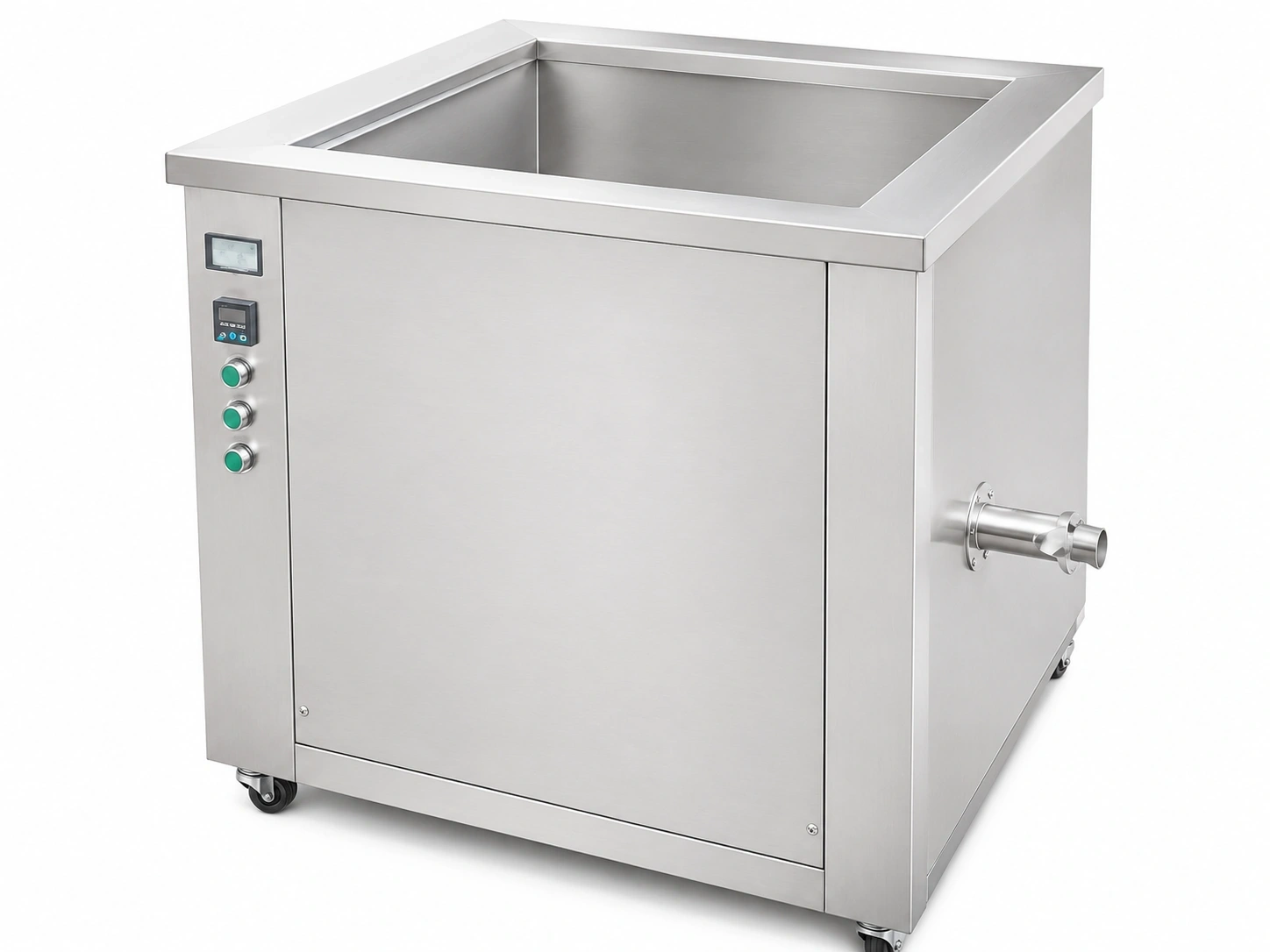
For professionally assessed metal artifacts, ceramics and other collection objects confirmed as compatible with immersion and ultrasonic action. The system combines a stainless-steel cleaning tank, ultrasonic cavitation and configurable heating to address adhered deposits and surface contamination within a controlled laboratory process. It is not a universal cleaning method: composite, fragile, cracked, porous, decorated or otherwise unstable objects require particular caution and may be unsuitable. Selection should follow examination of the material, construction, condition, surface, previous repairs and the intended cleaning liquid, with small-scale evaluation and a conservator-approved treatment plan before an object enters the tank.
Product Overview
The box-type system combines a separate ultrasonic generator, cleaning tank and transducers, with heating and automatic temperature control available as configuration options. Its tank-based action differentiates it from manual localized cleaning, washing tables and other surface-treatment equipment: the object and cleaning process must be suitable for immersion and for energy transmitted through the liquid. Before specification, laboratories should compare object dimensions with the internal tank, confirm the available electrical supply and determine whether the stated frequency, power and heating arrangement align with the proposed process. Cleaning chemistry, supports, baskets or object positioning are treatment decisions and should be established by the responsible conservation team.
Working Principle
Ultrasonic transducers transmit high-frequency vibration into the cleaning liquid, creating cleaning action throughout the tank. The process is intended for metal artifacts, ceramics and other objects professionally assessed as compatible with ultrasonic treatment; inclusion in a broad material category alone is not evidence of suitability. Operators should establish an object-specific sequence, monitor the treatment and stop if condition changes are observed. The system does not replace preliminary documentation, condition assessment, selection of an appropriate liquid, post-cleaning evaluation or any required rinsing and drying workflow. Verification should record the chosen operating conditions and the object’s condition before and after treatment rather than relying only on visual removal of deposits.
Technical Specifications
| Item | Specification |
|---|---|
| Ultrasonic power | 2900 W |
| Ultrasonic frequency | 28 kHz |
| Internal tank dimensions | 600 × 400 × 400 mm |
| Overall dimensions | 900 × 700 × 750 mm |
| Electrical supply | 380 V / 50 Hz |
| Heating power | 3 kW |
Performance Features
- The transducers use German CeramTec elements and high-Q transducers.
- Swiss Ciba adhesive is used with the corresponding bonding process.
- Heating and automatic temperature control can be configured.
- The equipment is fabricated entirely from stainless steel.
- The ultrasonic cleaning tank and generator use a separate structure for convenient operation and maintenance.
Suitable Applications
- Metal-artifact cleaning
- Bronze and other metal-object cleaning
- Ceramic cleaning
- Antiques and suitable collection-object cleaning
- Conservation-laboratory object cleaning
- Objects professionally assessed as suitable for ultrasonic treatment
Selection & Customization
Cleaning-tank dimensions, ultrasonic power, heating system and overall equipment specifications can be configured according to object dimensions, material type, cleaning process and laboratory conditions. Project planning should also confirm installation clearances, utilities, drainage or liquid-handling arrangements, operator access and maintenance space for the separate tank and generator. The final configuration should be based on the institution’s defined object range and validated process, not on the assumption that greater power or heating is appropriate for every treatment. Staff procedures should cover loading, monitoring, safe removal, cleaning of the stainless-steel tank and periodic checks of the generator, transducers and temperature-control functions.