Existing insect and biological risks
Insect damage and signs of mold-related deterioration created a need for a more systematic preventive-conservation workflow.

A dual-chamber nitrogen anoxia system configured to reduce dependence on chemical fumigation, simplify nitrogen supply and lower long-term operating costs for archive pest management.
Archive collections in tropical environments can face several preservation risks at the same time. High humidity can increase mold risk, while insects may remain concealed inside books, files, bindings, packaging materials and other organic collection materials.
For this archive project in Indonesia, the customer had observed mold-related deterioration and insect damage across parts of the collection. The immediate requirement was to control insect infestation without adding chemical residues, while keeping long-term operating costs predictable.
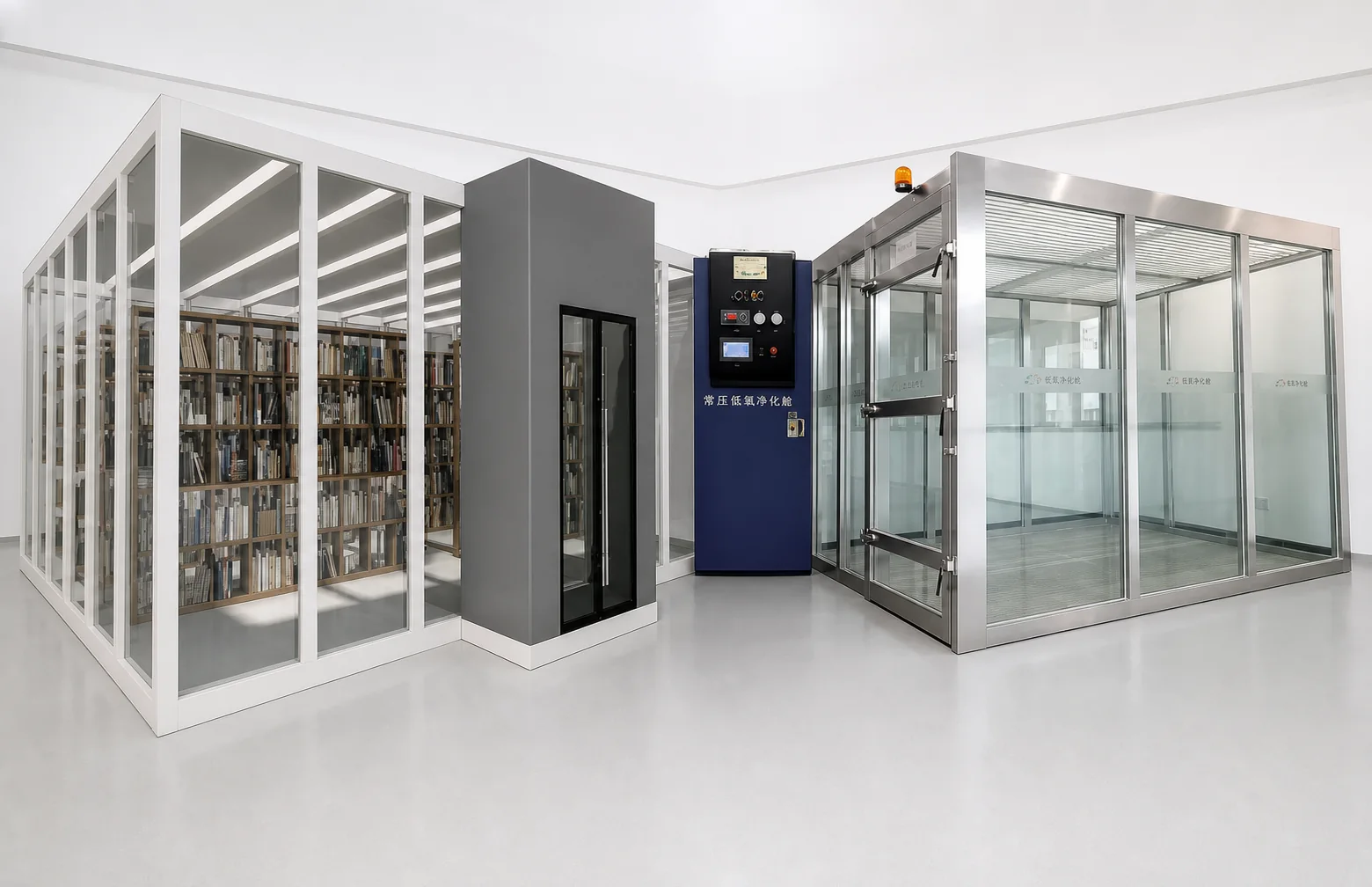
Sinoalta configured a dual-chamber ambient-pressure nitrogen anoxia system, using one nitrogen-generation unit to support two airtight treatment cabinets.
The archive had previously relied on conventional pest-control approaches when insect activity appeared within stored documents. That created repeated purchasing and handling of treatment materials, while the institution also wanted to reduce unnecessary chemical exposure around sensitive archival collections.
Staff raised one operating question that became central to the project: how much nitrogen would the system consume, and what would nitrogen cost over years of operation?
Rather than using bottled nitrogen as an ongoing consumable, the selected system was configured with an on-site nitrogen generator. It produces the nitrogen needed during operation, removing the need for routine replacement of nitrogen cylinders or other purchased nitrogen consumables.
Insect damage and signs of mold-related deterioration created a need for a more systematic preventive-conservation workflow.
The institution wanted to reduce reliance on conventional chemical fumigation and avoid unnecessary chemical residues around archival materials.
The customer was particularly concerned that nitrogen consumption could become a significant recurring expense after installation.
The archive required capacity for routine document batches without relying on one large treatment space for every cycle.
One nitrogen generator supplies two airtight anoxic treatment cabinets, allowing the archive to organize separate treatment batches while sharing the principal nitrogen-generation system.


Atmospheric air is used as the source for nitrogen generation. Clean nitrogen is introduced into the airtight treatment chamber, gradually reducing oxygen and creating a controlled low-oxygen environment for collection pest treatment.
Nitrogen anoxia provides a non-chemical route for insect pest treatment. For this ambient-pressure configuration, the oxygen-control range is 0.1%–1.0%.
The delivered arrangement includes two airtight treatment cabinets connected to a shared nitrogen-generation system, allowing the institution to manage treatment batches while keeping the gas-supply architecture centralized.

If treatment depended on purchased nitrogen cylinders, nitrogen would remain a recurring operating expense for every treatment batch. With an integrated nitrogen generator, the archive produces the required nitrogen on site. There is no routine bottled-nitrogen consumable; normal maintenance is primarily associated with equipment servicing such as pump-oil replacement.
For this project, the new configuration is estimated to reduce recurring treatment-related losses and consumable expenses by approximately US$100 per month, or approximately US$1,200 per year. This estimate reflects this project's operating conditions and previous cost structure; it is not a universal guaranteed saving.
Reduced dependence on chemical fumigation: nitrogen anoxia provides a physical low-oxygen route for insect pest treatment without conventional chemical fumigants or associated chemical residues.
No recurring bottled-nitrogen requirement: nitrogen is generated on site rather than purchased as a routine treatment consumable.
More flexible treatment capacity: two treatment cabinets can support different archive batches from a shared nitrogen-generation system.
Lower long-term operating expense: for this project, the customer estimates recurring savings of approximately US$1,200 per year compared with its previous operating approach.
Nitrogen anoxia is used here primarily for insect pest treatment. Existing or recurring mold problems require separate risk management including isolation, cleaning, humidity management, environmental monitoring and appropriate treatment selection.
A durable preservation strategy connects inspection → isolation → treatment → environmental control → monitoring, rather than relying on one treatment method alone. Explore the related archive pest-management workflow and mold and collection decontamination planning context.
By combining on-site nitrogen generation with two treatment chambers, the project created a more sustainable route for routine archive pest management. The decision was not based only on oxygen level; it also considered whether the institution could continue using the system economically year after year.
Control the treatment environment. Reduce recurring consumption. Protect the collection for the long term.
nitrogen anoxia treatment systemcontrolled-atmosphere pest treatment
archive pest-management workflowmold and collection decontamination
archive pest managementpreventive conservationnon-chemical pest treatment
archiveslibrariesmuseumsconservation laboratories