
Product overview
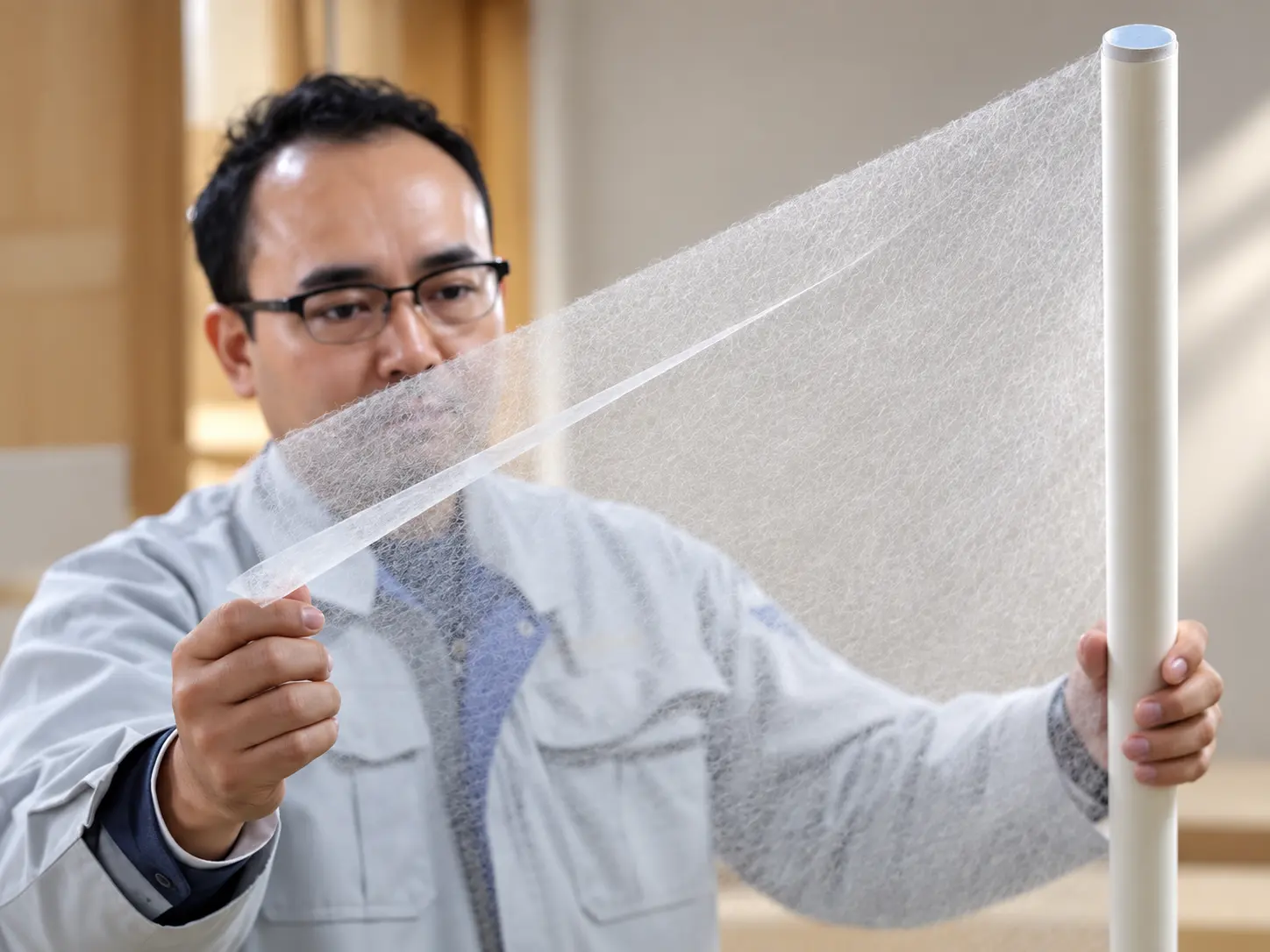
Tosa Tengujo is an exceptionally light Japanese washi made from Kozo (paper mulberry) fibers. Its translucent, flexible structure supports fine paper mending, reinforcement of weakened documents and selected conservation treatments for books and artworks. Sinoalta coordinates sourcing of Japanese-origin paper for museums, archives, libraries and conservation studios.
Technical specifications
| Parameter | Specification / condition |
|---|---|
| Product type | Japanese conservation tissue / washi |
| Reference manufacturer | Hidaka Washi |
| Manufacturing origin | Japan · Kochi Prefecture |
| Fiber | 100% Kozo (paper mulberry) |
| Manufacturing method | Machine-made Japanese washi |
| Reference basis weights | 1.6 / 2.0 / 3.5 g/m² |
| Reference roll format | 1,000 mm × 5 m |
| Reference cut sheet | 1,000 × 1,000 mm, 3.5 g/m² |
| Color options | Natural / white; availability by grade |
| pH | Neutral to mildly alkaline; confirm selected grade |
| Supply format | Rolls / cut sheets |
| Order unit | Roll or sheet |
| Estimated lead time | 5–6 weeks after order confirmation; stock and destination dependent |
| Minimum order quantity | By selected grade, format and procurement quantity |
Supplier-listed configurations
| Color | Basis weight | Dimensions |
|---|---|---|
| Natural | 1.6 g/m² | 1,000 mm × 5 m |
| Natural | 2.0 g/m² | 1,000 mm × 5 m |
| Natural | 3.5 g/m² | 1,000 mm × 5 m |
| White | 1.6 g/m² | 1,000 mm × 5 m |
| White | 2.0 g/m² | 1,000 mm × 5 m |
| White | 3.5 g/m² | 1,000 mm × 5 m |
| Natural | 3.5 g/m² | 1,000 mm × 1 m |
Color and weight combinations are sourcing references. Confirm the selected original manufacturer grade, availability, treatment and documentation before ordering.
Key features
Long paper-mulberry fibers combine flexibility with handling strength at very low basis weights.
Suitable for discreet reinforcement where visual interference should be limited.
Natural, white and pH characteristics depend on the selected original manufacturer grade.
Used for tear repair, localized reinforcement, backing and surface support with compatible treatment methods.
Material selection
Ultra-lightweight work where minimal added material and high translucency are priorities.
Delicate surface reinforcement and localized repairs.
Paper mending and reinforcement requiring more handling support.
Select the grade according to the original object, treatment method and adhesive compatibility. Test representative materials before treating valuable collections.
Conservation applications
- Fragile archival documents and manuscripts
- Historical books and individual paper sheets
- Paintings, calligraphy and other works on paper
- Selected cultural heritage paper treatments
Origin & procurement
Reference manufacturer: Hidaka Washi, Japan. Sinoalta can coordinate specification review, procurement and international supply. The 1,000 mm × 5 m roll, 1,000 × 1,000 mm cut sheet and 5–6 week lead time are sourcing references; confirm the exact grade, format, stock and delivery terms with the quotation.
Frequently asked questions
What is Tosa Tengujo made from?
Kozo, or paper mulberry, fibers. Confirm the exact grade and its material documentation before ordering.
Which weight should I choose?
1.6, 2.0 and 3.5 g/m² describe basis weight. The appropriate grade depends on the object and treatment method.
Is the paper self-adhesive?
This plain tissue is not specified as pre-coated. Select a compatible conservation adhesive separately.
Can I request a different size or color?
Additional formats and colors depend on manufacturer grade, minimum order quantity and current availability.
Is it suitable for archival conservation?
Selected grades are used in conservation. Suitability depends on the grade, object condition and treatment method.
What is the estimated delivery time?
The sourcing estimate is 5–6 weeks after order confirmation, subject to grade, stock and destination.