Entomology & Natural History Specimen Storage
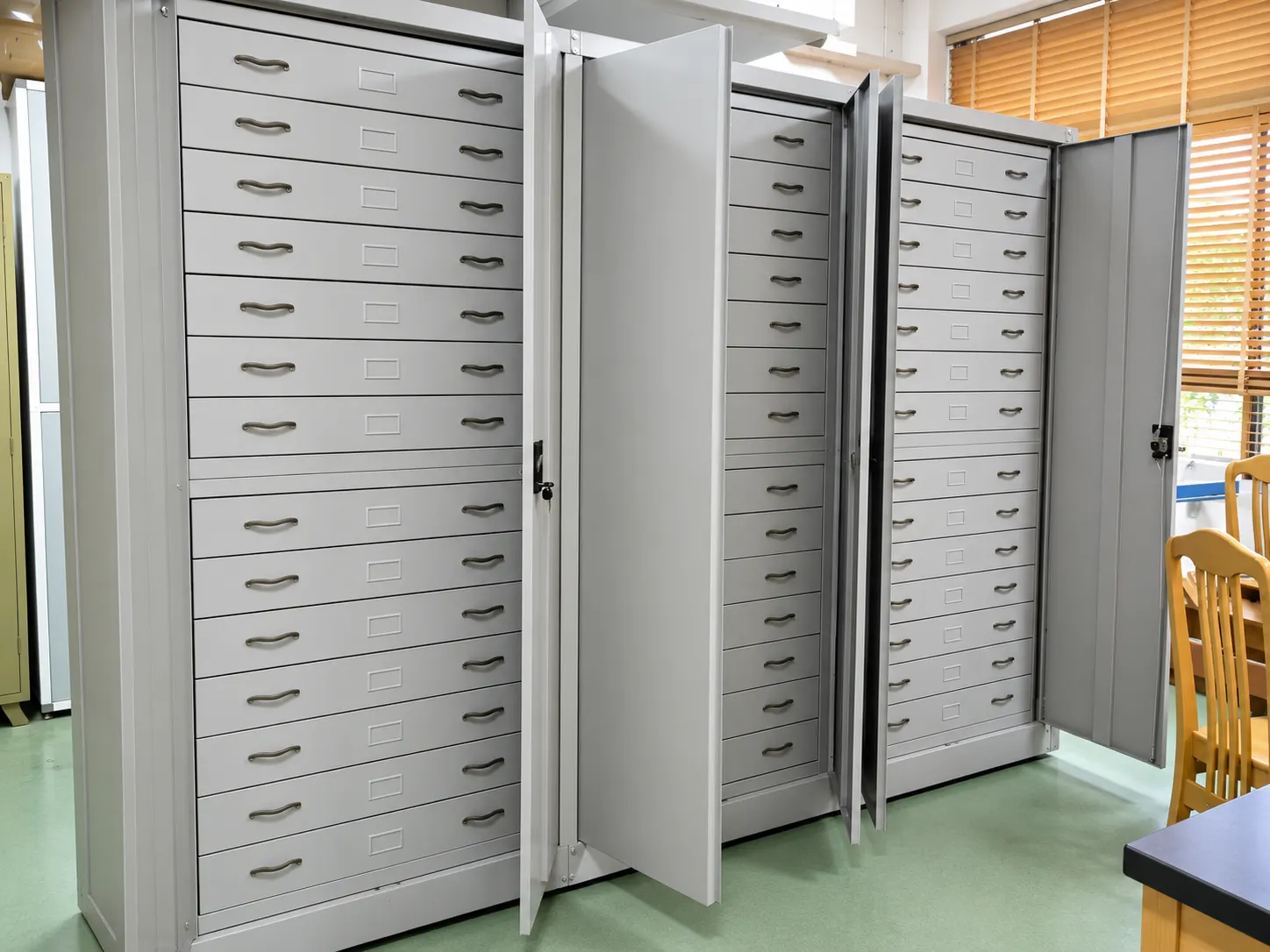
This project-configured storage system supports pinned insects and selected dry natural history collections. Removable specimen drawers, trays, adjustable shelving or archival boxes are arranged around the collection, the institution’s established drawer format and available storage space.
Key Functions
Organized Specimen Storage
Defined locations for specimen groups support systematic organization, identification and retrieval.
Individual Drawer Access
A selected drawer can be removed for inspection, research, cataloguing or return without handling unrelated groups.
Archival Internal Organization
Acid-free unit trays, archival trays and project-specific specimen boxes can be incorporated.
Enclosed Cabinet Storage
The stationary enclosure limits direct exposure and supports orderly day-to-day collection management.
Collection Identification
Cabinet, drawer and specimen-location labels can be integrated for inventory and research access.
Structure & Storage Principle
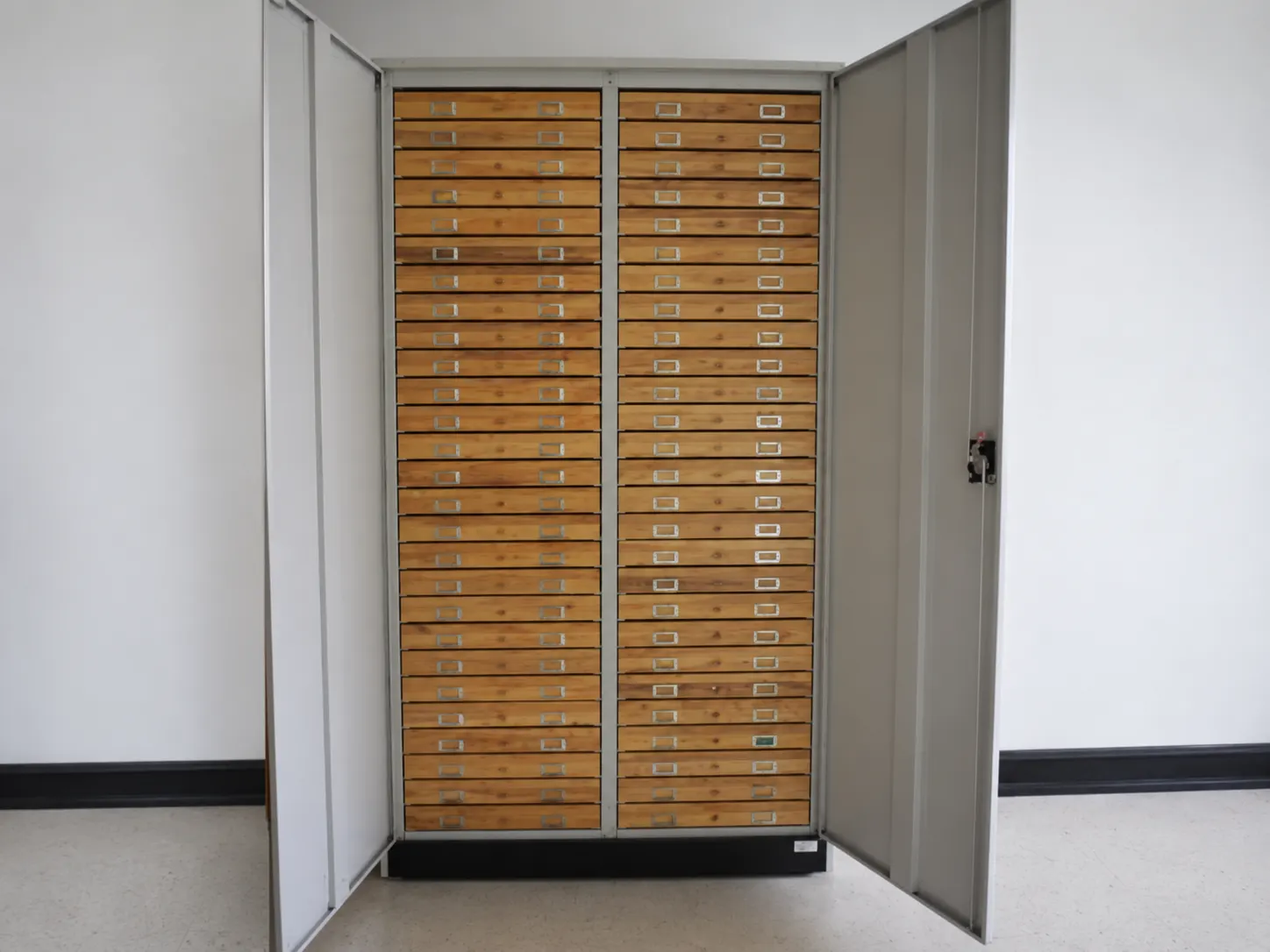
A stationary cabinet body encloses removable entomology drawers, trays or shelves. Guide spacing is engineered from the confirmed drawer dimensions. Door configuration, locks, handles and identification hardware are selected for the project. Overall cabinet dimensions, drawer quantity and internal layout are confirmed from collection needs and room conditions.
Configuration Structure Summary
| Product type | Entomology and natural history specimen storage cabinet |
|---|---|
| Construction | Powder-coated steel or project-confirmed wood / wood-finished configuration |
| Door configuration | Single door, double door or custom |
| Internal storage | Removable specimen drawers, archival trays, shelves or project-specific enclosures |
| Drawer guide spacing | Configured from confirmed drawer dimensions |
| Capacity | Project-specific |
| Reference layout | Single-column or double-column drawer arrangement |
| Cabinet dimensions | Custom |
| Identification | Cabinet, drawer and tray labeling options |
Capacity Planning
Cabinets may use single-column or double-column drawer arrangements. Full-height reference systems often use about 24 drawers per column, but final capacity depends on drawer height, guide spacing, cabinet structure and working clearance. Sinoalta confirms drawer quantity after the selected format and cabinet dimensions are defined.
Suitable Collections & Applications
- Pinned insect collections
- University biology and taxonomy collections
- Dry zoological specimens such as shells, bones and skeletal material
- Museum natural history collections
- Collection stores, laboratories and teaching collections
Dry Collections vs. Fluid-Preserved Collections
This configuration is intended primarily for dry collections. Specimens preserved in ethanol, formalin or other liquids may require different furniture, ventilation, fire-safety measures and facility provisions, and must be identified separately during project consultation.
Material & Construction Options
Cabinet bodies may use powder-coated steel or a project-confirmed wood / wood-finished construction. Drawer options include wood or metal specimen drawers, acid-free unit trays, archival specimen trays and project-specific boxes. Material, finish and compatibility requirements are confirmed for each project; no universal conservation-performance claim is implied.
Customization Options
- Overall cabinet dimensions and door arrangement
- Drawer format, quantity, guide spacing, material and construction
- Single-column or double-column internal layout
- Tray, box, shelf and identification system
- Locking, handles, mobility and project-specific hardware
- Surface finish and color
Information Required for Selection
- Collection and specimen type
- Existing drawer format and exact width, depth and height
- Required drawer quantity and future expansion needs
- Available room, access-route and cabinet dimensions
- Preferred cabinet, drawer and tray materials
- Locking, identification and institutional material requirements
Which Internal Configuration Do You Need?
Entomology drawer configuration
Choose removable drawers when pinned insect collections are already organized by drawer and researchers require individual access.
Dry specimen tray configuration
Choose trays, boxes or adjustable shelves for shells, bones and other dry specimens where conventional entomology drawers are not appropriate.
Frequently Asked Questions
Specimen Storage Cabinet — Frequently Asked Questions
What is an entomology cabinet?
A purpose-built cabinet arranged around removable drawers containing pinned insect specimens.
Can it use our existing drawers?
Yes. Provide exact drawer dimensions, quantity or a confirmed dimensional drawing before production.
Can it store specimens other than insects?
Selected dry shells, bones and skeletal materials can use project-specific trays, boxes, drawers or shelving.
Can acid-free trays be included?
Yes. Unit trays, archival trays and specimen boxes can be incorporated according to the collection.
Does it control temperature or humidity?
No environmental-control performance is assumed. If active control is required, define it separately during project planning.
Is it airtight?
No airtight performance is claimed unless a specific tested project configuration is separately confirmed.
Can it store alcohol- or formalin-preserved specimens?
The standard configuration is for dry collections. Fluid-preserved collections require separate safety and facility assessment.