Product Positioning
For the drying and tension-flattening stage after suitable paintings, calligraphy, rare books or paper documents have been mounted or prepared. The absorbent wall supports adhered perimeter drying and is distinct from the mounting table used as the horizontal work surface for repair, alignment and lining. Selection therefore depends on work dimensions, drying workflow, available wall or floor space and whether a fixed or mobile form is required.
I. Product Name and Functional Overview
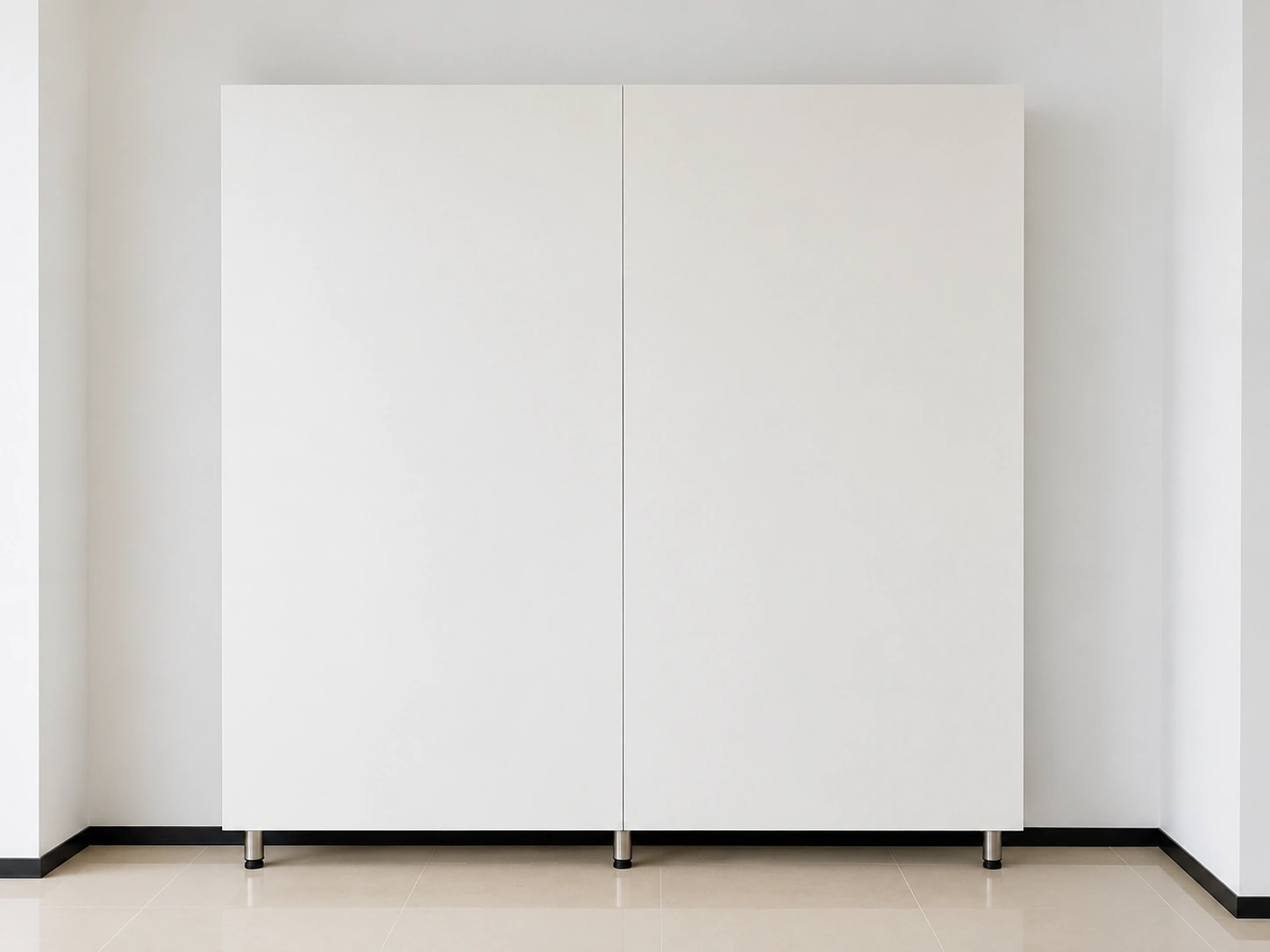
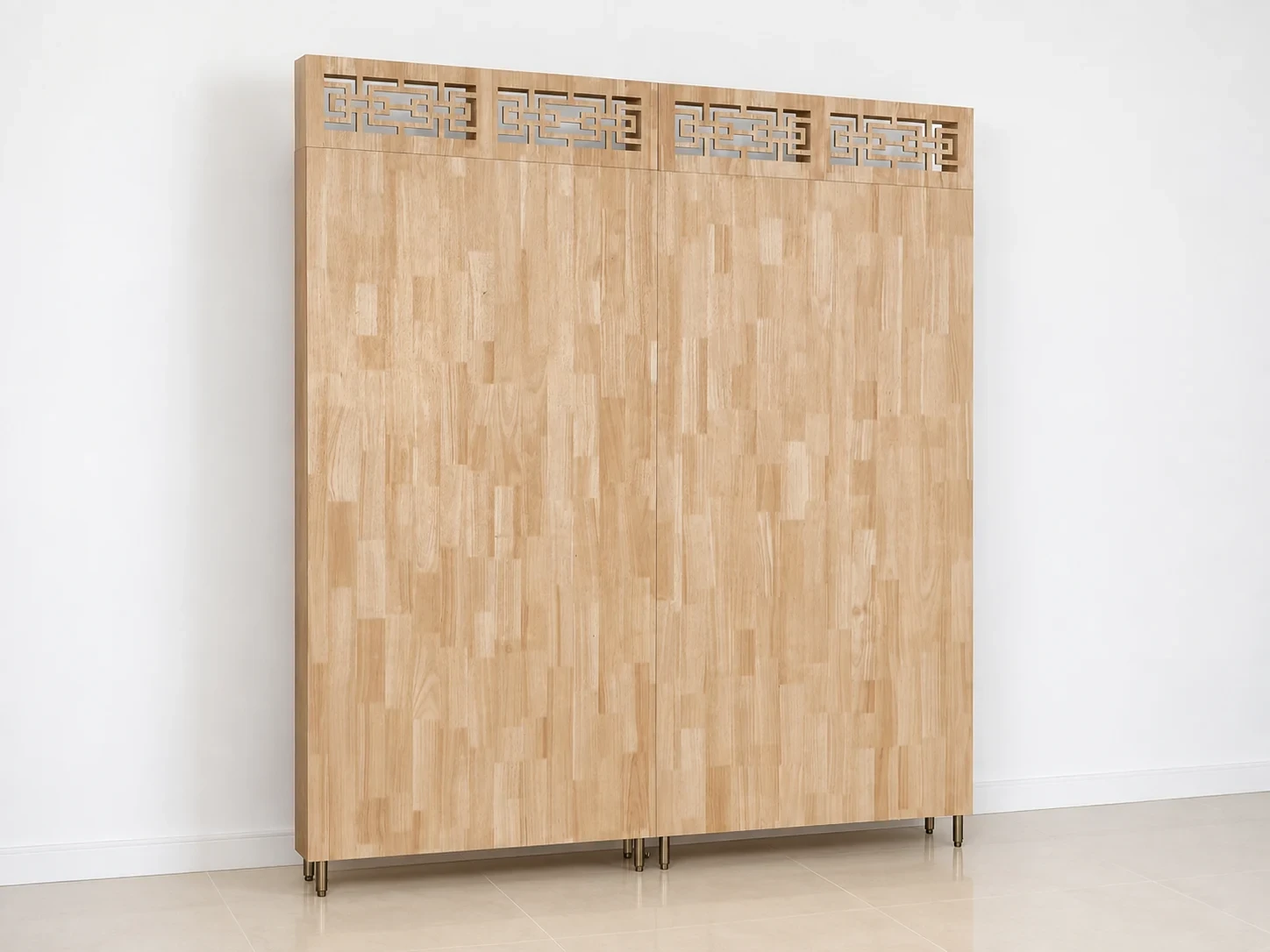
The mounting drying wall is used to dry and tension-flatten paper and is indispensable for mounting paintings and calligraphy and conserving rare books and archives. After the mounted work is placed on the wall, the paper layers gradually absorb moisture from it, and natural air drying completes the drying process. Because the perimeter remains adhered to the wall, the mounted work does not deform during drying and is tension-flattened.
II. Materials and Manufacturing Process
The product is made from a wooden lattice and adhered paper layers. The finished wall has a flat, smooth, highly absorbent surface. It can be made as a fixed wall or mobile unit as required.
- Wood-lattice material: solid pine.
- Wood-lattice cell size: approximately 24×24cm.
- Number of cells: 10 longitudinal and 5 transverse, 50 cells in total.
- Timber-section specification: 5cm.
- Adhered-paper materials: newsprint, Korean paper and Xuan paper.
- Number of adhered-paper layers: 10.
- Manufacturing process: cooked wheat-starch paste is used to adhere newsprint and Korean paper sequentially, layer by layer, followed by drying.
III. Specifications and Equipment Forms
| Item | Parameter |
|---|---|
| Overall dimensions | 1000×2400×50mm |
| Equipment forms | Fixed mounting drying wall, mobile mounting drying wall |
| Wood-lattice cell size | Approximately 24×24cm |
| Number of wood-lattice cells | 10 longitudinal and 5 transverse, 50 cells in total |
| Number of adhered-paper layers | 10 |
IV. Customization
The mounting drying wall can be made as a wall-fixed or mobile unit according to the actual space and use requirements.
Selection Questions
When is a mounting drying wall appropriate? It supports traditional mounting workflows for paintings, calligraphy, rare-book paper and archival paper where an absorbent wall and perimeter attachment form part of controlled drying and tension-flattening. It is not a substitute for a heated dryer or a general storage surface.
What should be assessed before mounting? Conservators should review the paper, media, mounting layers, adhesives and moisture response, then establish the attachment and drying method appropriate to the object. The wall supports the selected process but does not determine treatment suitability.
Should the project use a fixed or mobile form? A fixed wall suits a permanent mounting area, while a mobile unit supports flexible room use. Confirm object dimensions, available wall or floor space, working access and the largest expected mounted format before specifying the equipment form.