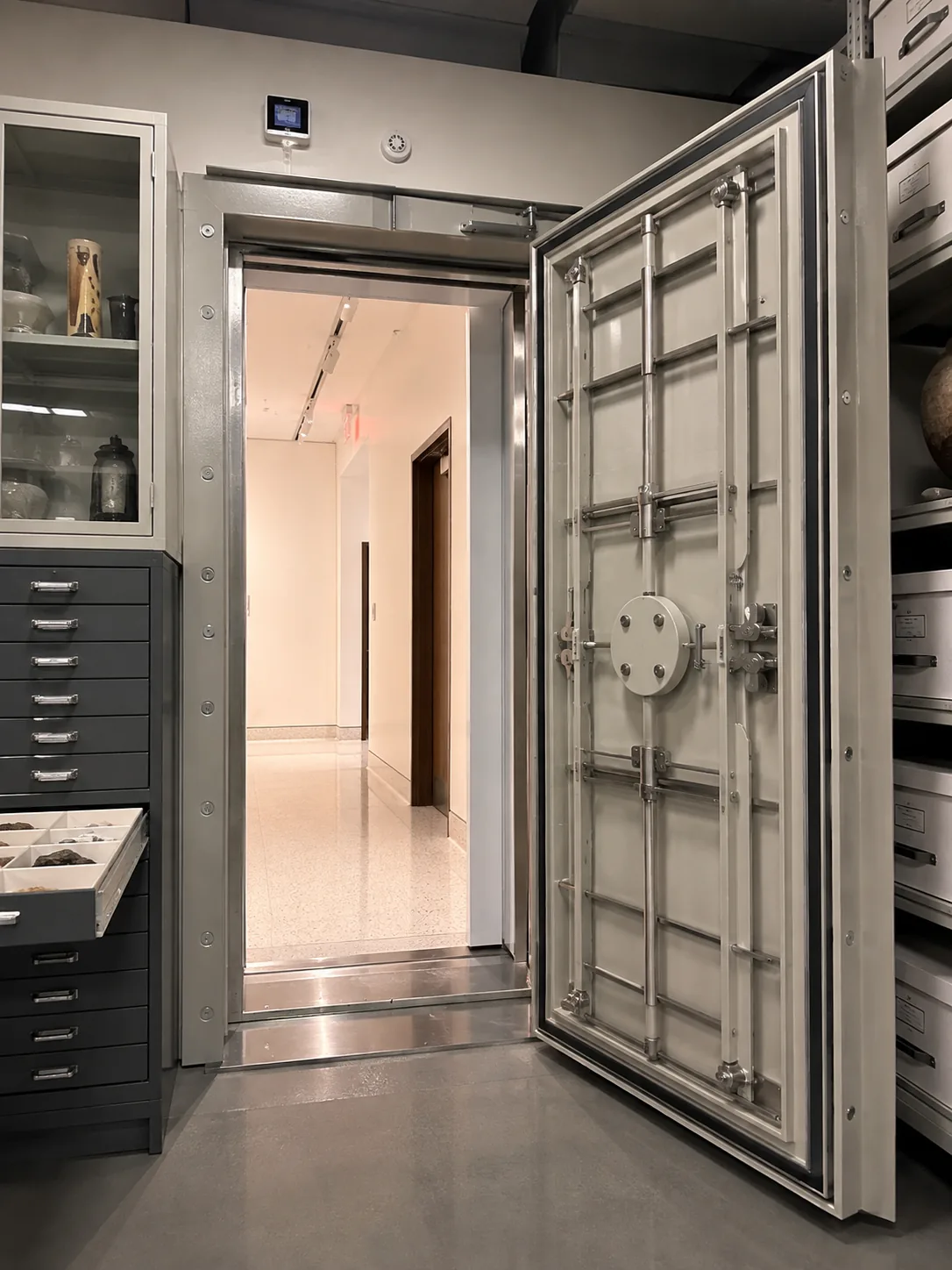
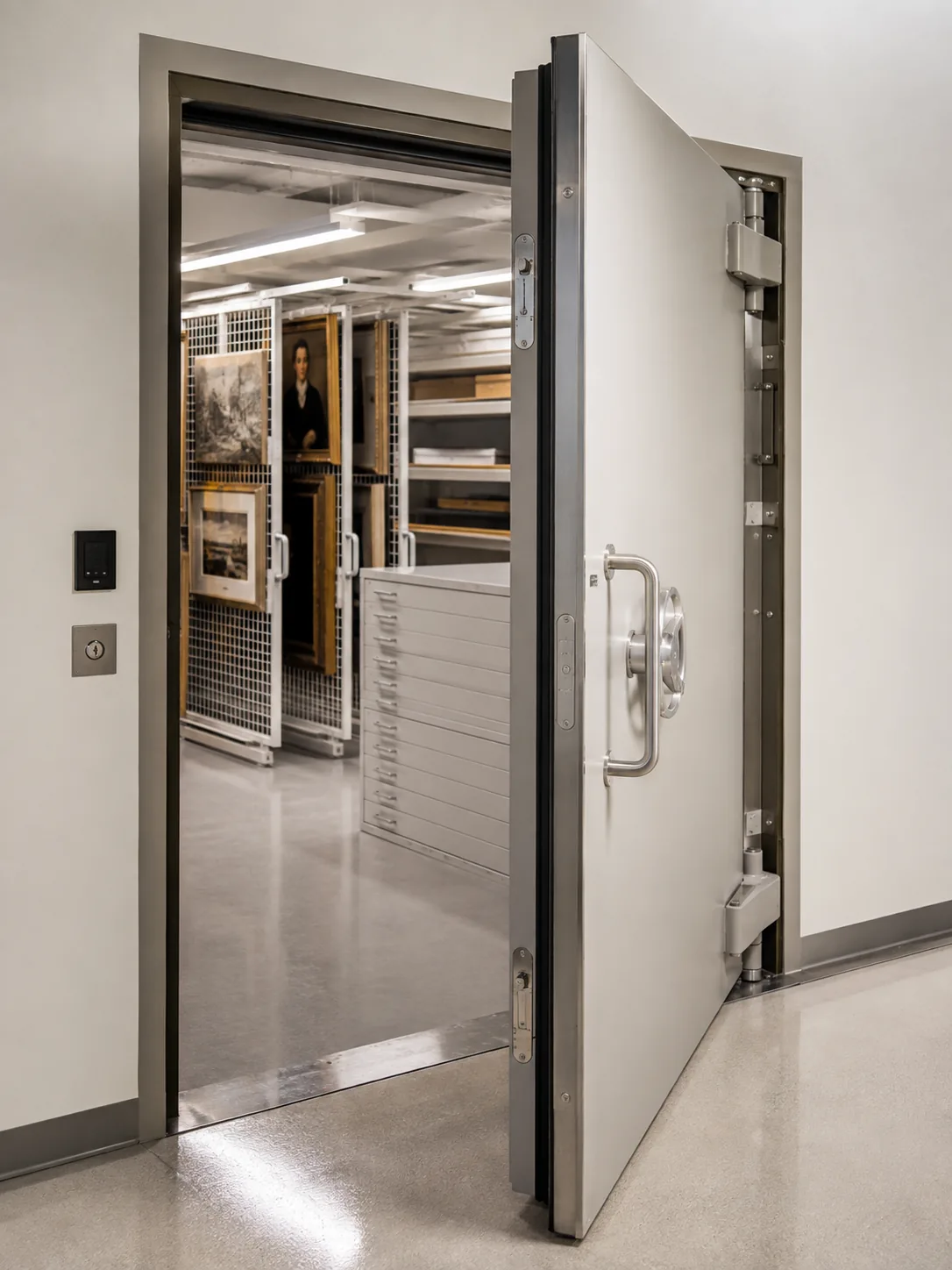
Product Overview
The Airtight Museum Storage Door is suitable for museum collection stores, cultural-heritage repositories, art collection stores, and other professional storage spaces requiring high levels of sealing and security protection.
The product uses vault-door manufacturing technology to provide multiple safeguards for cultural-heritage and art collection stores, including fire resistance, burglary resistance, watertightness, and airtightness, thereby improving protection at professional collection-store entrances.
The door can be customized according to the structural opening dimensions, method of use, and project requirements.
Key Protection Functions
Airtight Protection
The collection-store door provides high airtightness and can be used in museum collection stores and other professional storage spaces with stringent environmental-sealing requirements.
Watertight Protection
The door provides watertight performance to improve water-ingress protection for professional collection stores.
Fire Protection
The collection-store door provides fire resistance and thermal insulation, with fire integrity of at least 1.5 hours.
Security Protection
The product provides Class C protection, with a forced-entry resistance time of 120 minutes, providing security protection for professional cultural-heritage and art collection stores.
Smooth Door Operation
The door leaf opens and closes smoothly, without abnormal noise or binding.
During opening or closing, the door leaf can remain stationary at any angle and stably hold its position, facilitating routine personnel access and collection transfer.
Suitable Applications
Suitable for:
- Cultural-heritage collection stores;
- Art collection stores;
- Museum collection stores;
- Professional collection repositories;
- Professional storage spaces with stringent requirements for fire resistance, burglary resistance, airtightness, and watertightness.
Protection Performance
| Performance Item | Class or Rating |
|---|---|
| Airtightness | Class 8 |
| Watertightness | Class 5 |
| Fire Resistance | Class A, 90-minute fire resistance |
| Security Protection | Class C, 120-minute burglary resistance |
Standards
| Performance Item | Applicable Standard |
|---|---|
| Security Protection | GB 37481—2019 |
| Fire Resistance | GB 12955—2008 |
| Airtightness and Watertightness | GB/T 7106—2019 |
| Door-Leaf Opening Performance | GB 12955—2008 |
Product Features
- Uses vault-door manufacturing technology;
- Integrates fire resistance, burglary resistance, watertightness, and airtightness;
- Smooth door-leaf opening and closing;
- Can remain stably at any angle;
- Suitable for professional cultural-heritage and art collection stores;
- Customizable according to the project’s structural opening dimensions and operating requirements.
Customization
The product can be customized according to project requirements, including:
- Structural opening dimensions;
- Door dimensions;
- Method of use;
- Sealing requirements;
- Project installation conditions;
- Supporting requirements for museum collection stores.
Selection Questions
When should a project specify this door? It is intended for museum and collection-store entrances where the project requires a defined combination of airtightness, watertightness, fire resistance and security performance. A standard access door may be sufficient where these protection functions are not part of the store brief.
What site information is required? Confirm the structural opening, wall and threshold conditions, access direction, collection-transfer route, operating frequency, required clear opening and interfaces with the room envelope. Installation conditions must support the specified door dimensions and operation.
How should performance ratings be used? The listed classes and referenced standards define the stated product configuration. The project team should confirm required ratings, documentation and acceptance method for the destination project, including any local regulatory or authority requirements, before manufacture and installation.